
Venison and Rutabaga Stew with Rosemary and Bay
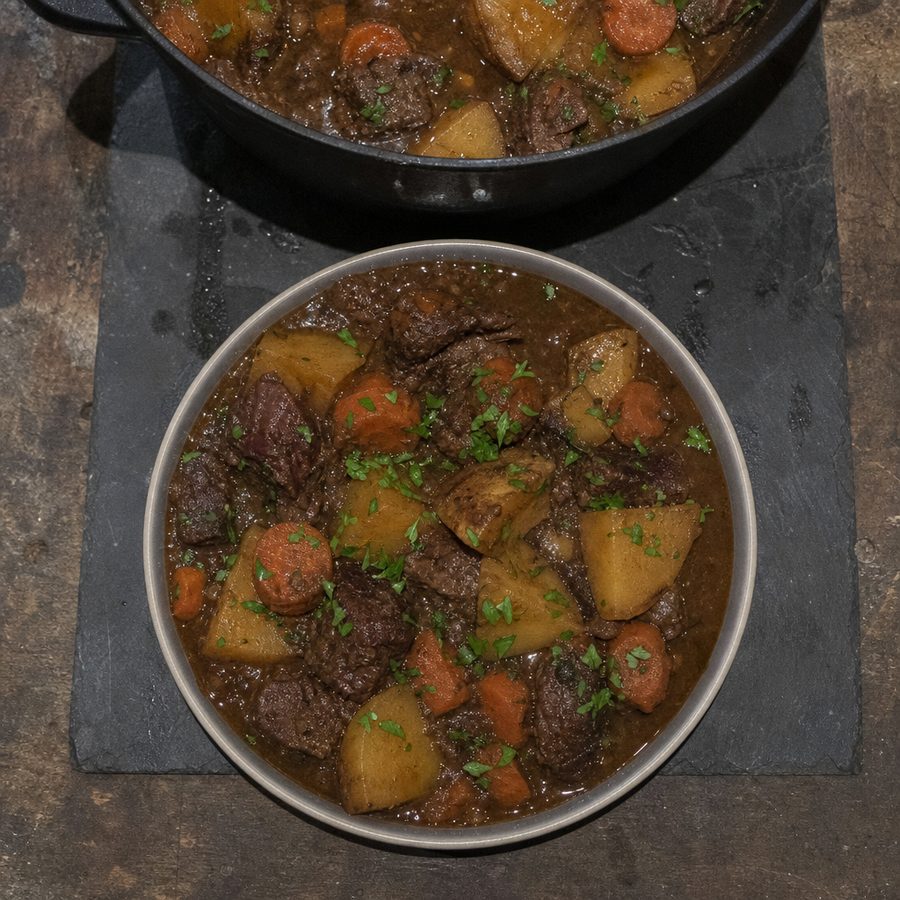
Cubes of venison shoulder browned hard and stewed low for two hours with onion, garlic, and bay, with rutabaga and carrot going in near the end.
Why You'll Love This Recipe
This is my Sunday pot, the one that goes on the stove after lunch and gets eaten all week. Venison is what I reach for when someone in the family has been hunting or when the freezer case at the good grocery has shoulder on offer, and it is worth cooking once even if you have never tried it. It tastes deeper and slightly sweeter than beef, more of the animal and less of the feedlot. Almost none of the two and a half hours is work. You brown the meat, you build the pot, and then you go and do something else while the kitchen fills up with rosemary and bay.
Brown the venison in two batches with room around every cube, because a crowded pot steams the meat gray and you lose the fond the whole stew is built on. After that it comes down to keeping the heat low. Venison carries very little fat of its own, so it is far less forgiving than chuck, and a pot held at a rolling boil gives you dry, stringy cubes in half the time. What you want is a bare shiver at the surface for ninety minutes to two hours. The rutabaga and the carrot wait until the last forty minutes so they arrive as recognizable pieces rather than dissolving into the broth.
The broth thickens on its own here, with no flour or starch stirred into it, because the connective tissue in the shoulder breaks down into gelatin over those hours and gives the liquid a body you can feel on your lips. If you want it thicker still, press three or four cooked rutabaga cubes against the side of the pot and stir them back in. Balsamic is the seasoning that makes this taste finished, a tablespoon early to deglaze and a tablespoon off the heat, since venison wants a little sweetness and a little acid to sit against. Parsley goes over the top raw, sharp and green.
Ingredients
- 1 3/4 lb boneless venison shoulder or stew meat, cut into 1 1/2-inch cubes
- 1 large rutabaga (about 1 1/4 lb), peeled and cut into 1-inch cubes
- 3 medium carrots, cut into 1/2-inch coins
- 1 large yellow onion, diced
- 6 cloves garlic, minced
- 4 cups beef bone broth
- 2 tbsp olive oil
- 1 tbsp finely chopped fresh rosemary
- 2 dried bay leaves
- 2 tbsp balsamic vinegar, divided
- 3 tbsp chopped fresh parsley
- 1 1/4 tsp fine sea salt, divided
Instructions
- Season and brown the venison: Pat the cubes very dry and season them with half a teaspoon of the salt. Heat the olive oil in a heavy pot or Dutch oven over medium-high until it shimmers. Brown the meat in two batches with space between the cubes, because a crowded pot traps steam and the meat grays instead of browning, about 4 minutes on the first side without moving them and 3 minutes after turning, until they carry a real crust. Move each batch to a bowl.
- Build the base: Lower the heat to medium and add the onion with a quarter teaspoon of the salt. Cook for 5 to 6 minutes, scraping up the browned bits as the onion releases its liquid, until it is soft and translucent. Add the garlic and the rosemary and cook for 1 minute, just until the garlic smells sweet.
- Deglaze and simmer low: Pour in 1 tablespoon of the balsamic and let it bubble away for 30 seconds, scraping the bottom clean. Return the venison and its juices, add the bone broth and the bay leaves, and bring it barely to a simmer. Cover and cook over low heat for 90 minutes to 2 hours, checking every half hour that the surface is only shivering, because venison carries so little fat of its own that a real boil pulls the cubes tight and dry. It is ready for the next step when a fork twists a cube apart with a little effort.
- Add the root vegetables: Stir in the rutabaga and the carrot with the remaining salt. Cover and cook for another 40 minutes, until the rutabaga is completely tender and the carrot coins are soft but still holding their shape.
- Skim and thicken: Take the lid off, spoon any fat off the surface, and let the pot bubble gently for 10 minutes to concentrate the broth. Press three or four cubes of rutabaga against the side of the pot with a spoon and stir them back in, which is what thickens the liquid without anything being added to it.
- Finish: Fish out the bay leaves. Off the heat, stir in the last tablespoon of balsamic, taste for salt, and scatter the parsley over the top just before serving.
Variations
- Beef chuck: Use chuck cut the same size when venison is hard to find, and give it about 30 minutes longer at the same low heat.
- Warm spice: Add a cinnamon stick and a pinch of ground cloves with the bay for a rounder, more fragrant pot.
- Mixed roots: Use half rutabaga and half turnip or parsnip when you want the vegetables sweeter and less peppery.
- Greens stirred in: Add a few large handfuls of chopped kale or collards in the last 10 minutes so every bowl has something dark green in it.
- Brothier bowl: Add two more cups of broth with the root vegetables and skip the reduction step for something closer to a soup you can drink.
Storage & Leftovers
The stew keeps in a sealed container in the refrigerator for 5 days and it is honestly better on day two, once the rosemary and bay have settled into the broth and the rutabaga has taken on the meat around it. Cool it uncovered for 30 minutes before the lid goes on so it chills quickly.
Reheat it in a saucepan over medium-low for about 10 minutes with a splash of broth or water, since the gelatin sets firm when cold and needs heat and stirring to loosen again. It also microwaves well, covered, in about three minutes with a stir halfway through. A thin fat cap may form overnight, and you can lift it off or stir it back in.
This freezes as well as anything I make, for up to 3 months in flat bags or single-serving jars. Thaw it overnight in the refrigerator and reheat on the stove. Rutabaga holds its shape through freezing far better than a potato would, though it softens a little, and the broth comes back exactly as it went in.
Notes & Tips
- Brown in two batches: Crowding the pot drops the temperature and the cubes steam in their own juice. Two batches costs about six minutes and it is the difference between a dark stew and a gray one.
- A shiver, not a bubble: Venison toughens at a hard boil faster than beef does. If the surface is rolling, the burner is too high, and the meat will take longer rather than less time.
- Cut the rutabaga big: One-inch cubes survive 40 minutes and stay recognizable. Anything smaller melts into the broth and you lose the vegetable entirely.
- Thicken with the vegetable: Mashing a few cooked rutabaga cubes against the pot gives you a thicker broth using what is already in there.
- Salt in stages: Some on the meat before browning, some with the onion, the rest with the roots. Salting only at the end leaves the meat itself tasting flat.
- Balsamic twice: One tablespoon to deglaze, one off the heat at the end. The first builds depth into the broth and the second is the one you actually taste.
Nutrition & Mindful Eating
- Venison, rutabaga, and the long simmer make this what it is. The meat gives the bowl its substance, the rutabaga and carrot give it sweetness and fiber, and two hours over low heat pull the two together into a broth that eats like part of the meal rather than liquid around it.
- Venison is close-grained and dark, with a flavor deeper than beef and very little fat running through it, and it carries iron in the form the body absorbs most readily along with B12 and zinc. It is why a bowl of this holds you well past the middle of the afternoon.
- Rutabaga turns sweet and mellow as it cooks, losing the sharp cabbage edge it has raw, and the fiber in it is part of why a meat-heavy stew still feels balanced. It brings vitamin C along too, more than most people expect from a hard winter root.
- Bone broth simmered with the shoulder gathers gelatin from the connective tissue, which is what makes the liquid coat a spoon and set soft in the refrigerator. That gelatin is protein, and the glycine in it is one of the amino acids most of us take in the least of.
- Rosemary and bay go in early and cook down into the background, while the balsamic and the raw parsley land at the very end where they stay sharp. That contrast between the deep slow flavors and the bright ones is what keeps a long stew from tasting heavy.
- As you eat, pay attention to how the broth clings to the spoon and how completely the meat has given way after two hours, and let a pot that took this long be eaten slowly enough to notice.
Frequently Asked Questions
Where do I buy venison, and what can I use instead?
Good butchers and online game suppliers carry farmed venison shoulder, and hunters usually have more than they know what to do with. Beef chuck is the closest substitute at the same weight and will want about 30 minutes longer. Lamb shoulder works too and cooks in about the same time.
My venison came out dry and stringy. What happened?
The pot was too hot. Venison has very little fat running through it, so it depends entirely on connective tissue melting slowly, and a hard boil squeezes the meat tight before that can happen. Turn the burner to its lowest setting, keep the lid on, and give it the full two hours.
Does it taste gamey?
Farmed venison is mild and slightly sweet, closer to a good piece of beef than most people expect. Wild venison tastes more strongly of what the animal ate. Browning the meat properly and finishing with balsamic both round that flavor off, and rutabaga and carrot bring sweetness that sits well against it.
Does this fit an AIP elimination phase?
It does. There are no grains, legumes, dairy, eggs, nuts, seeds, or nightshades here, and the seasoning is rosemary, bay, garlic, onion, balsamic, and salt rather than a stew blend, which almost always carries paprika or pepper in it. Read the bone broth label for the same reason.