
Vinegar-Braised Chicken Legs with Tomato and Thyme
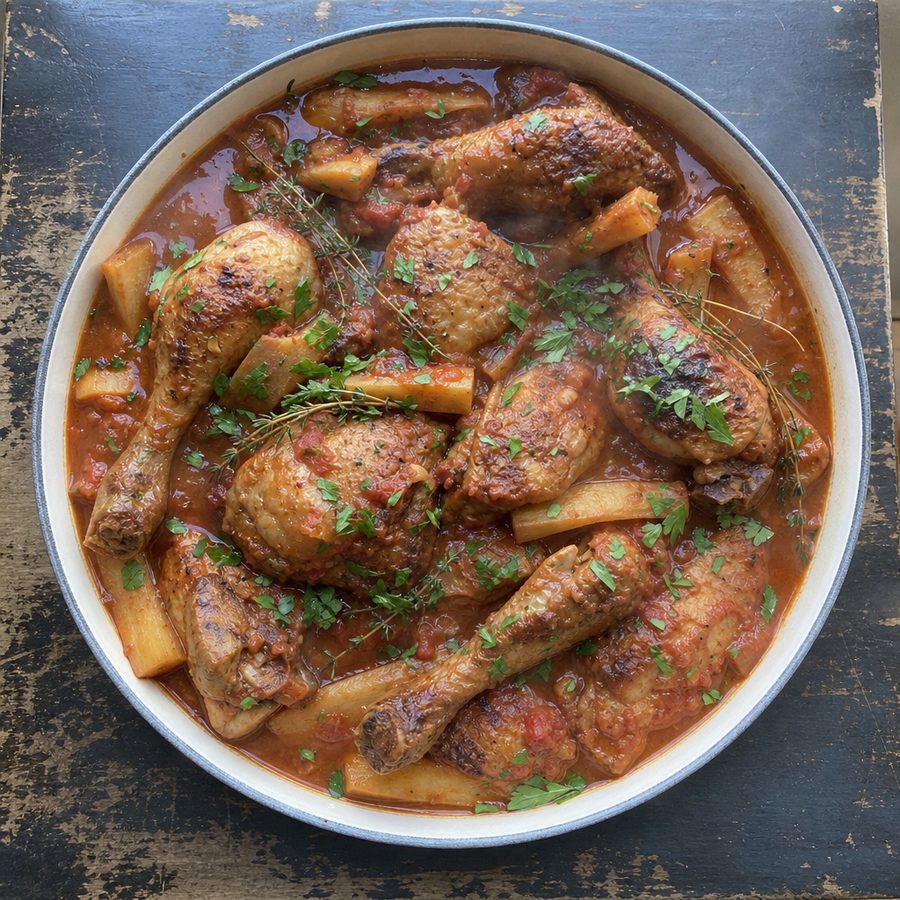
Whole chicken legs browned hard, then braised in cider vinegar, tomato, and thyme with parsnips until the meat pulls from the bone and the sauce turns glossy.
Why You'll Love This Recipe
Chicken legs are the cut I reach for when I want a braise on a weeknight, because the thigh and drumstick together hold enough fat and connective tissue to sit in liquid for an hour and come out better for it. Breast meat cannot do that. This is a version of the old French chicken in vinegar, and it is the dish I make when the refrigerator holds nothing but a can of tomatoes and some roots. Everything happens in one wide pan. Twenty minutes of real attention at the start, then the oven has it, and the kitchen smells like tomato and thyme by the time anyone asks what is for dinner.
The vinegar is doing what onion and garlic would do in another recipe, which is to give the sauce a bottom note that keeps it from tasting like plain tomato. Pour it into the hot pan after the legs come out and let it bubble down by half before anything else goes in, because that first hard boil is what burns off the raw, throat-catching edge and leaves the fruit behind. Blooming the tomato paste in garlic-infused olive oil for a minute first is the other half of the flavor, since the paste turns brick red and loses its tinny taste once it hits hot fat.
What comes out is a braise you eat with a spoon and a knife you barely need. The parsnips go in whole enough to hold their shape and turn sweet against the sharp sauce, which is the contrast the whole dish is built on. Skin that started crisp softens under the lid, so the legs go back uncovered for the last 15 minutes to firm up again. Cold butter whisked in at the end pulls the sauce together into something glossy that clings to the meat, and a handful of parsley over the top keeps a long-cooked pan tasting fresh.
Ingredients
- 4 whole chicken legs, skin on, about 3 lb total
- 1 lb parsnips (about 4 medium), peeled and cut into 2-inch batons
- One 14.5 oz can crushed tomatoes
- 1/2 cup apple cider vinegar
- 1 cup chicken broth
- 2 tbsp tomato paste
- 2 tbsp garlic-infused olive oil
- 2 tbsp cold butter, cut into 4 pieces
- 6 sprigs fresh thyme
- 2 bay leaves
- 1/4 cup chopped fresh parsley
- 1 tsp coarsely ground black pepper
- 1 1/2 tsp fine sea salt, divided
Instructions
- Dry and season the legs: Pat the chicken legs very dry and season them all over with 1 teaspoon of the salt and the black pepper. Let them sit at room temperature while the oven heats to 325°F (163°C). Dry skin is what browns, so give them a second pass with paper towel if they look damp.
- Brown the skin hard: Heat the garlic-infused olive oil in a wide braising pan or Dutch oven over medium-high. Lay the legs in skin-side down and leave them for 7 to 8 minutes, until the skin is deep brown and lifts cleanly. Turn them, give the underside 3 minutes, and move them to a plate.
- Cook off the vinegar: Pour off all but about a tablespoon of the fat. Stir in the tomato paste and cook it for 1 minute, until it darkens to brick red. Pour in the vinegar, scrape the browned bits off the bottom, and boil hard for 3 to 4 minutes, until it has reduced by half and no longer catches at the back of your throat.
- Build the braise: Add the crushed tomatoes, broth, thyme sprigs, bay leaves, and the remaining salt, and bring it to a simmer. Settle the legs back in skin-side up so the skin sits above the liquid, tuck the parsnips into the sauce around them, cover, and slide the pan into the oven for 40 minutes.
- Uncover and finish: Take the lid off and roast for 15 to 20 minutes more, until the skin firms up again, the sauce has thickened, and the thigh meat reads 175°F (80°C) and pulls back from the bone. Move the legs to a platter and fish out the thyme stems and bay leaves.
- Mount the sauce: Set the pan over low heat and whisk in the cold butter one piece at a time until the sauce turns glossy. Taste it for salt and for sharpness. Spoon the sauce and parsnips around the legs, scatter the parsley over everything, and serve straight from the pan.
Variations
- Other roots: Use carrots, turnips, or rutabaga cut the same size when parsnips are not around, or half parsnip and half carrot for a sweeter pan.
- Olive and orange: Add a handful of kalamata olives and a strip of orange zest with the tomatoes for a version that leans south.
- Smoky: Stir a teaspoon of smoked paprika into the tomato paste as it cooks for warmth and a deeper red color.
- Greens at the end: Wilt torn swiss chard or kale into the sauce in the last 5 minutes so there is something dark green on the plate.
- Rabbit or turkey legs: Both take this braise well. Turkey legs need about 30 minutes longer under the lid, rabbit about 15 minutes less.
Storage & Leftovers
This keeps for 4 days in the refrigerator and is better on day two, once the vinegar has settled into the tomato. Store the legs sitting in the sauce so the meat stays moist, and expect a layer of fat to set on top, which you can lift off cold or stir back in warm.
Reheat covered in a low oven at 300°F (150°C) for about 20 minutes, or in a saucepan over low heat with a splash of broth. High heat splits the butter out of the sauce and turns the parsnips to mush, so give it time. Shredded off the bone, it also reheats fast enough for a quick pan of sauce.
It freezes better than most braises because there is no dairy holding the sauce together until the last step. Freeze the legs in the sauce for up to 3 months, thaw overnight in the refrigerator, and whisk in fresh butter after reheating. Leave the parsnips out if you know it is headed for the freezer.
Notes & Tips
- Why the garlic oil works: Garlic flavor dissolves into fat while the fructans that upset some stomachs stay behind in the water, so infused oil gives you the taste and none of the trouble.
- Boil the vinegar before anything else: Vinegar added to a full pan stays raw and metallic. Reduced by half in a hot empty pan first, it turns into something fruity you can barely name.
- Keep the skin above the liquid: Set the legs back in so the sauce comes only halfway up. Skin submerged in liquid never firms up again, no matter how long you leave the lid off.
- Bloom the tomato paste: One minute in hot oil is the difference between a sauce that tastes of the can and one that tastes cooked. Watch it, since it goes from brick red to burnt quickly.
- How it keeps and reheats: Four days in the refrigerator, better on the second night, and it reheats best covered in a low oven while the rest of dinner comes together.
- Feeding people who are not on the plan: Their servings can take a spoonful of sliced garlic and shallot softened in oil stirred through at the table, which changes nothing about the pan itself.
Nutrition & Mindful Eating
- The legs, the tomato, and the vinegar carry this between them. Dark meat gives the pan its richness, the tomatoes give it body and color, and the acid keeps something braised for an hour from ever feeling heavy.
- Chicken legs are the cut that rewards long cooking. The connective tissue in the thigh and drumstick softens into the sauce, and the dark meat carries more iron and zinc than the breast, which is part of why the plate eats so solidly.
- Cooked tomato is where the lycopene here comes from, and heat and fat together make that pigment easier for the body to take up, which is one of the few cases where cooking a vegetable gives you more rather than less.
- Parsnips taste sweeter than they look and hold their shape through a braise, bringing fiber and a little natural sweetness that plays against a sharp tomato sauce.
- Thyme, bay, and black pepper are quiet in the jar and loud after an hour in a covered pan. They are the reason this tastes seasoned rather than salted, and parsley thrown over at the end keeps the whole thing from smelling only of long cooking.
- As you eat, notice the tang that runs under the tomato and how completely the meat has let go of the bone, and give the last spoonfuls of sauce the attention they deserve rather than clearing the plate on your feet.
Frequently Asked Questions
Can I use thighs or drumsticks separately?
Yes. Eight bone-in thighs or ten drumsticks work at the same weight, and the timing barely changes because both are dark meat. Skinless pieces will braise fine but the sauce loses some body, so add an extra spoonful of butter at the end to make up for it.
The sauce tastes too sharp. Can I fix it?
Almost always yes. Sharpness means the vinegar did not reduce enough at the start, so simmer the finished sauce uncovered for another 5 minutes and it will round out. A teaspoon of maple syrup stirred in also softens the edge without making the pan sweet.
Can I make it in a slow cooker?
Brown the legs and reduce the vinegar on the stove first, since neither step works in a slow cooker, then transfer everything and cook on low for 5 hours. The skin will be soft rather than firm, so run the legs under the broiler for 3 minutes before serving if that matters to you.
Does this work for a low-FODMAP plan?
It does. The savory depth comes from browned skin, tomato paste cooked in hot fat, vinegar, thyme, and bay rather than from onion or garlic, and canned tomatoes and parsnip both sit well at this portion. The garlic taste comes from garlic-infused olive oil.