
Warm Bulgur Plate with Cumin Carrots, Chickpeas, and Dill
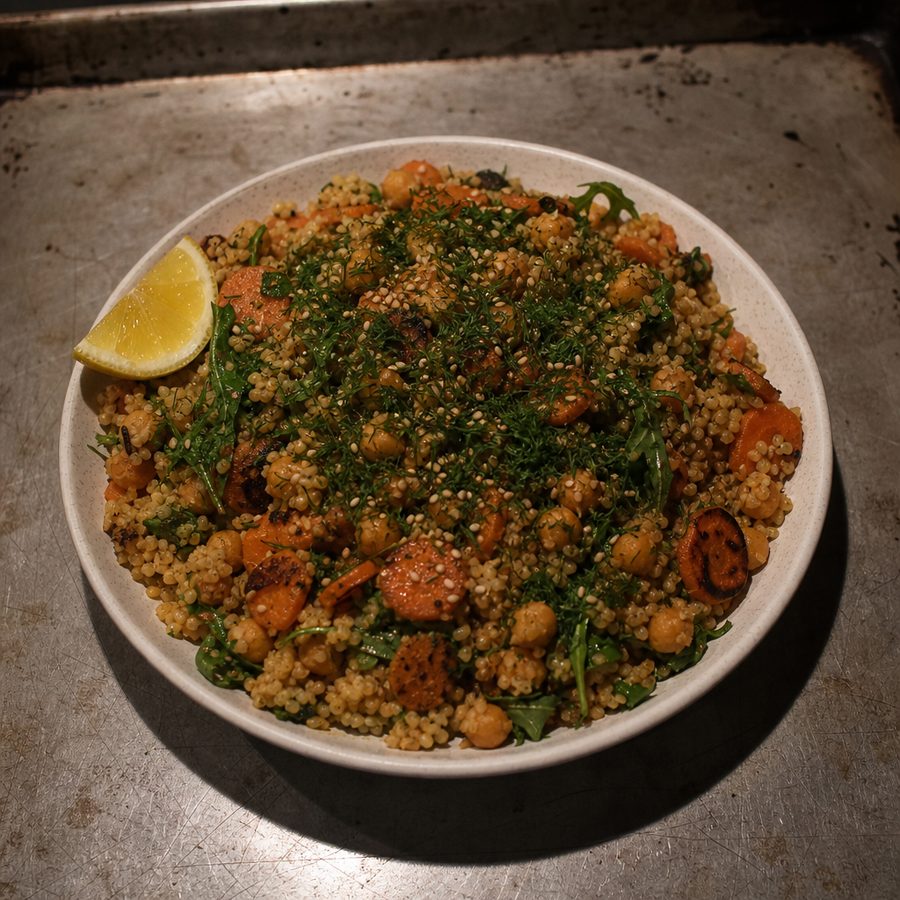
Cumin-roasted carrot coins and skillet-crisped chickpeas over warm bulgur, with arugula wilted in, toasted sesame seeds, and a great deal of fresh dill.
Why You'll Love This Recipe
I make this on Sundays when I want lunch for the week to be one warm thing I can spread across four plates and reheat without apology. Bulgur is the reason it works. It softens in the time it takes the oven to come up to heat, it drinks up lemon and oil, and it stays separate and toothsome for days rather than turning to paste. The carrots do the heavy lifting on flavor, roasted hard enough that the cut faces caramelize, and the cumin goes on before they meet the oven so it toasts against the hot pan rather than sitting raw on top.
Eating it is a study in temperature. The grain and the carrots come to the plate hot, the arugula goes in raw and collapses only halfway, and the dill and lemon stay cold and sharp right through. Chickpeas that have spent ten minutes in a dry skillet go nutty and slightly crisp on the outside while staying soft in the middle, which is a texture worth the second pan. Sesame seeds toasted until they hop and smell like a bakery give the plate a low, rich note underneath the citrus, and every bite comes out sweet, green, and bright at the finish.
This belongs on a weekday when you want something substantial that does not sit heavily. It is a plate rather than a bowl in my kitchen, spread wide so the arugula does not steam itself flat, and it eats just as well at room temperature if lunch happens at a desk. I also put it out warm alongside roasted vegetables for a Sunday supper when the house is full. The proportions are forgiving, so if your carrots are enormous or your bunch of dill is small, adjust and trust your eye. Leftovers want a fresh squeeze of lemon on the second day, and they get better for it.
Ingredients
- 3 cups cooked bulgur (from about 1 cup dry medium-grind bulgur)
- 1 lb carrots, peeled and cut into 1/2-inch coins on the bias
- 1 (15 oz) can chickpeas, drained and rinsed well, about 1 1/2 cups
- 4 packed cups arugula
- 5 tbsp sesame seeds
- 1/3 cup chopped fresh dill, loosely packed
- 4 scallions, thinly sliced, white and green parts
- 3 tbsp fresh lemon juice, plus wedges for the table
- 2 tbsp olive oil, divided
- 3 cloves garlic, grated on a microplane
- 2 tsp ground cumin
- 3/4 tsp coarsely ground black pepper
- 1/4 tsp fine sea salt
Instructions
- Roast the carrots: Heat the oven to 425°F. Toss the carrot coins with 1 tbsp of the olive oil, the cumin, the salt, and half the black pepper, and spread them on a sheet pan in a single layer with space between them. Roast 22 to 26 minutes, turning once at the halfway mark, until the cut faces are deep brown in patches and a coin gives easily when you press it with the back of a spoon. Crowding is the only thing that goes wrong here, so use two pans if one looks tight.
- Cook the bulgur: Bring 2 cups of water to a boil, stir in 1 cup medium-grind bulgur, cover, and take it off the heat. Leave it alone for 15 minutes, then lift the lid and fluff it with a fork. The grains should be tender with a little chew at the center and no standing water in the bottom of the pot. If any water remains, drain it and set the bulgur back over low heat uncovered for a minute.
- Toast the sesame seeds: Put the sesame seeds in a dry skillet over medium heat and shake the pan almost constantly. In three to four minutes they turn from pale to light gold, start to hop, and smell toasted and slightly sweet. Tip them onto a plate the moment that happens, because they go from gold to bitter in under a minute and the pan holds enough heat to take them there on its own.
- Crisp the chickpeas: Dry the rinsed chickpeas thoroughly on a towel, then put them in the same skillet with the remaining 1 tbsp olive oil over medium-high heat. Cook eight to ten minutes, shaking the pan every minute or so, until the skins have blistered, a few have split, and they rattle rather than slide. Turn off the heat, add the garlic and the rest of the black pepper, and stir for 30 seconds in the residual warmth so the garlic softens without browning.
- Build the plate: Fork the lemon juice through the warm bulgur so it goes in everywhere. Fold in the arugula while the grain is still hot, which wilts it about halfway and leaves the rest of the leaves standing. Spread it across a wide platter or four plates, scatter the carrots and chickpeas over the top with any oil left in the pans, then finish with the scallions, the dill, and the sesame seeds. Serve with lemon wedges.
Variations
- Roasted parsnip: Swap half the carrots for parsnips cut the same size. They go sweeter and softer in the oven and want two or three minutes less.
- Mint and lime: Use chopped fresh mint in place of the dill and lime juice in place of the lemon, which sends the whole plate somewhere greener and sharper.
- Warm spice: Add 1/2 tsp coriander seed, cracked, and a pinch of cayenne to the carrots along with the cumin for a slower, warmer heat underneath the sweetness.
- Grain swap: Cooked barley or farro both work in place of the bulgur. Barley is chewier and takes the lemon well, farro is nuttier, and either needs the dressing forked in while hot.
Storage & Leftovers
It keeps four days in a sealed container in the refrigerator and holds up better than most grain plates, because bulgur does not soften the way rice does once it is dressed. Store the sesame seeds and the dill separately in a twist of foil if you can be bothered, since both are at their best going on fresh, but folding everything together works fine and is what I usually do.
Reheat a portion in a skillet over medium for three or four minutes with a splash of water, spread flat and left alone for the first two so the carrots pick up a little color again. The microwave gets it hot in 90 seconds and softens the chickpeas, which some people prefer. Either way, a fresh squeeze of lemon and a few more dill fronds at the end bring it right back.
It does not freeze well. The carrots go watery and the arugula disappears entirely. If you want to get ahead, roast the carrots and cook the bulgur up to three days early, keep them separate, and do the chickpeas and the assembly on the day, which takes about twelve minutes.
Notes & Tips
- Cut the carrots on the bias: An angled cut gives you a longer, wider face against the pan than a straight coin does, which is where the browning happens. Same carrot, more caramelized surface.
- Dress the bulgur hot: Grain absorbs while it is steaming and stops once it cools. Lemon juice forked through a hot pot goes all the way in, and the same juice added later just sits on the surface.
- Watch the sesame seeds: They are pale, then gold, then burnt, and the last two steps take about forty seconds between them. Stay at the pan and tip them out onto a cold plate the second they smell toasted.
- Add the garlic off the heat: Grated garlic dropped into a hot skillet burns in seconds and turns acrid. Kill the burner first and let the residual heat take the raw edge off it while you stir.
- Taste before you add more salt: The cumin, the toasted sesame, and the lemon all read as seasoning, and the plate usually needs less than you expect. Taste after the lemon goes in, not before.
Nutrition & Mindful Eating
- The bulgur, the carrots, the chickpeas, and the sesame seeds each hold up a different corner of this plate. The grain gives it body and a good deal of fiber, the chickpeas bring the protein, the carrots bring sweetness and color, and the sesame seeds put fat and crunch on top so the whole thing tastes finished.
- Chickpeas crisped in a dry-ish skillet turn nutty and firm at the edges while staying creamy inside, and they carry both protein and soluble fiber, which is a large part of why a plate built on vegetables and grain eats like a real lunch.
- Sesame seeds are one of the better plant sources of calcium, and toasting is what unlocks them for eating. Pale seeds taste of almost nothing, while gold ones smell like a bakery and give every forkful a rich note underneath the lemon.
- Carrots roasted at high heat concentrate their sugars as the water cooks off, which is why the browned edges taste like candy, and the deep orange is beta-carotene that your body turns into vitamin A.
- Dill, arugula, scallions, and lemon juice are the reason this does not taste like a heavy grain plate. The arugula keeps a peppery bite where it stayed raw, the dill is grassy and cool, and the acid lifts everything the oven made sweet.
- As you eat, notice how the temperature shifts across the plate, hot carrot against cool dill against half-wilted leaves, and let that slow you down enough to feel when you have had enough.
Frequently Asked Questions
What grind of bulgur should I buy?
Medium grind, which is what most bags sold simply as bulgur contain. Fine grind is meant for tabbouleh and turns soft and clumpy under hot dressing. Coarse grind needs simmering rather than soaking and about twice the time, so if that is what you have, cook it like rice in 2 1/2 cups water for 20 minutes.
Can I use dried chickpeas?
Yes, and they crisp better. Soak 3/4 cup dried chickpeas overnight, simmer them 60 to 90 minutes until tender, then drain and dry them well. You will get roughly the same volume as the can, and the skillet step goes faster because they carry less moisture to start with.
My chickpeas never crisped. What went wrong?
Wet chickpeas steam rather than brown, so the towel is not optional. The other culprit is a crowded pan. They need to sit in one layer with room to rattle, and a ten-inch skillet is about right for this quantity. Give them the first two minutes undisturbed before you start shaking.
Can I make it entirely ahead for lunches?
Yes. Portion it into four containers while everything is still slightly warm so the grain absorbs the lemon, then refrigerate. Keep the sesame seeds in a small bag and add them as you eat, since they lose their crackle overnight. Eat it cold or warm, both are good.