
Warm Bulgur Salad with Blistered Zucchini, Fava Beans, and Mint
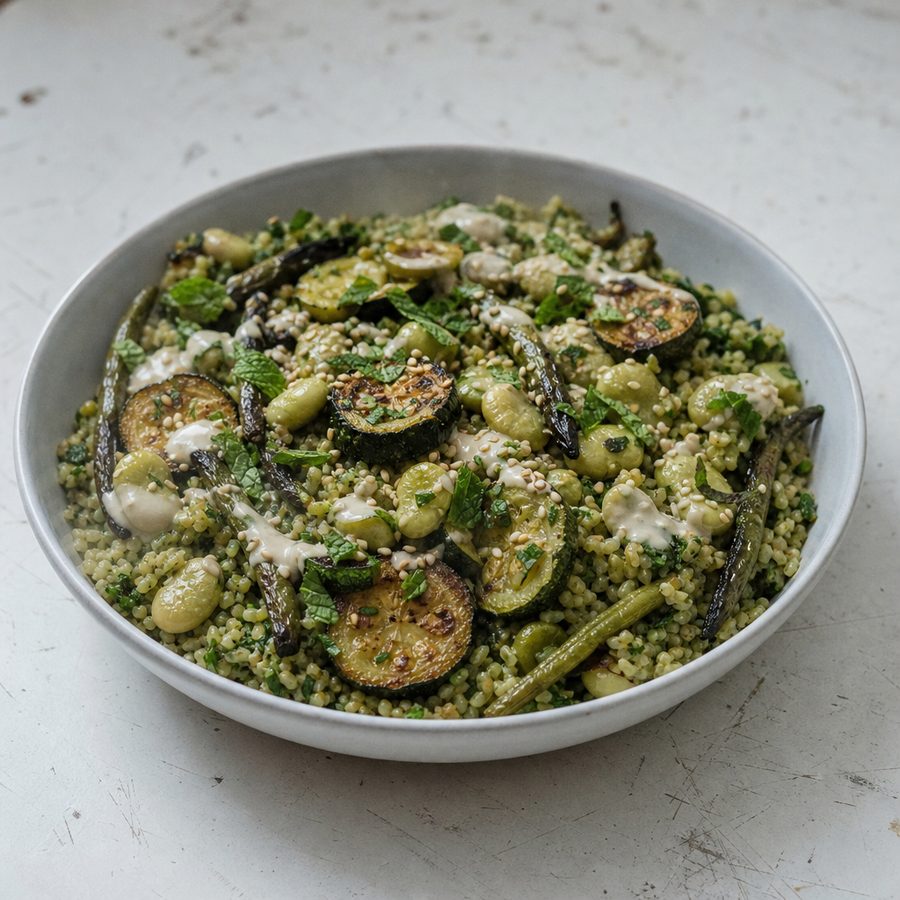
Coins of zucchini and cut green beans blistered in a hot skillet with garlic and cumin, folded through warm bulgur with fava beans, a loose lemon tahini, and a great deal of mint and parsley.
Why You'll Love This Recipe
Zucchini has a reputation for going limp and gray, and that reputation is earned every time somebody cooks it low and slow in a crowded pan. Cook it hot and fast in a single layer and something else happens entirely: the cut faces blister, the sugars catch, and the inside is still firm when the outside is spotted brown. That is the version I want in a grain salad, where soft vegetables have nowhere to hide. Fifteen minutes of real heat is all it takes, and the rest of this bowl is stirring things together.
Bulgur is the fastest whole grain I know. Coarse bulgur needs boiling water and a lid and about fifteen minutes on the counter, no pot watching at all, and it comes out separate and nutty with a firmness that holds up to dressing. I reach for it all summer long. The fava beans are what make the bowl a meal rather than a side, and I use frozen peeled favas without apology, since podding and skinning fresh ones is a pleasant Sunday job and a miserable Tuesday one.
The flavors here are the ones I grew up eating in other people's kitchens: cumin bloomed in oil, garlic that has just turned gold, lemon in quantity, and more mint than feels reasonable until you taste it. It eats warm, it eats at room temperature, and it eats cold out of the container standing at the counter, which is where a fair amount of it goes. Make it on a Sunday and it will still be good on Wednesday, which is the highest praise I have for a lunch.
Ingredients
- 2 3/4 cups cooked coarse bulgur, from about 1 cup dry
- 2 medium zucchini, about 14 oz total, cut into 1/3-inch coins
- 7 oz green beans, trimmed and cut into 2-inch lengths
- 1 1/2 cups cooked peeled fava beans, from frozen, or a 15 oz can of no-salt-added favas, drained and rinsed
- 2 tbsp tahini, well stirred
- 2 1/2 tbsp lemon juice, from 1 large lemon, divided
- 4 cloves garlic, 3 thinly sliced and 1 grated
- 2 1/2 tbsp olive oil, divided
- 4 scallions, thinly sliced, white and green parts kept separate
- 1/3 cup fresh mint leaves, torn
- 1/2 cup flat-leaf parsley, roughly chopped
- 1 1/2 tsp ground cumin
- 1 1/2 tbsp sesame seeds
- 1/2 tsp cracked black pepper
- 1/3 tsp fine sea salt
Instructions
- Soak the bulgur: Put 1 cup coarse bulgur in a heatproof bowl, pour over 1 1/2 cups boiling water, cover tightly with a plate, and leave it for fifteen minutes while you cook everything else. It is ready when the water is gone and the grains separate under a fork. Fluff it and spread it out so the steam escapes and it does not clump.
- Mix the lemon tahini: Whisk the tahini with the grated garlic and 1 1/2 tbsp of the lemon juice in a small bowl. It will seize and go stiff and pale, which is exactly what should happen. Add cold water a teaspoon at a time, whisking, until it loosens into a pourable cream about the thickness of heavy cream, usually two to three teaspoons in total.
- Blister the zucchini: Heat 1 1/2 tbsp of the olive oil in a wide skillet over medium-high heat until it shimmers. Lay the zucchini coins in a single layer, sprinkle with the salt, and leave them untouched for three minutes, until the undersides are spotted dark brown. Turn them and give them two minutes more, then lift them onto a plate while they still have some bite.
- Char the green beans and bloom the cumin: Add the green beans to the same pan and cook for four minutes, tossing once, until they are blackened in places and bright green underneath. Push them aside, add the sliced garlic, scallion whites, and cumin to the bare metal with the last tablespoon of oil, and stir for forty seconds, until the cumin smells toasted and the garlic is pale gold.
- Fold it together: Turn the warm bulgur into a wide bowl and add the fava beans, the contents of the skillet, the zucchini, the remaining lemon juice, and the cracked pepper. Fold gently so the zucchini keeps its shape. Add the mint, parsley, and scallion greens, spoon the lemon tahini over the top, and finish with the sesame seeds. Serve warm or at room temperature.
Variations
- Pomegranate and sumac: Scatter a handful of pomegranate seeds over the finished bowl and add a pinch of sumac to the tahini for a sharper, redder version.
- Charred pepper: Add a sliced red bell pepper to the pan with the green beans and let it blister at the edges before the garlic goes in.
- Dill and cucumber: Swap the mint for chopped dill and fold in a diced cucumber at the very end, which takes the bowl in a cooler, crunchier direction.
- Chile and lemon zest: Add a pinch of chile flakes with the cumin and grate the zest of the lemon over the top before serving.
Storage & Leftovers
This keeps four days in a sealed container in the refrigerator and packs better than almost any lunch I make. The bulgur stays separate, the fava beans get creamier, and the cumin settles into everything overnight. Keep the lemon tahini in its own small jar if you can, so the grains do not soak it all up before you eat.
Let a portion sit out for fifteen or twenty minutes before you eat it, or warm it in a skillet for two minutes with a splash of water. Cold from the refrigerator the tahini is stiff and the mint has gone quiet. At room temperature the herbs come back and the lemon sharpens up again.
Freezing is not worth it here. Zucchini turns to water on thawing and the herbs go black. What does work is making a double batch of bulgur and keeping the extra plain in the refrigerator for up to four days, which turns this into a ten minute lunch the second time around.
Notes & Tips
- Cut the zucchini thick: Thin slices have no middle left by the time the outside browns. A third of an inch gives you a blistered face and a firm center, which is the contrast the whole bowl is built on.
- Loosen the tahini with cold water: It will seize into a stiff paste the moment the lemon goes in. That is normal. Cold water added a teaspoon at a time brings it back into a smooth, pourable sauce, while warm water makes it grainy.
- Bloom the cumin in oil: Thirty to forty seconds in hot oil is the difference between cumin that tastes dusty and cumin that tastes toasted. Do it in the empty part of the pan and stir it constantly, since it burns fast.
- Tear the mint, do not chop it: A knife bruises mint and turns the cut edges dark within minutes. Torn leaves stay green and release their oil more slowly, which is what you want in a bowl that sits for a few days.
- Spread the bulgur to cool: Fluffed and spread on a wide plate for a minute, the grains dry slightly and stay separate. Left packed in the bowl, they steam themselves into a mass.
Nutrition & Mindful Eating
- Bulgur, fava beans, and a pan of blistered vegetables share the work in this bowl. The grain gives it chew and staying power, the favas make it a meal, and the zucchini and green beans bring the bulk and most of the color.
- Bulgur is cracked, parboiled wheat, which is why it needs nothing more than hot water and a lid, and it holds onto its bran, so a bowl of it carries real fiber along with a mild, nutty flavor that takes on whatever you dress it with.
- Fava beans have a buttery texture and a faintly grassy taste that sets them apart from other beans, and they bring plant protein and folate into a dish that would otherwise be mostly vegetables and grain.
- Tahini is nothing but ground sesame, which is where its deep bitterness and its calcium both come from, and whisking it with lemon and garlic turns it into a sauce that coats every grain rather than sitting on top.
- Cumin bloomed in hot oil, garlic taken just to gold, and a great deal of torn mint are what you actually taste first here, and the lemon going in at the end is what keeps a bowl this substantial feeling bright.
- As you eat, find the browned faces of the zucchini and the pieces of green bean that took the most color, and let the mint and lemon be a reason to sit down with this rather than eat it walking around.
Frequently Asked Questions
Can I use fine bulgur in place of coarse?
You can, but treat it differently. Fine bulgur needs only equal parts boiling water and about ten minutes, and it comes out softer and more tender, closer to a pilaf than a grain salad. Coarse is what gives this bowl its separation, so if fine is what you have, go a little easier on the tahini so the whole thing does not turn creamy.
What if I cannot find fava beans?
Rinsed no-salt-added chickpeas or white beans both work, and the dish stays recognizably itself. Fresh shelled edamame is the closest match for that buttery, slightly grassy quality that favas have. Use about the same volume whichever way you go.
Why did my zucchini go soggy?
Too many coins in the pan at once. Zucchini releases a lot of water, and if the pieces are touching, that water has nowhere to go and the pan steams rather than searing. Use a twelve-inch skillet, work in two batches if you need to, and do not stir for the first three minutes.
Can I make the whole thing ahead for the week?
Yes, and it is one of the better candidates for it. Cook everything through step four, refrigerate the grain mixture and the tahini separately, and add the herbs the morning you eat it so they stay green. Four days is the outer limit before the vegetables start to soften noticeably.