
Warm Farro Salad with Charred Fennel, Orange, and White Beans
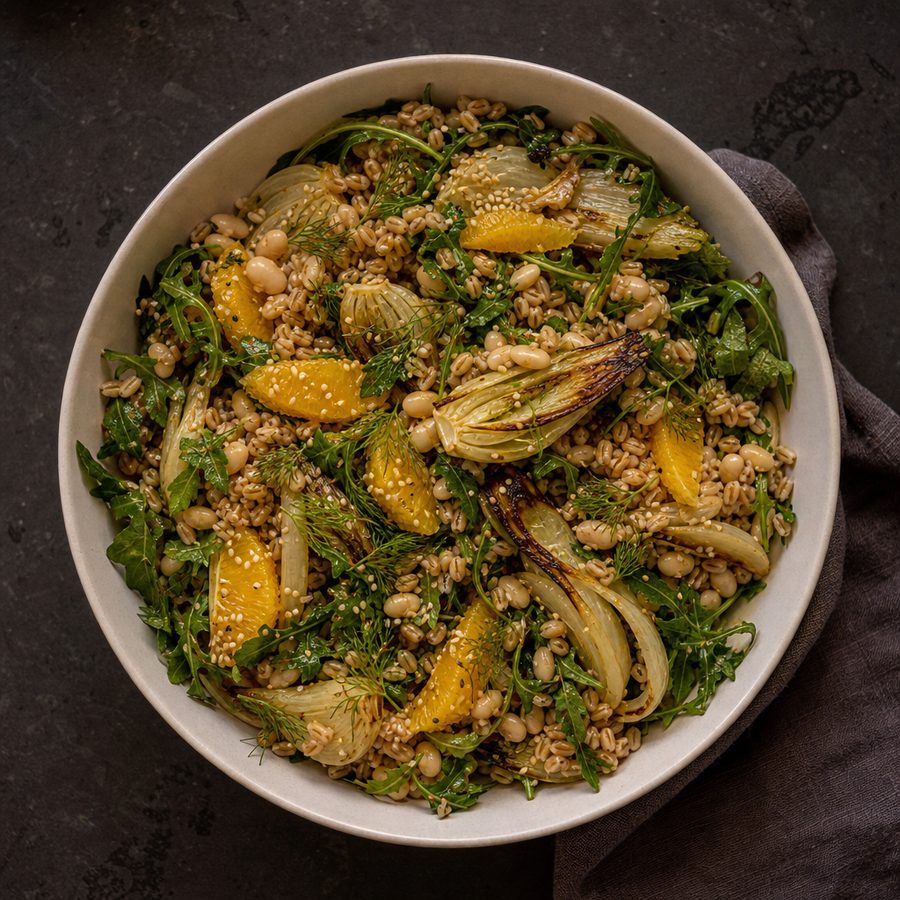
Fennel wedges browned hard in a skillet with shallot and garlic, tossed through warm farro with white beans, orange segments, dill, and arugula that wilts against the heat.
Why You'll Love This Recipe
Lunch assembled out of what is already in the kitchen, and this has become the grain salad I return to most. Farro is the reason. It stays separate and chewy no matter how long it sits in dressing, which means the bowl I pack at noon is still a bowl at one o'clock rather than a soft mound. A bulb of fennel, a couple of oranges, and a can of white beans is the whole shopping list beyond the pantry, and the skillet does the only real work in about fifteen minutes.
The pleasure of it is the temperature contrast. The fennel and the shallot come off the heat still warm, the farro underneath is warm, and then the orange segments and the arugula go in cold and stay that way for a minute or two, so the first few forkfuls give you both at once. Charring fennel changes it completely. The licorice note that people either love or avoid mostly cooks off, leaving a sweetness closer to a roasted onion, and the wedges keep enough structure that you get a bite rather than a collapse.
Weeks where lunch keeps slipping past you are what this is for. It holds beautifully for three days, it travels in a jar without wilting into sadness, and it is just as good at room temperature standing in the kitchen as it is in a bowl at the table. I also serve it as a side at dinner when there is fish, and in that case I double the arugula and let the whole thing go greener. My own rule about grain: cook it once, eat it three ways.
Ingredients
- 2 1/2 cups cooked farro, from about 3/4 cup quick-cooking pearled farro
- 1 large fennel bulb, about 11 oz, cored and cut into 1/2-inch wedges, fronds reserved
- 1 1/4 cups no-salt-added cannellini beans, drained and rinsed well, from one 15 oz can
- 2 navel oranges, peel and pith cut away, segments cut free over a bowl
- 3 packed cups arugula
- 1 large shallot, halved and thinly sliced
- 4 cloves garlic, thinly sliced
- 2 1/2 tbsp olive oil, divided
- 2 tbsp lemon juice, from 1 lemon
- 1 1/2 tbsp sesame seeds
- 1/4 cup fresh dill, chopped, plus the reserved fennel fronds
- 1/3 cup flat-leaf parsley, roughly chopped
- 1/2 tsp coarsely cracked black pepper
- 1/4 tsp fine sea salt
Instructions
- Get the farro warm: If your farro is left from another day, warm it in a covered pan with a splash of water for two minutes so it loosens. If you are cooking it now, simmer 3/4 cup quick-cooking pearled farro in plenty of unsalted water for ten to twelve minutes, until it is tender with a chew at the center, then drain it well and leave it in the colander to steam dry.
- Cut the fennel and segment the oranges: Trim the fennel, halve it through the root, cut out the tough core, and slice each half into wedges about half an inch across at the widest point so they hold together. Pull off the feathery fronds and chop them with the dill. Slice the top and bottom off each orange, cut the peel and white pith away in strips down the sides, then cut the segments free over a bowl and keep whatever juice collects.
- Char the fennel: Heat 1 1/2 tbsp of the olive oil in a wide skillet over medium-high until it shimmers. Lay the fennel wedges flat in a single layer with the salt and leave them completely alone for four to five minutes, until the undersides are dark brown in patches. Turn them, add the shallot, and cook three to four minutes more, until the fennel gives to a knife tip but still has a little resistance.
- Add the garlic and beans: Push the fennel to one side, add the garlic to the bare part of the pan, and stir it for thirty to forty seconds, until it smells sweet and is just turning pale gold. Tip in the drained beans and the cracked pepper, toss everything together, and let it sit for two minutes so the beans pick up some color on the bottom of the pan. Take the skillet off the heat.
- Toss it together: Turn the warm farro into a wide bowl, add the contents of the skillet, the lemon juice, the collected orange juice, and the remaining tablespoon of olive oil, and toss until every grain is glossy. Fold in the orange segments, dill, fennel fronds, and parsley, then add the arugula last and turn it over twice so it half wilts against the warmth. Scatter the sesame seeds over the top and serve warm or at room temperature.
Variations
- Blistered tomato: Add a cup of halved cherry tomatoes to the skillet with the shallot and let them slump and split before the beans go in.
- Green olive and chile: Stir in a pinch of chile flakes with the garlic for a low warm heat that plays against the sweetness of the charred fennel.
- Toasted walnut: Scatter a small handful of toasted chopped walnuts over the finished bowl for a soft crunch alongside the sesame seeds.
- Herbier: Double the dill and the parsley and add torn mint, which pushes the salad toward something closer to a herb salad with grain in it.
Storage & Leftovers
This keeps three days in a sealed container in the refrigerator and is one of the few grain salads that genuinely improves overnight. The farro absorbs the citrus and the pan juices, the fennel softens a little further, and the beans go creamier. The arugula is the only part that suffers, so if you are making it ahead on purpose, hold the greens back and add them by the handful as you serve.
Take it out of the refrigerator twenty minutes before you want to eat, or warm a portion in a skillet over medium heat for two or three minutes with a teaspoon of water. Cold straight from the shelf, the olive oil is thick and the flavors are muted. At room temperature they open right back up, which is how this is meant to be eaten.
I would not freeze it. Farro thaws acceptably on its own, but the orange segments break down into wet threads and the fennel loses the structure that makes the dish worth eating. If you want a head start instead, cook a double batch of farro and refrigerate it plain for up to four days, then the salad is a fifteen minute job.
Notes & Tips
- Leave the core in until the last cut: Fennel wedges hold together in the pan only if a sliver of the root end stays attached. Cut the bulb through the root, trim the core down rather than out, and the layers will not scatter when you turn them.
- Dry the farro before it meets the dressing: A few minutes in the colander lets steam escape, and dry grains take on oil and citrus rather than diluting them. Wet farro gives you a puddle at the bottom of the bowl.
- Rinse the beans until the water runs clear: The liquid in the can is starchy and dulls everything it touches. A proper rinse in a sieve, thirty seconds under the tap, gives you beans that taste of beans.
- Segment the oranges over a bowl: The juice that runs out while you cut is the best part of the dressing, and it costs nothing to catch it. Squeeze the leftover membranes hard before you throw them away.
- Add the greens off the heat: Arugula in a hot pan turns to dark strings in seconds. Folded into the warm salad in the bowl, it goes silky at the edges and stays green everywhere else.
Nutrition & Mindful Eating
- Farro, white beans, fennel, and orange are each doing a separate job here. The grain gives the bowl its chew and most of its fiber, the beans make it substantial, the fennel brings sweetness and bulk, and the citrus keeps the whole thing from tasting heavy.
- Farro is an ancient wheat with a firm, nutty grain that stays distinct in dressing, and it carries a good amount of fiber along with magnesium, which is part of why a bowl of it eats like a real meal rather than a snack.
- Cannellini beans go creamy at the edges where they touch the pan and hold their shape everywhere else. They bring plant protein and soluble fiber, the kind that softens into a gel and slows the whole bowl down.
- Fennel cooked hard loses most of its anise sharpness and turns sweet, and the bulb carries vitamin C and potassium under all that sweetness. The fronds are worth chopping into the salad, since they taste greener and brighter than the bulb ever does.
- Arugula folded in at the end wilts only halfway, and that peppery bite is the last thing you taste in each forkful. It is one of the leafy greens richest in calcium, and the sesame seeds scattered over the top add more of it in a form you can hear when you bite down.
- As you eat, notice how the warm grain and the cold orange arrive together in the same bite, and let that contrast slow you down enough to finish the bowl at the table rather than over the sink.
Frequently Asked Questions
Can I use a different grain?
Yes, though the texture shifts. Barley behaves most like farro and stays chewy for days. Bulgur works and is faster, but it drinks the dressing quickly, so add the lemon in two stages and taste as you go. Couscous is the one I would avoid here, since it goes soft against the warm fennel and the salad loses its separation.
My fennel steamed rather than browning. What went wrong?
Almost always a crowded or underheated pan. The wedges need to sit in contact with hot metal in a single layer, so use a twelve-inch skillet or brown them in two batches. Pat the cut faces dry first, and once they are down, leave them alone. Every time you move them you interrupt the crust that is forming.
Is quick-cooking farro different from regular farro?
It is the same grain, cut or pearled so more of the bran is gone, which is what brings it under twelve minutes. Whole farro takes closer to thirty five and stays chewier. Either is good here, so if you are using the whole kind, cook it the night before and this becomes a fast assembly at noon.
What can I use in place of the arugula?
Watercress is the closest match for that peppery bite, and young kale sliced into thin ribbons works well because it stands up to the warmth without collapsing. Romaine gives you crunch rather than pepper, which is fine, though you will want a little extra lemon to make up the difference.