
Warm Hummus with Spiced Turkey, Almonds, and Toasted Sesame
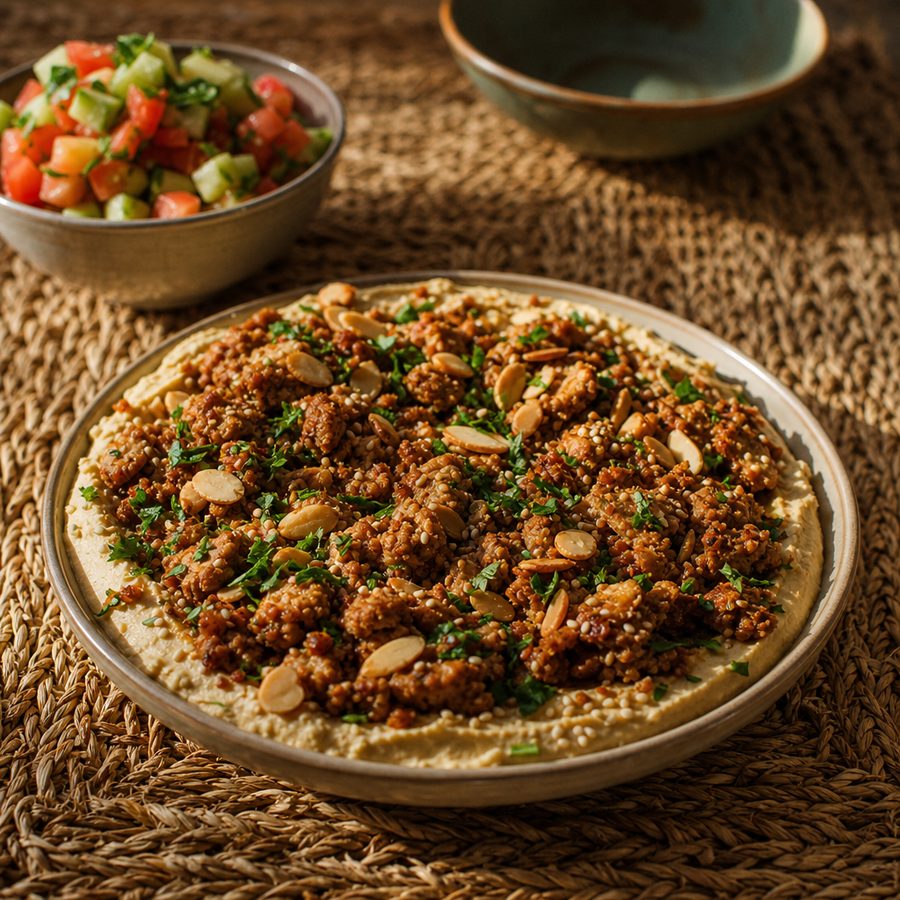
A wide plate of warm hummus spread thick and hollowed at the center, filled with cumin and cinnamon spiced ground turkey, toasted almonds and sesame over the top, and a sharp cucumber and tomato salad alongside.
Why You'll Love This Recipe
Every mezze table has hummus on it, and most of the time it is cold, smooth, and a little polite. This is the other way it gets served across the Levant, warm and spread wide with meat piled into the middle, and it turns a dip into lunch. Warming the chickpeas before they are blended is the whole trick. They break down looser, the tahini goes silkier, and the plate stays warm long enough that the spiced meat and the cold salad both taste like they are supposed to be there. Cold hummus is a dip and warm hummus is a meal, and the distance between them is about ten minutes of simmering.
The topping is where the character comes from. Ground turkey browned hard with cumin, cinnamon, paprika, and a little cayenne tastes far more of the spice than of the bird, and cinnamon in a savory dish is one of those things people cannot place and always ask about. Almonds and sesame toast in the same pan afterward so they pick up what the meat left behind. Then lemon over everything at the end, and a bowl of cucumber and tomato chopped small and dressed sharp, which is what keeps the plate from being one soft note. The nuts and seeds go on last so they stay loud against everything soft underneath them.
I make this when people are coming over at lunchtime and I want one warm thing on the table that does not need timing. It sits happily for twenty minutes, it scales up without any trouble, and everything except the blending can be done ahead. Bread on the side is traditional and welcome. The leftovers become the best sandwich of the week, and cold hummus with the meat stirred through it is not a compromise, it is just a different dish. The whole plate comes together in about half an hour, and most of that is the chickpeas sitting in their pot. What I like best is that it looks generous without costing much, which is a rare combination.
Ingredients
- Three 15 oz cans chickpeas, drained and rinsed (about 4 cups)
- 6 1/2 tbsp well-stirred tahini
- 3/4 lb ground turkey
- 1/4 cup sliced almonds
- 2 tbsp sesame seeds
- 1 medium cucumber, cut into small dice
- 1 1/3 cups cherry tomatoes, quartered
- 3 tbsp fresh lemon juice
- 4 garlic cloves, 2 grated to a paste and 2 minced
- 1 tbsp extra virgin olive oil
- 2 1/4 tsp ground cumin
- 3/4 tsp ground cinnamon
- 1 tsp sweet paprika
- 1/4 tsp cayenne
- 1/2 cup chopped fresh flat-leaf parsley
- 1/8 tsp fine sea salt
Instructions
- Warm the chickpeas: Put the chickpeas in a saucepan with water to cover by an inch and bring them to a gentle simmer for eight to ten minutes, until they are hot through and the skins begin to loosen and float. This is what makes warm hummus taste different from cold, so do not shortcut it. Drain them and reserve a cup of the cooking water.
- Blend the hummus: Put the hot chickpeas, the tahini, the grated garlic, two thirds of the lemon juice, and the salt in a food processor and run it for a full three minutes. It will look grainy for the first minute. Add the reserved cooking water a few tablespoons at a time until it turns pale, glossy, and loose enough to fall from the spatula in a ribbon.
- Brown the turkey and cook it through: Heat half the olive oil in a skillet over medium-high heat, add the turkey, and press it flat. Leave it undisturbed for four minutes so a crust forms, then break it up and cook another four to five minutes, until the crumbles are browned at the edges rather than gray and steaming and no piece is pink inside, which is 165°F for ground turkey. Stir in the cumin, cinnamon, paprika, and cayenne and cook one minute more, until the spices smell toasted.
- Toast the almonds and sesame: Push the meat to one side of the pan, add the almonds and sesame seeds to the empty half, and toast them for two to three minutes, shaking the pan often, until the almonds are golden and the sesame starts to pop. Take the pan off the heat, since both will keep coloring in the residual warmth.
- Dress the salad: Toss the cucumber, tomatoes, minced garlic, half the parsley, and the rest of the lemon juice together in a bowl. Leave it for a few minutes so the tomatoes give up some juice, which becomes the dressing. Keep it cold until the plate goes down.
- Build the plate: Spread the warm hummus across a wide shallow plate and use the back of a spoon to sweep a wide well into the center. Spoon the turkey into the well with all the spiced fat from the pan, scatter on the almonds, sesame, and remaining parsley, and pour the rest of the olive oil over in a thin thread. Serve the salad alongside.
Variations
- Mushroom topping: Brown a pound of sliced mushrooms hard with the same spices in place of the meat, which gives a version with the same depth.
- Pomegranate finish: Scatter pomegranate seeds over the meat for pops of sweet and sour against the warm spice.
- Chile oil: Warm a tablespoon of olive oil with a teaspoon of Aleppo style pepper flakes and pour it over the plate in a spiral just before serving.
- Herb heavy: Fold a handful of chopped mint into the salad along with the parsley for a cooler, greener bowl beside the warm plate.
Storage & Leftovers
The hummus keeps five days in a sealed container in the refrigerator and the meat four, stored separately. Hummus firms up considerably when it is cold, so warm it gently in a pan with a splash of water and whisk it smooth again before serving rather than trying to spread it straight from the container.
Reheat the turkey in a dry skillet over medium heat for three minutes, spread flat and left alone, so the edges crisp again. The microwave heats it evenly but softens the crumbles, and the crisp edges are what stand up against the hummus underneath.
Hummus freezes for three months, which surprises people. Freeze it flat in sealed portions, thaw overnight in the refrigerator, and whisk in a spoonful of water and a squeeze of lemon to bring the texture back. Make the salad fresh, since cucumber turns to water once it has been frozen.
Notes & Tips
- Simmer the chickpeas first: Blending them hot is the single thing that separates this from the tub at the store. Cold chickpeas make a stiff, grainy hummus no matter how long the machine runs.
- Let the processor run longer than feels right: Three minutes, timed. Most people stop at forty seconds, which is exactly where hummus is grainy and dull, and the texture changes completely in the last minute.
- Press the turkey flat and leave it: Meat stirred from the moment it hits the pan steams and goes gray. Four still minutes give you the browned crust that carries the spice.
- Add the spices to the pan, not the bowl: A minute in the hot fat blooms them. Stirred in cold at the end they taste dusty and sit on the surface of the meat.
- Serve it warm, not hot: Straight off the burner, the meat is too hot to taste and the salad wilts against it. A couple of minutes on the counter is the right temperature for the whole plate.
Nutrition & Mindful Eating
- Chickpeas, tahini, and the browned turkey on top do three different jobs. The chickpeas bring fiber and slow carbohydrate, the tahini adds fat and calcium that carry through every spoonful, and the meat lands a dense amount of protein in the middle of the plate.
- Tahini is sesame ground to a paste and almost nothing else, which is why it brings so much calcium along with copper and magnesium. It is also what makes hummus taste savory rather than simply of beans.
- Chickpeas hold their shape and their soluble fiber even after simmering, and they carry folate and iron. The lemon juice going in with them helps your body take up more of that iron, which is a good reason to be generous with it.
- Cumin, cinnamon, paprika, and cayenne bloom in the hot pan for a full minute, and that is where the smell that fills the kitchen comes from. Cinnamon in a savory dish is the note nobody can name, and it is what makes this taste of the Levant rather than of a spice rack.
- Almonds and sesame toasted together are the only crunch on a soft plate, and between them they add vitamin E, more calcium, and enough fat to make a spoonful of hummus and meat sit properly.
- As you eat, alternate a spoonful of the warm spiced plate with a forkful of the cold salad and notice how differently each one lands, and let the plate be lunch rather than something eaten over a keyboard.
Frequently Asked Questions
Do I need to peel the chickpeas?
Not if you simmer them first. Heating them until the skins loosen does most of the work of peeling, and three full minutes in the processor takes care of the rest. If you want the glassy smooth version served in Beirut, slip the skins off while the chickpeas are warm and add ten minutes to your prep.
Can I use lamb or beef?
Yes, and lamb is what most cooks would reach for. Use the same weight, brown it the same way, and pour off some of the fat before the spices go in if the pan looks flooded. Turkey takes the spicing well and keeps the plate from tipping into something very rich.
My hummus is thick and pasty. What now?
Add more of the chickpea cooking water and keep the machine running. Hummus takes far more liquid than seems reasonable, and the texture you are after is looser than what most people stop at, closer to a thick sauce than a spread. It also thickens as it cools, so err loose.
What goes with this?
Warm flatbread is the traditional answer and it is hard to improve on. Beyond that, a plate of olives, some pickled turnips or cucumbers, and a pot of tea. If you are feeding more people, the same plate scales up simply and looks like far more effort than it was.