
Whole Wheat Pasta with Shrimp, Blistered Tomatoes, and Charred Kale
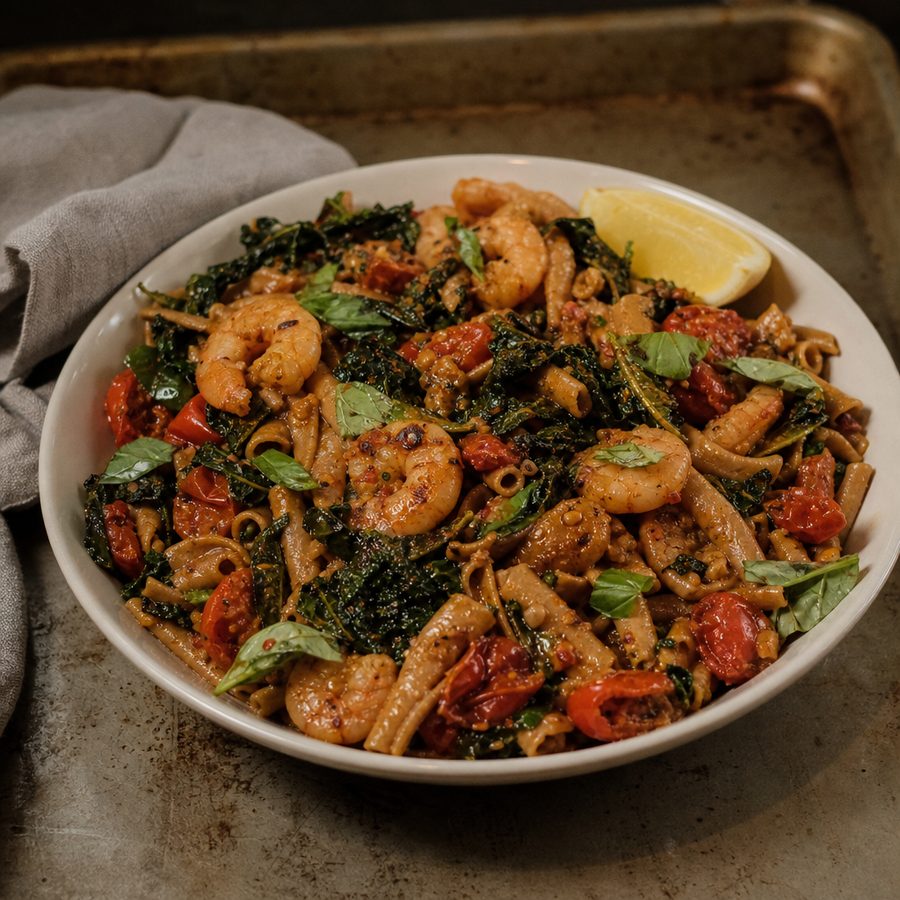
Cherry tomatoes burst into a loose pan sauce with garlic and cayenne, kale goes crisp and dark at the edges, and a handful of shrimp finishes on top of the pasta.
Why You'll Love This Recipe
A bag of kale going soft in the drawer, and half a bag of pasta in the cupboard. If you are trying to get more vegetables onto the table without announcing it, this is how: the vegetables are the meal here and the pasta and shrimp are the two things holding the bowl together, which is the opposite of how most pasta gets cooked in this country. A pound of tomatoes and a whole bunch of kale go into one skillet, and the pasta that joins them is enough to twirl but never enough to bury anything. Twenty minutes from a cold pan, and one pot plus one skillet to wash.
The eating is bright and a little rough in a way I like. Blistered tomatoes give up their juice and thicken with the starchy pasta water into a loose sauce that clings rather than pools, so every strand carries some of it. The kale is the surprise: torn big and left alone in hot oil, it crisps at the edges and stays chewy in the ribs, and those two textures against soft pasta are most of the pleasure here. Shrimp cook in ninety seconds and come out sweet and firm, lemon goes over at the table, and the cayenne sits underneath it all as warmth rather than heat.
This belongs on a weeknight in late summer, when tomatoes are cheap and good, though a winter pint of cherry tomatoes blisters well enough to make it worth cooking in February. It reheats better than most pasta because the kale keeps its body, and it is just as good at room temperature the next day with more lemon. When I want it to feel like a bigger dinner I add another handful of kale rather than more noodles, and the bowl still eats like a full plate.
Ingredients
- 5 oz whole wheat spaghetti or linguine (about 4 cups cooked)
- 6 oz large shrimp, peeled and deveined, tails removed
- 1 large bunch curly kale (about 10 oz), stemmed and torn into wide ribbons
- 1 1/2 pints cherry tomatoes
- 6 garlic cloves, thinly sliced
- 3 tbsp olive oil
- Juice of 1 lemon (about 2 1/2 tbsp), plus wedges to serve
- 1/2 cup fresh basil leaves, torn
- 1/4 tsp cayenne, or to taste
- 1/2 tsp coarsely ground black pepper
- Scant 1/4 tsp fine sea salt
Instructions
- Get the pasta going: Bring a large pot of water to a rolling boil and cook the spaghetti to just under the package time, about a minute shy of tender. Before you drain it, dip a mug into the pot and save a cup and a half of the starchy water. That water is the sauce, so do not skip it. Drain and leave the pasta in the colander.
- Blister the tomatoes: Set a wide skillet over medium-high with 2 tbsp of the olive oil. Add the cherry tomatoes in one layer and leave them completely alone for three to four minutes, until the undersides brown and a few start to hiss and split. Shake the pan once and cook two minutes more, pressing the softest ones with the back of a spoon so they collapse into juice.
- Add the garlic and pepper: Push the tomatoes to one side, add the last tablespoon of oil and the sliced garlic to the clear space, and cook for forty five seconds until the slices turn pale gold at the edges and smell sweet. Stir in the cayenne and the black pepper, then fold everything together so the garlic disappears into the tomatoes.
- Char the kale: Add the kale ribbons a handful at a time, pressing each one flat into the pan before adding the next. Let them sit for a minute between additions so the leaves blacken at the frills rather than steam. Once it is all in, cook three to four minutes, tossing twice, until the ribbons are glossy, deep green, and crisp at the edges with a little bite left in the ribs.
- Cook the shrimp: Pat the shrimp dry, scatter them over the vegetables with the salt, and cook for a minute on each side. They are done the moment they turn opaque and curl into a loose C. A tight O means they went a minute too far, so pull the pan early and let the residual heat finish them.
- Bring it together: Add the drained pasta and half a cup of the reserved water and toss hard for a minute over medium heat, adding more water a splash at a time until the sauce loosens and coats the strands rather than sitting at the bottom of the pan. Off the heat, add the lemon juice and the torn basil, toss once, and serve with wedges.
Variations
- Bay scallops: Swap the shrimp for small bay scallops, patted very dry and seared thirty seconds a side. They are sweeter and go from perfect to bouncy faster, so watch the pan.
- Zucchini and basil: Add a diced zucchini with the tomatoes and let it brown before the kale goes in. It softens into the sauce and makes the bowl heavier without more pasta.
- Herb-heavy: Trade the basil for a big handful of chopped parsley and a little fresh dill, stirred in off the heat. It pushes the bowl greener and sharper.
- Ricotta finish: Spoon a tablespoon of ricotta onto each bowl and let it melt into the hot pasta for a creamier version.
Storage & Leftovers
Leftovers keep three days in a sealed container in the refrigerator. The kale is what makes this a good leftover, since the ribbons hold their chew where a softer green would go to threads overnight, and the tomato sauce settles into the pasta rather than separating.
Reheat in a skillet over medium with a splash of water, tossing for two or three minutes until the sauce loosens again. The microwave works but the pasta tightens, so add a tablespoon of water before it goes in and stir halfway through. A fresh squeeze of lemon at the end brings the whole bowl back.
I would not freeze this one. Cooked pasta turns pasty on thawing and the shrimp go rubbery. If you want to get ahead, blister the tomatoes and char the kale up to two days early, refrigerate them together, and cook fresh pasta and shrimp when you want to eat.
Notes & Tips
- Save more pasta water than you think: A cup and a half sounds like too much and it never is. The starch in that water is what turns tomato juice and oil into a sauce that grips, and you can always pour the rest down the drain.
- Undercook the pasta by a minute: It finishes in the skillet, soaking up tomato juice while it goes. Pasta boiled to tender in plain water and then tossed in sauce is pasta that never tastes of anything but itself.
- Tear the kale big: Pieces the size of your palm are right. Small pieces have too much edge and go from charred to bitter in seconds, while big ribbons blacken at the frills and stay tender in the middle.
- Dry the shrimp: Two minutes on a towel is the difference between shrimp that sear and shrimp that poach. This matters more than the temperature of the pan.
- Lemon goes in off the heat: Boiled lemon juice turns flat and slightly bitter. Added once the burner is off, it stays sharp and lifts the sweetness out of the tomatoes.
Nutrition & Mindful Eating
- The kale, the tomatoes, and the pasta do three different jobs in one skillet. The kale brings bulk and chew along with a good amount of calcium for a green, the tomatoes give up their juice and become the sauce, and the pasta carries fiber from the whole grain and keeps the bowl from feeling like a side dish.
- Kale cooked hard and fast this way keeps most of its structure, and with it the vitamin K and vitamin C that a long braise would soften away. A bunch this size also puts a real amount of calcium into a bowl with no cheese in it.
- Shrimp are firm, sweet, and quick, and a small amount goes a long way in a dish like this. They carry protein and selenium, and because they cook in ninety seconds they stay tender rather than tightening the way they do in a stew.
- Cherry tomatoes cooked until they burst release lycopene more readily than raw ones do, and the olive oil in the pan is what carries it. That is a happy accident of a technique chosen for flavor.
- Garlic sliced rather than crushed goes sweet and mellow in the oil, and it feeds the bacteria in your gut on the way through. Cayenne warms the back of the bowl, cracked black pepper gives it a rougher edge, and lemon squeezed in off the heat pulls all three together.
- As you eat, look for the crisped black edges on the kale and the tomato skins that curled back from the heat, and slow down enough between forkfuls to notice when the bowl has actually been enough.
Frequently Asked Questions
Can I use frozen shrimp?
That is what I use most of the time. Thaw them in a bowl of cold water for ten minutes, then dry them thoroughly on a towel, because shrimp that go into the pan wet will steam and turn gray. Buy them raw rather than precooked, since precooked shrimp only get tougher when they meet heat again.
My tomatoes never blistered, they just went watery. Why?
The pan was not hot enough or it was too crowded. You want the skillet ripping hot before the tomatoes go in and enough space that each one touches metal. If your largest skillet is ten inches, blister the tomatoes in two batches and it will work perfectly.
Does the type of kale matter?
Curly kale crisps best and is what I build this around. Lacinato, the flat dark kind, goes silky rather than crisp and is very good here in a different way. Whichever you buy, strip the leaves off the ribs with your hand and tear them big, since small pieces burn before they char.
Can I make it with a different shape of pasta?
Yes, though long strands catch this sauce best. If you use short shapes, choose something with ridges or a hollow, like penne rigate or shells, and hold back a little more pasta water since short shapes soak it up faster.