
Wilted Romaine and Apple Salad with Crisped Duck
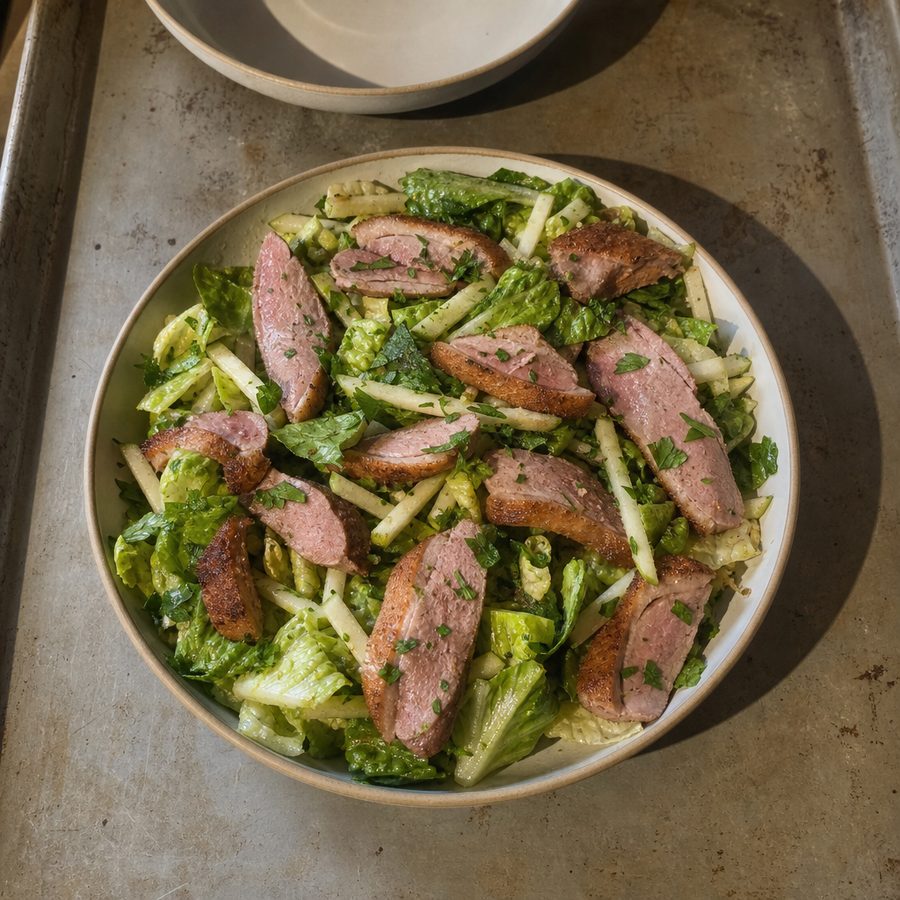
Duck breasts rendered until the skin is crisp, sliced rosy over torn romaine and matchsticks of raw tart apple, with the hot duck fat and cider vinegar poured over as the dressing.
Why You'll Love This Recipe
Hot and savory wins on a morning that cannot face another skillet of meat and cubed sweet potato. Wilted lettuce is an old country trick, and it was a breakfast long before anyone turned it into a side dish. The fat comes out of the duck skin while you tear the romaine, and when it goes over the leaves half of them collapse while the pale ribs stay crisp. If you have been working through a rotation of hashes for a few weeks, the crunch of a raw apple first thing in the morning will feel like a different life entirely.
Two things decide whether this works. The first is the duck skin. Score it in a crosshatch, lay it in a cold dry pan, and turn the heat to medium-low, because skin that starts cold gives up its fat slowly and ends up thin and crisp, while skin dropped into a hot pan seizes and stays rubbery. Ten minutes, and you will have most of a quarter cup of clear fat. The second is heat at the finish. Stir the vinegar into that hot fat off the burner, pour it over the bowl in one go, and toss for about five seconds. Any longer and the romaine keeps cooking itself into something limp.
The apple is the sweetness in this salad. Cut into matchsticks and tossed in lemon juice so it stays pale, a tart apple keeps its cold snap right through the hot dressing and picks up the cider vinegar as though the two were made for each other, which in a way they were. Duck breast is dark meat and it wants to come off the heat at medium rare with the center still rosy, so pull it at 135°F (57°C) and rest it a full five minutes, or the juices end up on the board rather than in the salad. Sliced thin across the grain over the warm leaves, it makes this a real plate of food rather than a bowl of greens.
Ingredients
- 2 boneless duck breasts, skin on (about 1 1/2 lb total)
- 2 large romaine hearts (about 1 lb), torn into wide pieces
- 1 large tart apple (about 7 oz), cored and cut into matchsticks
- 1 large shallot, sliced paper thin
- 3 tbsp apple cider vinegar
- 1 tbsp fresh lemon juice, plus the zest of 1 lemon
- 1 tsp fresh thyme leaves
- 3 tbsp chopped fresh parsley
- 3/4 tsp fine sea salt, divided
Instructions
- Get the salad ready first: Tear the romaine into wide pieces into a large bowl and dry it thoroughly, since wet leaves repel the fat. Core the apple and cut it into matchsticks, toss them with the lemon juice so they stay pale, and slice the shallot paper thin. The dressing goes on hot, so there is no time to prep once you start.
- Score and render the duck: Pat the breasts very dry and score the skin in a crosshatch about a quarter inch apart, cutting through the fat but not into the meat. Season with half the salt. Lay them skin down in a cold dry skillet, set the heat to medium-low, and render for 10 to 12 minutes, pouring off the fat into a heatproof cup as it collects. You want about 1/4 cup saved.
- Finish and rest the duck: When the skin is thin, deep brown, and crisp, raise the heat to medium, flip the breasts, and cook 3 to 4 minutes more, until the thickest part reads 135°F (57°C). Move them to a board skin side up and let them rest at least 5 minutes while you make the dressing.
- Build the dressing in the pan: Wipe the skillet, return 1/4 cup of the reserved duck fat to it, and set it over low heat. Add the shallot and thyme and cook 1 minute, just until the shallot softens. Take the pan off the burner and stir in the cider vinegar and the remaining salt. It will spit for a second.
- Dress and toss: Put the pan back on the heat for 15 seconds so the dressing is genuinely hot and sizzling, then pour it over the romaine in one motion. Toss for about 5 seconds, no longer, then add the apple with its lemon juice, the lemon zest, and the parsley and toss once more.
- Slice and serve: Slice the duck thin across the grain and lay it over the salad, then pour any juices from the board over the top. Divide among four shallow bowls and eat while the leaves are still warm at the edges and the apple is still cold.
Variations
- Bitter leaves: Swap half the romaine for sliced endive or radicchio when you want the bitterness to push back against the fat.
- Dill and lemon: Use fresh dill in place of the thyme and lemon juice in place of the cider vinegar for a softer, greener dressing.
- Sirloin version: Sear a sirloin steak in place of the duck, then build the dressing from the beef drippings with a tablespoon of olive oil added.
- Sharper fruit: Use a firm underripe pear or a handful of halved grapes in place of the apple when you want less acidity.
- Roasted beets alongside: Roast beet wedges the night before and warm them in the duck fat before you build the dressing.
Storage & Leftovers
A dressed salad does not hold, so store the parts separately. Sliced duck keeps in a sealed container in the refrigerator for 3 days, and leftover dressing keeps in a small jar for a week. Torn romaine holds 2 days in a bag with a paper towel, and apple browns within an hour once it is cut, so cut it fresh each morning.
The duck fat dressing sets solid and pale in the cold, which is normal. Warm it in a small skillet over low heat until it loosens and sizzles again, then pour it straight over fresh leaves. Duck reheats poorly, so eat leftover slices cold on the warm salad or give them 30 seconds in the pan.
Cooked duck freezes for 2 months but the skin goes soft on thawing, so freeze only the meat and plan to eat it cold. Rendered duck fat is the real prize here. Strain it into a jar, keep it in the refrigerator for months, and use it for roasting roots on another morning.
Notes & Tips
- Dry the lettuce completely: Water and hot fat do not mix, and damp leaves give you a diluted dressing that pools in the bottom of the bowl.
- Tear, do not chop: Torn romaine holds dressing in its folds and the edges stay pale, while knife-cut lettuce browns at the cuts within an hour.
- Start the duck in a cold pan: This is the whole technique. A cold start melts the fat out slowly and leaves the skin thin and brittle rather than tough.
- Pour off the fat as it renders: Skin sitting in a deep pool of its own fat fries rather than renders, and you lose the crackle you were working toward.
- Cut the apple last: Matchsticks brown fast, so cut them just before you cook and toss them straight into the lemon juice to keep them pale.
- Rest the duck properly: Five minutes minimum on a board, skin side up so it stays crisp. Cutting early sends the juices onto the cutting board rather than into the salad.
Nutrition & Mindful Eating
- The duck, the romaine, and the cider vinegar make this work between them. The meat and its fat give the bowl richness and substance, the lettuce brings water and crunch, and the vinegar cuts across both so nothing sits heavy first thing in the morning.
- Duck breast is dark, close-grained meat with a deeper flavor than most poultry, and it carries iron, zinc, and B vitamins along with the fat that dresses this entire salad.
- Romaine is the sturdiest of the salad lettuces, with a thick pale rib that keeps its crunch even under hot fat, and it brings folate, vitamin A, and a good deal of water to the plate.
- Apple cut raw into matchsticks stays cold and crisp even under a hot dressing, and it brings its own sweetness, along with the fiber that sits mostly in the skin, which is a good reason to leave the skin on.
- Cider vinegar goes into the hot fat off the burner, where the acid stays sharp rather than turning flat, and lemon zest lands at the very end. That brightness against rendered fat is what makes a bowl of lettuce eat like breakfast.
- As you eat, notice that the leaves are hot at their edges and still cool at the ribs, and let the sharpness of the vinegar slow you down enough to finish the bowl sitting rather than standing.
Frequently Asked Questions
Can I use a different lettuce?
Use something with structure. Romaine, escarole, endive, and radicchio all take hot fat and stay partly crisp. Butter lettuce, spring mix, and baby spinach collapse completely and turn slick within seconds, so save those for a cold salad.
My duck skin came out rubbery. What went wrong?
Almost always the pan was hot when the duck went in, or the skin was damp, or the rendered fat was left to pool. Start cold and dry, keep the heat at medium-low, and pour the fat off as it collects so the skin roasts rather than fries in a puddle.
Can I do part of this the night before?
Yes. Render and cook the duck the night before, refrigerate the meat whole rather than sliced, and keep the fat in a jar. In the morning you warm the fat, make the dressing, toss the salad, and slice the cold duck over it, which takes about 6 minutes.
Does this work for an AIP elimination phase?
It does. The seasoning is salt, thyme, shallot, cider vinegar, and lemon, with no grains, dairy, eggs, nuts, seeds, or nightshades anywhere in it. Duck skin is rich, so if fat sits heavily with you, render more of it off and use a little less in the dressing.