
Amaranth Fig Breakfast Porridge
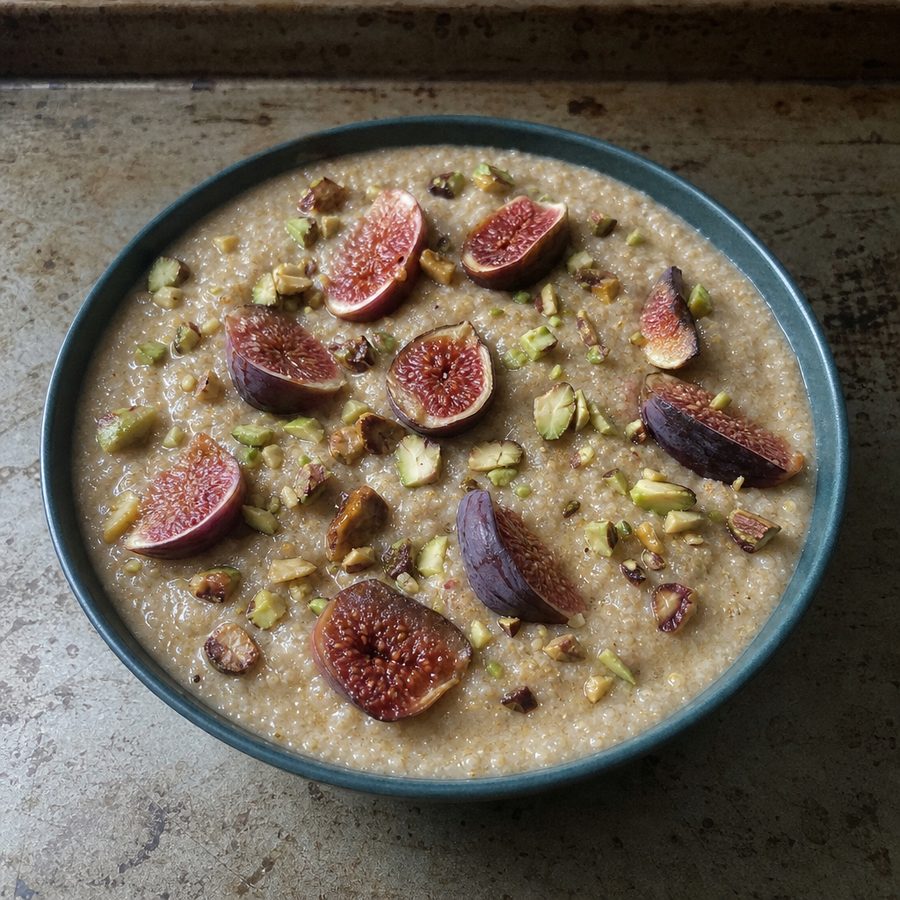
A warm, spoonably creamy amaranth porridge simmered in coconut milk and cinnamon, sweetened with maple syrup, and finished with jammy halved figs and crunchy pistachios.
Why You'll Love This Recipe
This is a slow, comforting breakfast for anyone who wants something warm and filling that still leans on plants. Amaranth is a tiny gluten-free seed that cooks into a soft, almost pudding-like porridge, making it a gentle base for people who find oats repetitive or who simply want more variety in the morning bowl. It suits a quiet weekday breakfast just as well as a slower weekend one.
The magic is in how amaranth releases its starch. As the tiny grains simmer, they thicken the surrounding liquid into a natural cream, so the coconut milk turns the whole pot silky without any thickener or straining. Cinnamon and a small amount of maple syrup keep the sweetness restrained and let the fruit lead, while fresh figs bring a jammy, honeyed softness that plays against the chew of the seeds and the snap of pistachios.
It satisfies because it works on texture as much as on flavor: creamy porridge, tender fig, crisp nut, all in the same spoonful. The grain and the coconut milk together give it staying power so you are not hungry an hour later, the figs add sweetness and fiber, and the pistachios bring a savory, buttery contrast that keeps it from reading as dessert. Amaranth is also a complete protein, which is unusual in a grain and worth knowing if breakfast is where protein tends to go missing.
Ingredients
- 4 cups cooked amaranth
- 6 fresh figs, halved
- 1/2 cup shelled pistachios
- 1 1/2 cups coconut milk
- 2 tbsp maple syrup
- 1 1/2 tsp cinnamon
- 1/4 tsp salt
Instructions
- Start with cooked amaranth: This wants four cups of cooked amaranth. From dry, that is about a cup and a third rinsed in a fine-mesh sieve and simmered covered in three times its volume of water for 20 to 25 minutes, until the grains are tender and most of the water is gone. Rinse it properly, because amaranth carries a faint bitterness on the outside of the seed in the same way quinoa does, and cooked amaranth from earlier in the week works just as well here.
- Halve the figs and chop the pistachios: While the pan comes up to heat, halve the fresh figs lengthwise through the stem, so the cut face shows the seeds and the pink center rather than a flat side of skin. Roughly chop the pistachios; a coarse chop keeps enough size in the pieces to snap against a soft porridge, where finely chopped nuts would disappear into it.
- Simmer with the coconut milk, about 6 minutes: Add the coconut milk, cinnamon, and salt to the amaranth and cook over medium-low heat for about 6 minutes, stirring often so the bottom does not catch, until the porridge is thick, glossy, and creamy. The stirring is what makes it creamy rather than merely wet, because amaranth releases its starch into the liquid as it is worked and that starch is the only thickener in the pot.
- Sweeten off the heat: Take the pan off the burner and stir in the maple syrup until it is fully blended through. Off the heat is deliberate: maple held at a simmer loses the smoky, floral part of its flavor within a minute or two and leaves plain sweetness behind. Taste, and add a pinch more cinnamon if you want it warmer.
- Top with figs cut side up: Divide the warm porridge among bowls, arrange the halved figs on top with the cut sides facing up, and scatter the pistachios over them. Cut side up is not only for looks: it keeps the soft, jammy face out of the hot porridge, so the figs stay fresh and cool against it rather than collapsing into the bowl. Serve right away, while it is still creamy.
Variations
- Dried fig version: When fresh figs are out of season, use chopped dried figs. Simmer them into the porridge for the last few minutes so they plump and soften, giving a deeper, more caramel-like sweetness.
- Berry swap: Trade the figs for fresh raspberries or sliced strawberries for a tart, brighter bowl. Their acidity cuts the richness of the coconut milk nicely.
- Chocolate-cinnamon: Stir a spoonful of unsweetened cocoa powder into the porridge with the cinnamon for a warm, chocolatey base that still lets the figs shine on top.
- Extra crunch: Swap the pistachios for chopped toasted almonds or walnuts, or add a handful of pumpkin seeds. This changes which nut is present but keeps the crisp topping.
- Citrus lift: Add a little grated orange zest with the maple syrup. The bright citrus oil brings out the honeyed flavor of the figs without adding sweetness.
Storage & Leftovers
Store leftover porridge in an airtight container in the refrigerator for up to four days. Keep the figs and pistachios separate if you can, since the figs soften and the nuts lose their crunch once they sit in the warm porridge.
Reheat gently in a saucepan over low heat or in the microwave in short bursts, stirring between each. Amaranth thickens considerably as it cools, so loosen it with a splash of coconut milk or water until it returns to a creamy, spoonable consistency, then add fresh figs and pistachios just before serving.
To get ahead, cook the amaranth and simmer it with the coconut milk, cinnamon, and salt in advance and refrigerate the plain porridge. In the morning, warm it, stir in the maple syrup, and top with fresh figs and pistachios so the finish still tastes bright and just-made.
Notes & Tips
- Rinse the amaranth: Give the tiny seeds a quick rinse in a fine-mesh sieve before cooking. It washes away any dusty, faintly bitter coating and gives the finished porridge a cleaner, sweeter taste.
- Stir to stay creamy: Amaranth wants to settle and stick to the bottom of the pot. Stir it often during both simmers and keep the heat at a low bubble so it turns silky instead of scorching.
- Pick ripe figs: Choose figs that feel soft and yield gently to a light squeeze, with a slight bend at the stem. Hard figs never turn jammy and taste flat; ripe ones are floral and honey-sweet.
- Toast the pistachios: For deeper flavor, warm the chopped pistachios in a dry skillet over medium heat for a couple of minutes until fragrant. Optional, but it makes the nutty topping more pronounced.
- Adjust the sweetness: Ripe figs and maple syrup do a lot of the work, so taste before adding more syrup. If your figs are very sweet, you may want to hold back; if they are underripe, a little extra maple balances the bowl.
- Full-fat for richness: Canned full-fat coconut milk gives the creamiest, most luxurious porridge. A carton coconut milk will still work but yields a thinner, less rich result.
Nutrition & Mindful Eating
- The amaranth, the figs and the pistachios build this bowl in layers. The grain goes creamy and mild, the figs turn jammy in the heat, and the pistachios stay crisp on top, so no two spoonfuls feel quite the same.
- Amaranth is a tiny grain that never entirely loses its texture, staying slightly poppy inside all that cream. It is one of the few plant foods carrying a complete set of amino acids, and it brings magnesium and iron along with them.
- Figs soften into the pot and go almost jammy, releasing a honeyed sweetness that runs through the whole bowl. Their skins and seeds are where the fiber sits, and they are one of the better plant sources of calcium.
- Pistachios go on at the end so they stay crisp against the soft grain, and their green against the pale porridge is half the reason the bowl looks worth eating. The fat and protein in them are what make a spoonful feel substantial.
- Coconut milk and cinnamon are what make this taste rich rather than plain. The milk gives the grain a rounded, faintly sweet body, and the cinnamon rises as steam the moment you stir, which is usually when people decide they are hungry.
- As you eat, let the steam and the cinnamon reach you first, then find the pockets where fig has melted into the grain, and pause somewhere in the middle of the bowl to notice how full you already are.
Frequently Asked Questions
Do I have to use fresh figs, or can I use dried?
Both work. Fresh figs give a soft, jammy top and mild sweetness. Dried figs are chewier and more concentrated, so chop them and simmer them into the porridge for the last few minutes to soften and plump them.
My porridge turned out gluey and too thick. What happened?
Amaranth thickens fast and keeps thickening as it cools. Simmer over low heat, and if it stiffens, stir in a splash of coconut milk or water to loosen it back to a creamy, spoonable texture.
Can I make this less sweet?
Yes. The maple syrup is stirred in at the end, so taste the porridge first and add it gradually. Ripe figs bring their own sweetness, so you may find you need very little.
What can I use instead of coconut milk?
Any unsweetened plant milk works, though the porridge will be less rich. For the creamiest result, full-fat coconut milk is best; a lighter plant milk gives a thinner, more everyday bowl.