
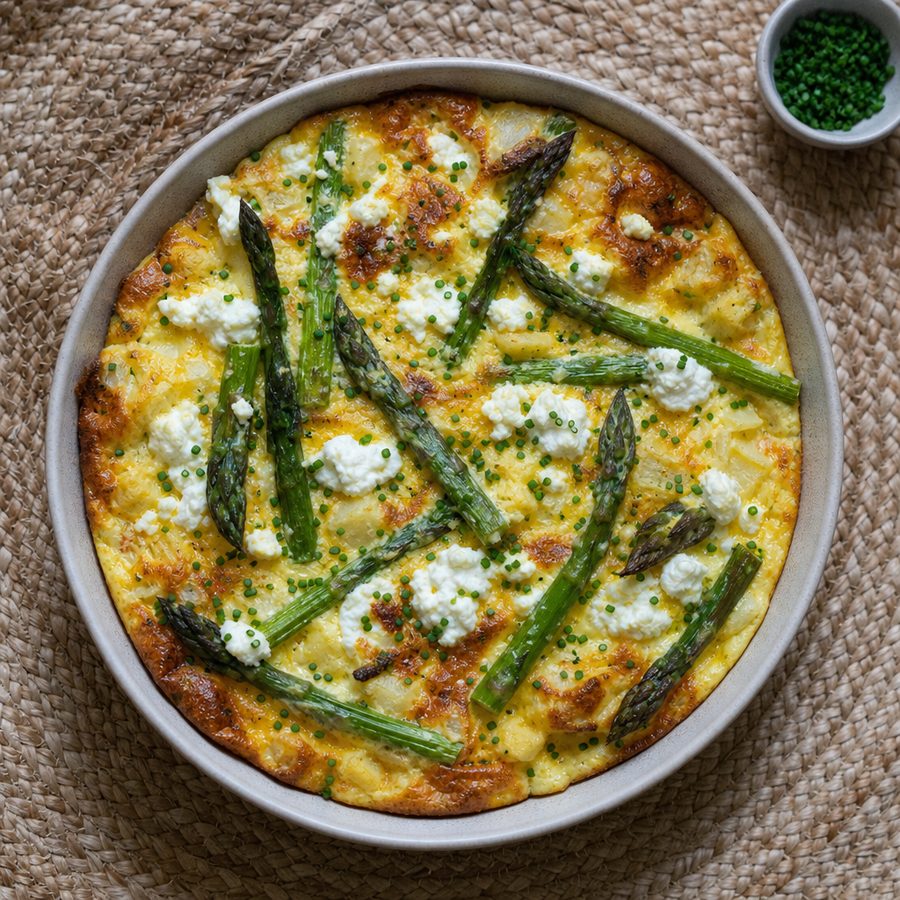
Asparagus and Goat Cheese Frittata
Tender asparagus and sliced shallot folded into whisked eggs, baked until just set and dotted with creamy goat cheese and fresh chives for a soft, savory frittata.
Why You'll Love This Recipe
This is a soft, savory baked egg dish built around spring asparagus and tangy goat cheese, and it suits anyone who wants a warm, protein-rich start to the day without much fuss. It comes together in a single oven-safe skillet, holds well for a few days, and is just as welcome at a slow weekend brunch as it is sliced and eaten on a rushed morning.
The vegetables are cooked before the eggs ever meet them. Sautéing the asparagus and shallot first drives off some moisture and coaxes out sweetness, so the vegetables land in the eggs already crisp-tender rather than watery and raw. Starting the eggs on the stovetop sets the bottom and edges, then finishing in a moderate oven cooks the custard through gently and evenly, which keeps the texture tender instead of rubbery. Dotting the goat cheese on top rather than stirring it in leaves creamy, tangy pockets against the mild egg.
It satisfies because the eggs and cheese bring real staying power, while the asparagus adds fiber, freshness, and a little bite so the dish never feels heavy. The olive oil carries the flavor and adds a smooth richness, and the chives and shallot layer in a gentle savory-onion note. It is filling without being dense, and it eats well warm from the oven or cool from the fridge.
Ingredients
- 8 large eggs
- 1 bunch asparagus, cut into 1-inch pieces
- 3 1/2 oz goat cheese, crumbled
- 1 large shallot, thinly sliced
- 2 tbsp chopped chives
- 2 tbsp olive oil
- 3/4 tsp salt
Instructions
- Preheat and prep: Preheat the oven to 375°F (190°C). Rinse the asparagus and snap off the tough woody ends, since the point where a spear snaps is where it stops being fibrous. Cut the spears into 1-inch pieces. Peel the shallot and slice it thinly. Finely chop the chives and set them aside.
- Cook the asparagus and shallot: Warm the olive oil in an oven-safe skillet over medium heat. Add the sliced shallot and the asparagus and saute, stirring occasionally, for about 5 minutes, until the asparagus is bright green and crisp-tender and the shallot is softened and translucent.
- Whisk and add the eggs: Crack the eggs into a bowl, add the salt and most of the chopped chives, and whisk until the yolks and whites are fully blended and slightly frothy. Pour the eggs evenly over the asparagus and shallot in the skillet, then crumble the goat cheese and dot it across the top. Let the frittata cook undisturbed on the stovetop for about 3 minutes, until the edges begin to set, so the bottom is firm before the pan goes into the oven.
- Bake until set: Transfer the skillet to the oven and bake for 12 to 14 minutes, until the center is just set and no longer jiggly when you gently shake the pan and the top is lightly puffed. Use an oven mitt for the handle, and leave the mitt sitting on it once the pan comes out, because a skillet handle straight from a 375°F oven looks exactly like a cool one.
- Rest and serve: Let the frittata rest in the pan for 5 minutes so it firms up and releases cleanly. Sprinkle with the remaining chopped chives, then slice it into wedges and serve warm or at room temperature.
Variations
- Herb swap: Trade the chives for chopped fresh dill or tarragon to give the eggs a brighter, more aromatic edge that pairs naturally with asparagus.
- Green onion base: Use thinly sliced green onions in place of the shallot for a sharper, fresher onion flavor and a faster prep with no peeling.
- Feta finish: Swap the goat cheese for crumbled feta for a saltier, firmer tang; this keeps the dish based on dairy but changes the character of the cheese.
- Pepper and spice: Whisk a pinch of black pepper and a little red pepper flake into the eggs for gentle warmth against the creamy cheese.
- Extra greens: Fold a handful of baby spinach or arugula into the pan with the asparagus and let it wilt before adding the eggs for more vegetables and color.
Storage & Leftovers
Store leftover frittata in an airtight container in the refrigerator for up to 4 days. Let it cool to room temperature before covering so condensation does not collect and soften the eggs.
To reheat, warm individual wedges in a 300°F (150°C) oven or toaster oven for about 8 to 10 minutes until heated through, which keeps the texture better than a microwave. If you are in a hurry, a microwave on medium power in short bursts works, though the eggs firm up a little more.
To get ahead, prep the vegetables the night before: cut the asparagus, slice the shallot, and chop the chives, then store them covered in the fridge so the morning is just whisk, pour, and bake. The whole frittata can also be baked a day ahead and served cold or gently rewarmed.
Notes & Tips
- Pick the right asparagus: Choose medium spears with tight, closed tips; very thick spears take longer to soften, so slice them a touch thinner if that is what you have.
- Chill the goat cheese: Cold goat cheese crumbles into neat pieces, while soft room-temperature cheese smears; keep it in the fridge until the moment you dot it on.
- Use a truly oven-safe pan: A cast-iron or all-metal skillet moves from stovetop to oven safely; if your handle is plastic or wood, wrap it in foil or transfer the eggs to a baking dish before baking.
- Judge doneness by the jiggle: The frittata is ready when the center no longer wobbles like liquid but still looks moist; a gentle shake of the pan is the clearest cue that it is set.
- Season the eggs, taste the cheese: Goat cheese is already tangy and salty, so add the salt to the eggs but hold back a little if you love a milder finish, then adjust once you taste a wedge.
- Round out the plate: Serve wedges with a simple green salad or sliced tomatoes to turn the frittata into a fuller meal for lunch or a light supper.
Nutrition & Mindful Eating
- Eggs, asparagus and goat cheese play off each other in every slice. The eggs go soft and custardy, the asparagus keeps its shape and its snap, and the cheese melts into tangy pockets that break up all that richness.
- Eggs started slowly on the stove and finished in the oven set soft and stay that way, which is the whole difference between a frittata and a rubbery omelet. The yolks bring choline and the lutein that colors them, and the protein makes this a real breakfast.
- Goat cheese is sharper and saltier than most soft cheeses, so a few clumps season the entire pan. It softens rather than melting into strings, and it brings calcium and protein inside that tang.
- Asparagus laid across the top rather than stirred in stays visible and keeps its spine, and the tips brown a little under the oven heat. The stalks bring folate and enough fiber to give a soft dish something to chew on.
- Shallot softened in olive oil goes under everything, sweeter and gentler than an onion, and chives scattered over the finished pan give a mild green sharpness. Cut into wedges, this eats as well warm as it does at room temperature.
- As you eat, look for the pockets where the goat cheese has gone molten and let the tang sit against the soft egg, and let a slice at the table be a proper start to the day.
Frequently Asked Questions
Can I make this frittata without a skillet that goes in the oven?
Yes. Cook the asparagus and shallot in any pan, then transfer everything to a greased baking dish, pour in the whisked eggs, dot with goat cheese, and bake. Skip the stovetop step for the eggs and simply bake until the center is just set, adding a few extra minutes since the eggs start cold.
How do I keep the frittata from turning rubbery?
Rubbery eggs come from overcooking. Pull the frittata as soon as the center stops jiggling and still looks moist, and let the carryover heat during the 5-minute rest finish the job. A moderate oven rather than high heat also keeps the custard tender.
Can I use frozen asparagus?
You can, but thaw it first and pat it very dry, since frozen asparagus releases extra water that can make the eggs soggy. Sauté it a little longer to drive off that moisture before the eggs go in.
Is this good served cold?
Yes. The frittata holds its texture well chilled, making it easy to slice straight from the fridge for a quick breakfast or to pack for lunch. The goat cheese and chive flavor actually comes through clearly at cool temperatures.