
Asparagus and Goat Cheese Quiche Cups
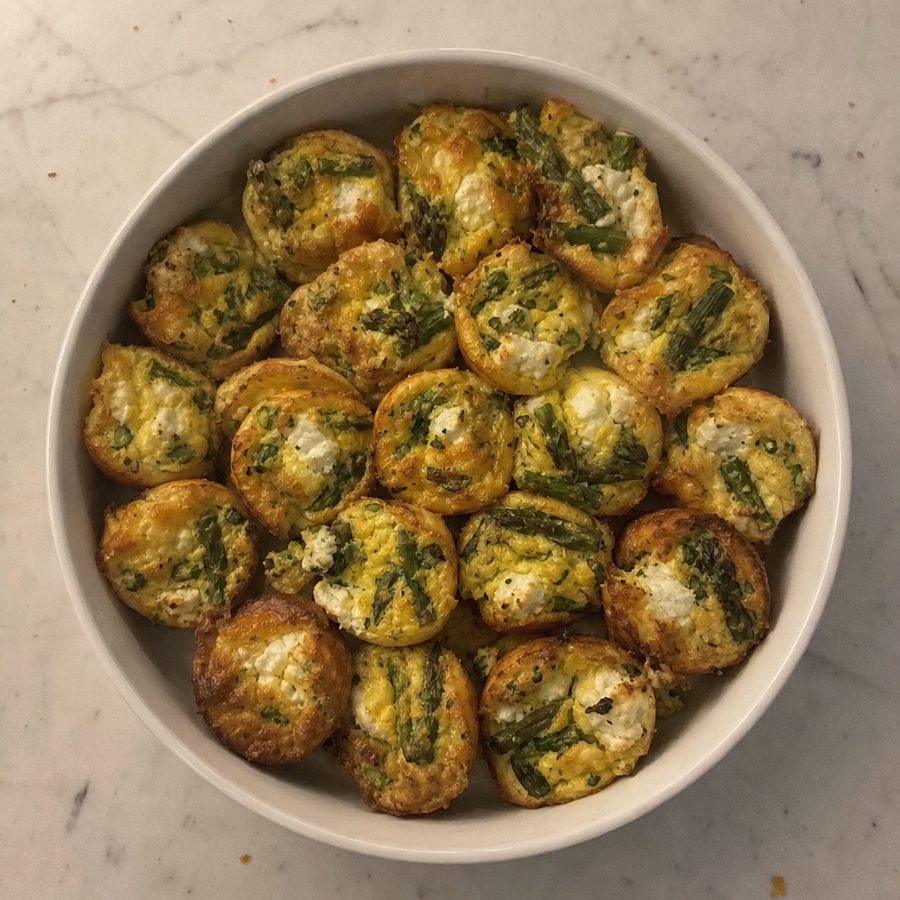
Individual crustless quiche cups baked in a muffin tin with tender asparagus, creamy goat cheese, and shallots in a dill-flecked egg custard.
Why You'll Love This Recipe
These little egg cups are for anyone who wants something substantial they can eat with one hand, warm from the tin in the morning or cold from a container hours later. Baked in a muffin tin with no crust to fuss over, they turn a bunch of asparagus and a few eggs into a self-contained meal that holds its shape, travels without falling apart, and is worth eating at either temperature.
A few minutes in a hot pan before baking is what separates these from watery ones. Cooking the shallots and asparagus in olive oil first drives off raw-vegetable moisture and sweetens the shallots, so the custard sets clean instead of turning watery. Whisking the eggs thoroughly with milk gives a tender, uniform texture, and adding the goat cheese on top rather than mixing it in means each cup bakes with soft, tangy pockets rather than a muddled interior. Pulling them when the centers are just set keeps them creamy instead of rubbery.
They are filling in a lasting way. Eggs and goat cheese bring a generous amount of protein, and the asparagus and dill keep everything fresh and green. It is a savory, satisfying combination that eats like comfort food while leaving you steady rather than heavy. A tin makes twelve, which is more than four people eat at one sitting on purpose, since the rest keep for three days and are the reason this recipe earns its place rather than being a one-time project.
Ingredients
- 10 large eggs
- 1 1/4 cups crumbled goat cheese
- 1 bunch asparagus, chopped
- 2 shallots, minced
- 1/2 cup milk
- 3 tbsp olive oil
- 2 tbsp fresh dill
- 1/2 tsp salt
Instructions
- Heat the oven and oil the tin properly: Heat the oven to 375°F (190°C) and brush a 12-cup muffin tin generously with olive oil, going around the sides of every cup as well as across the bottom. Egg sticks to bare metal in a way almost nothing else does, and a cup that will not let go tears in half as you lift it, so these two minutes decide whether they come out looking like quiches or like scrambled eggs.
- Cut the vegetables small: Mince the shallots, snap the woody ends off the asparagus, and chop the spears into short bite-size pieces, then chop the dill. Size matters more than it looks: the custard sets in about twenty minutes, and any piece bigger than a bite is still squeaky and raw in the middle when the egg around it is done.
- Saute the filling, then let it cool: Warm the olive oil in a skillet over medium heat, add the shallots and asparagus, and cook for about 5 minutes, stirring now and then, until the asparagus is bright green and just tender. Take the pan off the heat and leave it for a few minutes. Cooking drives off the water raw asparagus would otherwise let go into the custard, which is the difference between a quiche that sets and one that weeps, and the cooling stops hot vegetables scrambling the eggs the moment they meet.
- Whisk the custard until it is one color: Whisk the eggs with the milk, dill, and salt for about 30 seconds of steady beating, until no ropes of white are left and the bowl is a single even yellow. Streaks of unmixed white bake into rubbery patches you can find with a fork, so this is worth doing properly rather than stirring twice and calling it done.
- Fill the cups and put the cheese on top: Divide the asparagus mixture among the oiled cups, pour the custard over it to just below each rim, and crumble the goat cheese across the surface. The cheese goes on top rather than into the bowl so it bakes into soft, tangy pockets instead of disappearing into the egg, and the little bit of headroom keeps them from spilling over as they puff.
- Bake until just set, then rest 5 minutes: Bake for 18 to 22 minutes, until the tops are puffed and lightly golden at the edges and the centers no longer wobble when you nudge the tin. Let them sit in the tin for 5 minutes before you run a thin knife around each one. Straight from the oven they are still fragile and will break apart; five minutes of resting firms them enough to lift out whole.
Variations
- Spinach and pea: Swap the asparagus for chopped spinach and thawed green peas for a softer, sweeter spring filling; wilt the spinach in the pan first and squeeze out excess liquid.
- Sun-dried tomato and basil: Fold chopped oil-packed sun-dried tomatoes into the vegetables and use basil in place of the dill for a brighter, Mediterranean-leaning flavor.
- Roasted red pepper and feta: Stir in chopped jarred roasted red peppers and use crumbled feta instead of goat cheese for a saltier, punchier bite; this keeps the dairy but changes its character.
- Smoky mushroom: Add sliced cremini mushrooms to the saute and a pinch of smoked paprika to the custard for an earthier, savory version; cook the mushrooms until their liquid evaporates.
- Herb and scallion: Skip the asparagus and load the cups with a mix of chopped scallions, dill, and parsley for a lighter, herb-forward egg cup.
Storage & Leftovers
Store the cooled quiche cups in an airtight container in the refrigerator, where they keep well for up to four days. Layer them with a sheet of parchment if you are stacking so the goat cheese does not stick.
To reheat, warm a cup in the microwave in short bursts of about 20 seconds until just heated through, or set them in a 325°F (163°C) oven for a few minutes. Avoid overheating, which firms up the eggs and dries them out; you want them warm, not hot and tough. They are also good cold or at room temperature.
For make-ahead, bake a full tin over the weekend and portion them out for the week. You can also saute the asparagus and shallots and whisk the custard the night before, keeping them in separate covered containers so you only have to fill and bake in the morning.
Notes & Tips
- Choose thin asparagus: Look for pencil-thin to medium spears, which cook quickly and stay tender inside the cups; thick spears can stay fibrous, so peel or halve them lengthwise before chopping.
- Oil the tin well: Because these are crustless, a thorough coat of olive oil in every cup is what lets them release. A silicone muffin pan or paper-free nonstick tin makes lifting them out even easier.
- Bring the goat cheese to room temperature: Cold goat cheese crumbles into hard nuggets, while slightly softened cheese spreads into creamy pockets as it bakes. Let it sit out while you prep.
- Test doneness by the jiggle: The cups are ready when the centers no longer wobble and a knife tip comes out clean; a slight puff that settles as they cool is normal and expected.
- Double the batch: These freeze well, so make two tins at once. Cool completely, freeze on a tray until firm, then transfer to a bag and reheat individual cups straight from frozen.
- Serve alongside something crisp: A simple green salad with lemon, or sliced tomatoes with cracked pepper, rounds these into a full lunch and plays off the creamy, custardy texture.
Nutrition & Mindful Eating
- Eggs, milk and goat cheese make the custard, and the asparagus and shallot give it something to hold onto. The milk loosens the eggs so they bake soft, the cheese seasons from the inside, and the vegetables keep each cup from being uniform.
- Eggs whisked with milk set into a custard rather than a scramble, tender enough to give under a fork. The yolks carry choline, and the protein is most of the reason a couple of these eat like lunch rather than a nibble.
- Goat cheese tucked into each cup stays in soft tangy pockets rather than spreading through, so you get a sharp bite every few forkfuls. It brings calcium and protein, and its sharpness means the whole cup tastes seasoned.
- Asparagus cut into short lengths cooks through in the same bake as the custard, staying green and keeping a bit of snap. The stalks bring folate and inulin, a fiber the bacteria in your gut feed on.
- Fresh dill and softened shallot are the flavors you notice last, one grassy and cool, the other sweet from the pan. These travel well, and two of them carry you through an afternoon with the eggs and cheese doing that work.
- As you eat, break one open and let the steam and the dill come up, notice the custard giving way against the asparagus, and sit down with them rather than eating one at the counter.
Frequently Asked Questions
Why did my quiche cups turn out watery?
Usually it is moisture from the vegetables. Sauteing the asparagus and shallots until tender drives off their water before it can loosen the custard. Letting the cooked vegetables cool slightly before adding the eggs also helps.
Can I make these without a muffin tin?
Yes. You can bake the same filling and custard in a well-oiled baking dish as one larger crustless quiche; it will need longer in the oven, so bake until the center is set and no longer jiggles, then cut into squares.
Why do the cups deflate after baking?
That puff comes from steam and air expanding in the hot oven, and it naturally settles as the eggs cool. It is not a sign anything went wrong; the texture stays tender and set.
Can I use a different cheese?
Absolutely. Feta gives a saltier, firmer result and crumbled ricotta salata or a mild shredded cheese also work. Each changes the flavor and the dairy character, so use whatever tang and saltiness you prefer.