
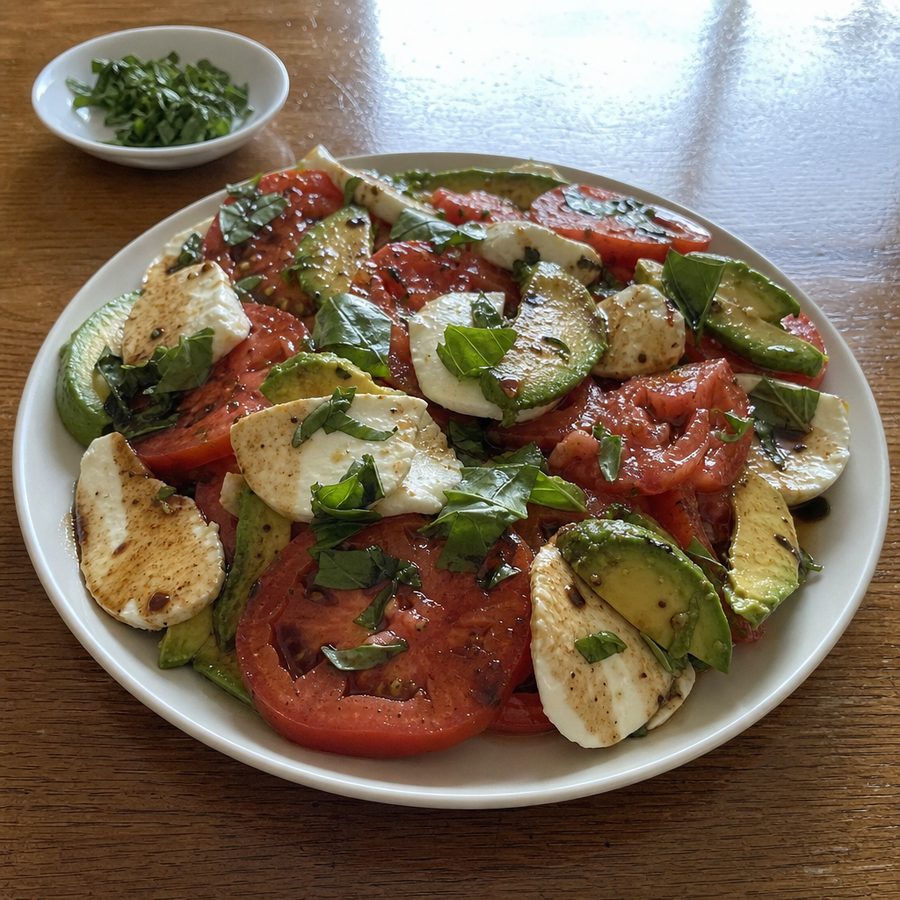
Avocado and Mozzarella Caprese Stacks
Layered rounds of creamy fresh mozzarella, ripe avocado, and juicy cherry tomatoes with fresh basil, set over peppery arugula and finished with extra-virgin olive oil, balsamic vinegar, pumpkin seeds, and flaky salt.
Why You'll Love This Recipe
This is a knife-and-board plate for anyone who wants a fresh, substantial midday meal with nothing more than two minutes of pan time for the seeds. It leans on good raw ingredients handled simply: cool creamy mozzarella, buttery avocado, sweet-tart tomato, and fragrant basil, all built into a stack you can make in the time it takes to slice. It suits a warm-weather lunch, a light spread for guests, or a plate you want to look composed with almost no effort.
Four things, and each one answers another. The mozzarella brings mild milkiness and a soft, springy bite; the avocado adds richness and body; the tomato cuts through both with acidity and juice; and the basil ties them together with its perfume. Keeping the slices an even thickness lets the stack stand upright and gives you a little of everything in each forkful. The olive oil carries flavor and helps the balsamic cling, while the balsamic's sweetness and acid brighten the whole plate. Pumpkin seeds and flaky salt are the finishing touch, adding crunch and little bursts of savoriness that keep each bite interesting.
It satisfies because it combines protein and generous good fats with the freshness of raw vegetables and greens. The mozzarella and pumpkin seeds contribute protein, the avocado and olive oil supply lasting richness that keeps you full, and the tomato, basil, and arugula add fiber, color, and a peppery lift. The result feels light on the plate but eats like a real meal, so you finish it satisfied rather than looking for something more.
Ingredients
- 12 oz fresh mozzarella, sliced
- 1 1/2 large avocados, sliced
- 4 tbsp extra-virgin olive oil
- 1 1/2 cups cherry tomatoes, sliced
- 3 tbsp pumpkin seeds
- 1/2 cup fresh basil leaves
- 4 tsp balsamic vinegar
- 3 cups baby arugula
- 1/2 tsp flaky salt
Instructions
- Toast the pumpkin seeds: Put the pumpkin seeds in a dry skillet over medium heat and shake the pan every twenty seconds for about two minutes, until they smell nutty and a few start to pop, then tip them onto a plate to cool. This is the only heat in the dish and it earns its place: everything else on the stack is soft, and a raw pumpkin seed is soft too, so toasting is what gives the plate something that cracks.
- Bruise the basil into the olive oil: Tear half the basil leaves into a small bowl, add the olive oil and a pinch of the salt, and press and twist the leaves against the side of the bowl with the back of a spoon for a minute. The oil turns green and starts to smell like a basil plant rather than like oil with a leaf in it. Leave it to stand while you do everything else; it goes on getting better for about twenty minutes.
- Macerate the tomatoes in the balsamic: Slice the cherry tomatoes and put them in a bowl with the balsamic vinegar and another pinch of salt, then leave them for ten minutes. Salt pulls juice out through the cut faces and the vinegar draws it further, and what collects in the bottom of the bowl is a dressing made of tomato and balsamic rather than balsamic alone. That liquid is the point, so do not tip it away.
- Slice the mozzarella and the avocado: Cut the mozzarella into even rounds about a quarter of an inch thick and lay them on a paper towel for a minute, since fresh mozzarella carries a surprising amount of water and a wet round slides off the plate as you build. Halve the avocados, remove the pits, peel them, and slice the flesh into half-moons of roughly the same thickness so the stacks sit level.
- Build the stacks with a basil leaf between: Start each stack with a round of mozzarella, add a slice of avocado, then a few slices of the macerated tomato, tucking a whole basil leaf between the layers as you go. Two or three tiers is the limit before it topples. Press down gently on the top so the stack settles into itself rather than standing tall and unstable on the plate.
- Spoon the tomato juices over, then the basil oil: Set each stack on a loose handful of arugula, then spoon the tomato and balsamic liquid over so it runs down the sides and dresses the leaves underneath. Follow it with the basil oil, which sits on top of the vinegar rather than mixing with it and gives you both in the same bite. Scatter the pumpkin seeds and a final pinch of salt, and serve at once.
Variations
- Add a peppered edge: Grind fresh black pepper over each layer as you build. It sharpens the tomato and basil and adds a little heat without changing the makeup of the dish.
- Swap the crunch: Trade the pumpkin seeds for toasted sunflower seeds or chopped toasted almonds for a different crunch and flavor. Note that almonds add tree nuts.
- Herb it up: Tuck in torn fresh mint or oregano alongside the basil for a more layered herbal note. Both keep the plate light and add no meaningful carbohydrate.
- Brighter finish: Skip the balsamic drizzle and squeeze fresh lemon over the stacks instead, then add a little extra flaky salt. This gives a cleaner, more citrusy acidity.
- Make it heartier: Drape a few slices of prosciutto around each stack for a salty, savory contrast to the creamy layers. Note that this adds cured meat.
Storage & Leftovers
Because this is a fresh, uncut-avocado dish, it is best eaten the day it is made. If you need to hold leftovers, keep the built stacks in an airtight container in the refrigerator for up to a day, though the avocado will darken and the tomato will weep some liquid.
There is nothing to reheat here; this plate is meant to be eaten cool. Simply take it out of the refrigerator a few minutes before serving so the mozzarella loses its fridge chill and the flavors open back up.
To get ahead, slice the mozzarella and tomatoes and rinse and dry the arugula and basil earlier in the day, then store them separately in the refrigerator. Slice the avocado and build, drizzle, and finish the stacks only when you are ready to eat, since avocado is the one component that will not keep.
Notes & Tips
- Choose the right mozzarella: Look for fresh mozzarella packed in water rather than the firm, shrink-wrapped block. It slices into cleaner rounds and has the soft, milky texture this plate depends on. Pat each slice dry before stacking so it does not water down the drizzle.
- Judge avocado ripeness: A ripe avocado yields to gentle pressure near the stem end but is not mushy. If yours are firm, buy them a few days ahead and let them ripen on the counter, then refrigerate to hold them once they soften.
- Pick ripe tomatoes: Choose cherry tomatoes that are deeply colored and fragrant at the stem; they carry the acidity that balances the rich layers. A quick pinch of the flaky salt on the tomato slices draws out their juice and sweetness.
- Toast the seeds for more flavor: For a deeper, nuttier crunch, warm the pumpkin seeds in a dry pan over medium heat, shaking often, just until they start to pop and smell toasty, then let them cool before sprinkling on.
- Keep the basil bright: Add the basil leaves whole and at the last moment. Tearing or bruising them early makes the edges darken, and their aroma fades the longer they sit once cut.
- Serve it as a starter: These stacks also work as a passed appetizer or dinner-party first course. Build them smaller with a single round of each layer so guests can eat one in a couple of bites.
Nutrition & Mindful Eating
- Tomato, mozzarella and avocado stacked together give you three soft textures that are not the same soft. The tomato is juicy, the mozzarella is springy and milky, the avocado is dense and buttery, and the seeds on top keep the plate from going one note.
- Fresh mozzarella is the reason this eats like lunch. Torn by hand so its ragged edges hold the oil, it brings a mild milky sweetness along with the protein and calcium that give the plate its weight.
- Ripe tomatoes want to be at room temperature for this, because cold flattens them. Warm, they go sweet and almost savory, and the lycopene behind that deep red comes along with the flavor.
- Pumpkin seeds toasted for a minute in a dry pan may be the best thing here, popping against everything else that is soft, and they carry magnesium and zinc inside that green, faintly nutty crunch.
- Basil torn rather than cut, good olive oil poured over, a few drops of balsamic and a handful of peppery arugula underneath are what finish the stacks, and they are most of what you actually taste in the first bite.
- As you eat, take a stack apart with the side of your fork so tomato, mozzarella and avocado land in the same mouthful, and stay at the table long enough to notice the basil coming up off the plate.
Frequently Asked Questions
How do I keep the avocado from browning before I serve?
Slice the avocado last, right before you build the stacks, and finish the plate immediately. The olive oil and balsamic coating help slow browning a little, but the real fix is to build the stacks and eat them while the slices are freshly cut and bright green.
Can I make these stacks ahead for a party?
You can do most of the prep ahead: slice the mozzarella and tomatoes, wash and dry the greens and basil, and even toast the seeds. Hold off on slicing the avocado and building, drizzling, and finishing the stacks until close to serving, since the avocado will not keep once cut.
My stacks keep toppling over. What am I doing wrong?
Usually the slices are uneven or too thin. Cut the mozzarella, avocado, and tomato into rounds of similar width and thickness, press each layer down gently as you go, and keep the stacks to three or four layers so they stay stable.
What can I serve alongside to make it a bigger meal?
A handful of extra arugula dressed with olive oil and a little more balsamic rounds it out, and a few olives or some cured meat on the side turns it into a fuller plate without much added effort.