
Baked Buffalo Cauliflower Bites
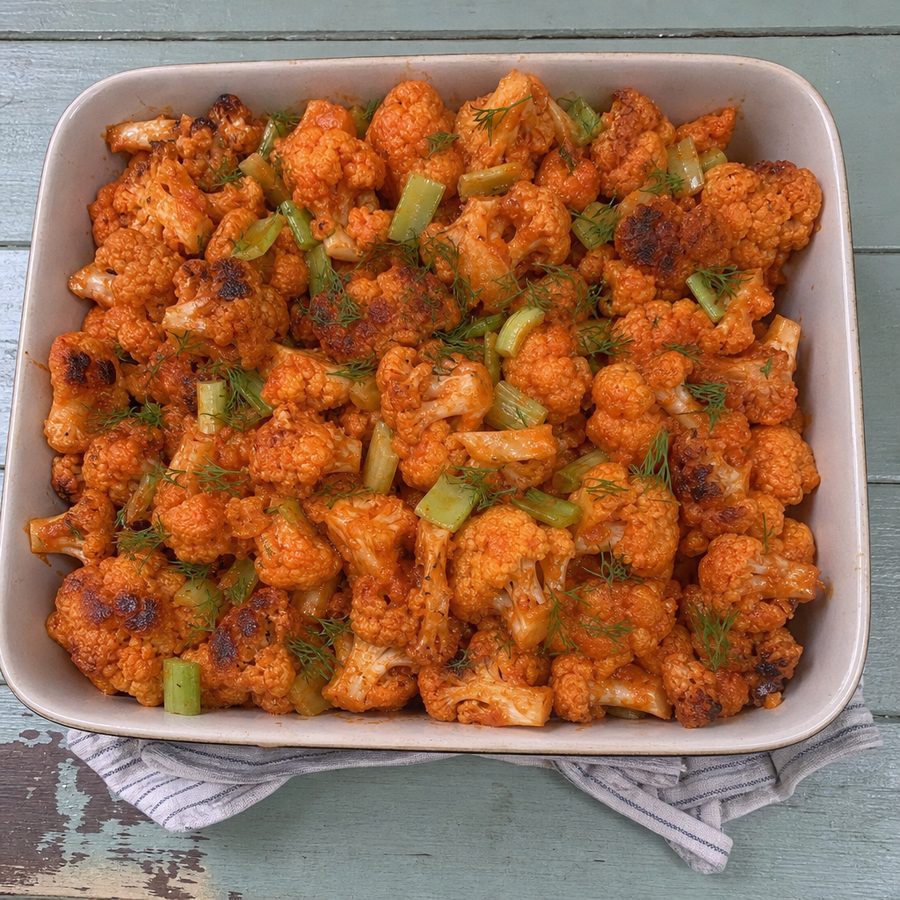
Cauliflower florets dusted in almond flour and roasted until golden, then tossed in a tangy glaze of tomato paste, cayenne, paprika, and lemon juice and baked again until sticky.
Why You'll Love This Recipe
The trick with buffalo cauliflower is when the sauce goes on. Brushed on before roasting it steams the florets and slides off into the pan; brushed on after they have browned, it clings to a dry, hot surface and stays there. That one decision is the difference between a tray of soggy orange cauliflower and something that eats like a wing. Worth knowing on an evening when people are coming over, since it is one sheet pan, twenty-five minutes, and it disappears faster than anything else on the table.
The two-stage bake is what makes it work. Roasting the florets first, dusted in almond flour and a little oil, drives off moisture and builds a golden, textured exterior so the cauliflower holds up instead of turning soft under the sauce. Then the glaze goes on and bakes a second time, which concentrates the tomato paste and lets the cayenne and paprika cling and caramelize into a sticky coat. The lemon juice cuts the richness and brightens the heat so the buffalo character reads clearly.
Cauliflower brings real substance here, contributing fiber and a satisfying bite, while the almond flour coating adds a little protein and healthy fat that make the snack more filling than vegetables alone. The glaze leans on tomato paste and spices rather than butter or a bottled hot sauce, so it stays light while still delivering big flavor. It is the kind of snack that scratches the itch for something bold and spicy while nourishing you.
Ingredients
- 1 small head cauliflower, cut into florets
- 1/2 cup almond flour
- 3 tbsp tomato paste
- 2 tbsp avocado oil
- 1 tsp cayenne, to taste
- 1 tsp paprika
- 1 tbsp lemon juice
- 1/2 tsp salt
Instructions
- Preheat and prep: Preheat the oven to 425°F (220°C) and line a baking tray with parchment paper. Pull or cut the head of cauliflower into bite-sized florets of roughly even size so they roast at the same rate; halve any large ones through the stem.
- Coat the florets: In a large bowl, toss the florets with the almond flour, half of the avocado oil, and the salt until every piece is lightly and evenly dusted. The oil helps the almond flour cling; work with your hands so the coating reaches into the crevices.
- Roast: Spread the florets in a single layer on the lined tray, leaving space between them so they brown rather than steam. Roast for about 20 minutes, until the edges are golden and a fork slides in with a little resistance.
- Make the glaze: While the cauliflower roasts, whisk the tomato paste, the remaining avocado oil, the cayenne, the paprika, and the lemon juice in a bowl. Add a splash of water and keep whisking until the sauce is smooth and pourable, loosening with a little more water as needed. Taste and add more cayenne if you want more heat.
- Glaze and finish: Add the roasted florets to the glaze and toss until each piece is well coated, then return them to the parchment-lined tray in a single layer. Bake another 8 to 10 minutes, until the glaze looks set and sticky and the edges begin to caramelize. Let them rest a few minutes on the tray to firm up before serving.
Variations
- Extra smoky: Swap the paprika for smoked paprika, or add a pinch alongside it, for a deeper, barbecue-like backbone under the heat.
- Garlic-forward: Whisk a little garlic powder or fresh minced garlic into the glaze for a savory, pungent edge that plays well with the cayenne.
- Herb finish: Sprinkle chopped fresh parsley or chives over the florets after the final bake for color and a fresh, grassy lift against the spice.
- Milder bite: Cut back on the cayenne and lean on the paprika for color and warmth, so the snack stays flavorful and tangy without the strong heat.
- Zesty citrus kick: Add a little grated lemon zest to the finished florets along with the lemon juice for a brighter, more aromatic tang.
Storage & Leftovers
Refrigerator: Store leftover florets in an airtight container in the fridge for up to three days. They soften as they sit because the glaze draws moisture into the coating, but the flavor holds well.
Reheat: For the best texture, reheat in a 400°F (200°C) oven or an air fryer for several minutes until hot and the edges crisp back up. Skip the microwave if you can, since it steams the florets and leaves them limp.
Make ahead: You can roast the florets through the first bake and whisk the glaze separately a day in advance, keeping each in the fridge. When you are ready to serve, toss them together and do the final sticky bake so they come out fresh and hot.
Notes & Tips
- Cut florets evenly: Aim for uniform, bite-sized pieces. Oversized florets stay raw in the center while small ones burn, so halve the big ones through the stem before roasting.
- Dry the cauliflower first: If you wash the florets, pat them thoroughly dry before coating. Surface water dilutes the almond flour and keeps the pieces from browning in the first bake.
- Dial in the heat: Cayenne varies in strength, so start with less than you think, taste the glaze before tossing, and whisk in more. It is far easier to add heat than to pull it back.
- Don't crowd the tray: Leave space between florets in a single layer. Packed too tightly they steam instead of roast, and you lose the golden edges that give them structure.
- Serve promptly: These are at their best within a few minutes of the final bake, while the glaze is sticky and the edges still have snap. Plate them close to serving time.
- Pair with something cool: A cool, creamy dip made from cashews or a dairy-free yogurt, plus celery and carrot sticks, balances the heat and rounds the snack into a plate.
Nutrition & Mindful Eating
- The cauliflower, the coating and the glaze each need the one before it. The florets roast until their edges caramelize, the almond flour coating gives the surface something to hold onto, and the glaze grabs all of it at the end.
- Cauliflower is mild enough to take a sauce this loud and sturdy enough to stay in one piece, and roasted hot it turns nutty and sweet at the edges. Underneath the glaze it is still a vegetable with real fiber and vitamin C in it.
- Almond flour is what turns the outside crisp in a dry oven, and it browns fast, so keep an eye on the tray. It also brings a nutty fat and a little plant protein that make these more filling than they look.
- Tomato paste is the body of the glaze, cooked down and concentrated so it clings rather than runs, and the lycopene behind that deep red arrives concentrated too. Cayenne and paprika sit on top of it, one for heat and one for warmth and color.
- Avocado oil holds its clean flavor at the high heat these florets need, and a squeeze of lemon over the finished tray is what makes the heat readable. The tang arrives first and the burn builds up behind it.
- As you eat, notice how the heat climbs a little with each piece and how the lemon keeps cutting it back, and pause between handfuls to see where your appetite actually is.
Frequently Asked Questions
How do I get the cauliflower crisp instead of soggy?
Two things matter most: dry the florets well before coating, and roast them in a single layer with space between the pieces so they brown rather than steam. The first bake before the glaze is essential, since it drives off moisture and builds the texture that lets them hold up under the sauce.
Can I make these in an air fryer?
Yes. Roast the coated florets in the air fryer at around 400°F (200°C) until golden, tossing partway through, then toss with the glaze and air-fry a few more minutes until sticky. Work in batches so the florets are not crowded, which is what keeps them crisp.
How spicy are these, and can I tone them down?
With the full amount of cayenne they carry a solid buffalo-style heat. To make them milder, reduce the cayenne and rely on the paprika for warmth and color, and always taste the glaze before tossing so you can adjust to your liking.
Can I use frozen cauliflower?
Fresh gives the best crisp texture, but frozen works if you thaw it fully and pat it very dry first, since frozen florets release a lot of water. Expect a slightly softer bite, and give them a little extra time in the first roast to drive off the moisture.