
Baked Chicken With Butternut Squash
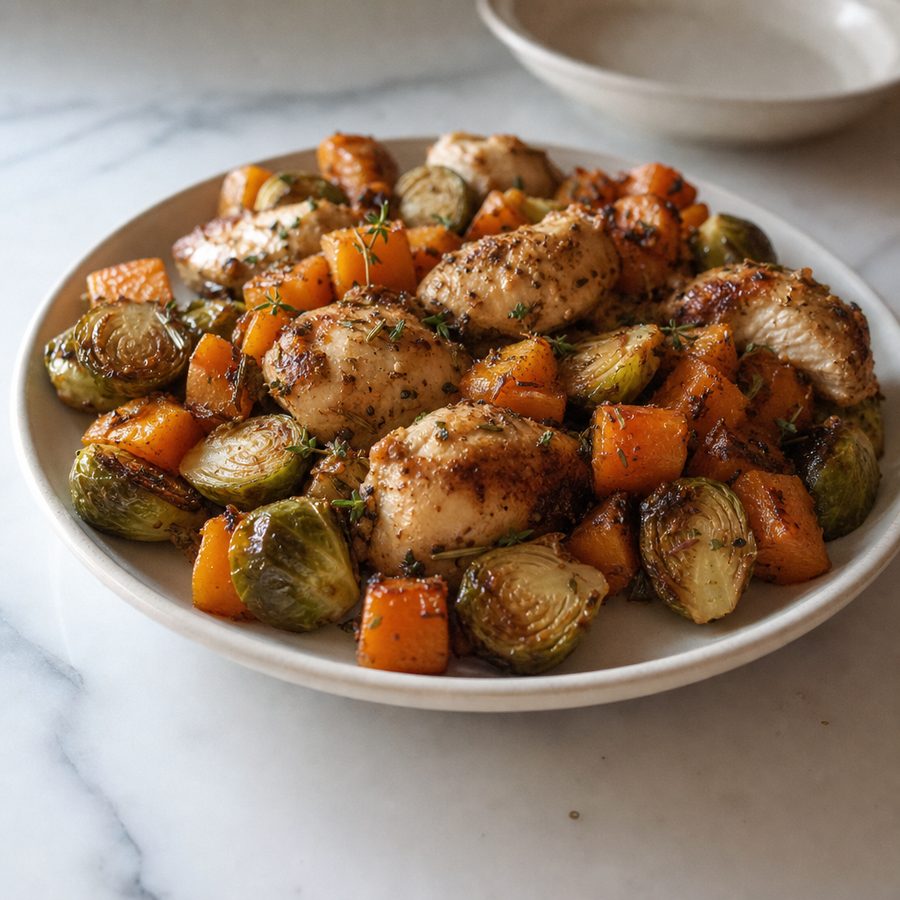
Herb-rubbed chicken breasts roasted alongside sweet butternut squash and caramelized Brussels sprouts, brightened with garlic, fresh thyme, rosemary, and lemon juice.
Why You'll Love This Recipe
This is a one-pan roast built for a busy weeknight when you still want a real, sit-down dinner. Chicken breast is the anchor, and it shares the pan with butternut squash and Brussels sprouts so the whole meal comes out of the oven at once. It suits anyone cooking for a family or meal-prepping for the week, and it leans on pantry herbs rather than a long shopping list, so it is approachable for a beginner and forgiving enough to make on repeat.
Nothing goes on the pan at the same time. The squash and sprouts go in first because they are dense and need longer to turn tender and caramelized, and the chicken joins them partway through so it finishes right as it reaches a safe temperature without drying out. Roasting at a high heat drives off surface moisture and browns the vegetables, deepening their natural sweetness, while garlic, thyme, and rosemary perfume everything and a squeeze of fresh lemon lifts the richness. Resting the chicken before slicing keeps it juicy on the plate.
The plate holds together on the contrast: tender, high-protein chicken against soft, sweet squash and slightly crisp, nutty sprouts. The protein keeps you full, the vegetables bring fiber and natural sweetness so you do not miss a heavy starch, and olive oil rounds it into a cozy autumn plate. It is nourishing without feeling like diet food, which is exactly why it earns a spot in the regular rotation.
Ingredients
- 4 boneless chicken breasts (about 145 g each)
- 3 cups cubed butternut squash
- 3 cups halved Brussels sprouts
- 4 garlic cloves, minced
- 2 tsp chopped fresh thyme
- 1 1/2 tsp chopped rosemary
- 3 tbsp olive oil
- 2 tbsp fresh lemon juice
- 1/2 tsp sea salt
Instructions
- Preheat the oven: Preheat the oven to 425°F (220°C) and set a rack in the middle position. Line a large rimmed sheet pan with parchment or leave it bare for deeper browning.
- Prep the vegetables and aromatics: Peel the butternut squash, scoop out the seeds, and cut the flesh into even bite-sized cubes so they cook at the same rate. Trim the dry stem ends from the Brussels sprouts, pull off any loose outer leaves, and halve each one through the root. Mince the garlic cloves, and finely chop the fresh thyme and rosemary.
- Roast the vegetables first: On the sheet pan, toss the squash and Brussels sprouts with olive oil, the minced garlic, and the chopped thyme and rosemary until everything is glossy. Spread the vegetables in a single layer, keeping the sprouts cut-side down for better color, and roast for 10 minutes. This head start lets the dense squash soften before the chicken goes in.
- Season the chicken: Pat the chicken breasts dry with paper towels. Rub them all over with olive oil, a little more chopped thyme, the fresh lemon juice, and the sea salt so the surface is evenly coated.
- Add the chicken and finish roasting: Pull the pan from the oven, push the vegetables to the edges, and settle the chicken breasts into the cleared center in a single layer. Return the pan to the oven and roast for 22 to 25 minutes, until the vegetables are tender and lightly caramelized and the thickest part of each breast registers 165°F (74°C) on an instant-read thermometer and the juices run clear.
- Rest and serve: Transfer the chicken to a board or plates and let it rest for about 5 minutes so the juices settle before slicing. Spoon the roasted squash and Brussels sprouts alongside and finish with any pan juices.
Variations
- Root-vegetable swap: Trade the butternut squash for cubed sweet potato or peeled acorn squash. Both roast in a similar time and bring the same natural sweetness against the savory herbs.
- Maple-mustard glaze: Whisk a little maple syrup with the lemon and oil before rubbing the chicken for a sweeter, glossier finish. Note that this adds sugar.
- Spiced-up version: Add a spoonful of grated fresh ginger and a little ground turmeric to the vegetables before roasting for gentle warmth and color that play well with the caramelized sprouts, with no nightshades if you are following the autoimmune protocol.
- Bone-in for more flavor: Use bone-in, skin-on chicken thighs in place of the breasts. They stay juicy and forgiving, though they need a few extra minutes in the oven to reach a safe temperature.
- Bright herb finish: Shower the finished pan with chopped fresh parsley and a little grated lemon zest just before serving for a fresher, greener lift over the roasted flavors.
Storage & Leftovers
Store leftovers in an airtight container in the refrigerator for up to four days. Keep the chicken and vegetables together or separate; slicing the chicken before storing makes it quicker to portion for lunches.
To reheat, warm portions in a 350°F (175°C) oven or toaster oven for about 10 minutes so the vegetables re-crisp and the chicken heats through gently. A microwave works in a pinch, but heat the chicken in short bursts and only until warmed through, since the breast can toughen if overheated.
To get ahead, cube the squash, halve the sprouts, and mince the garlic and herbs up to two days in advance and keep them refrigerated in a covered container. You can also whisk the olive oil, lemon juice, and salt rub for the chicken and store it separately, so on cooking night the pan comes together in minutes.
Notes & Tips
- Cut the squash evenly: The biggest reason for unevenly cooked vegetables is mismatched sizes. Aim for squash cubes and sprout halves of roughly the same bite, so nothing is raw while the rest turns to mush.
- Do not crowd the pan: Give the vegetables room in a single layer. Piled up, they steam and stay pale; spread out, they brown and turn sweet. Use two pans if your batch is large.
- Trust the thermometer: Chicken breast is done at 165°F (74°C) in the thickest part. An instant-read thermometer is the surest way to avoid dry, overcooked meat, since visual cues alone can mislead.
- Pick firm, tight sprouts: Choose Brussels sprouts that are firm, bright green, and tightly closed. Loose, yellowing leaves signal age and a stronger, more sulfurous flavor once roasted.
- Save the loose leaves: The stray outer leaves that fall off while you halve the sprouts are a bonus. Toss them on the pan too; they crisp up into savory little chips as everything roasts.
- Round out the plate: This is a complete plate on its own, but a spoonful of cooked quinoa or a slice of crusty whole-grain bread turns it into a heartier meal when you want more on the table. Both are grains, which the autoimmune protocol leaves out.
Nutrition & Mindful Eating
- Chicken, squash and sprouts share a pan and taste better for it. The chicken juices and olive oil run into the vegetables, the squash sweetens, and you get protein, whole vegetable carbohydrate and fat in the same forkful.
- Chicken breast is the mild, savory anchor of the plate, and it takes on whatever it is roasted with, so the garlic, thyme and lemon end up in the meat itself, along with the protein that makes this eat like dinner.
- Butternut squash is the sweetness here. Its edges caramelize where they touch the hot pan, and that deep orange running through it is beta-carotene, which is also where the color on the plate comes from.
- Brussels sprouts roast into something quite different from their boiled version, the cut faces going golden and the loose leaves turning crisp and almost nutty, and they bring fiber and a green bitterness that keeps the squash from being too sweet.
- Rosemary, thyme, garlic and a squeeze of lemon are what tie the pan together. The herbs go woodsy in the oven, the garlic softens and sweetens, and the lemon at the end lifts all of it just before it hits the table.
- As you eat, take in the smell of rosemary and roasted squash before your first bite, and slow down enough between forkfuls to notice when the plate has already done its job.
Frequently Asked Questions
Can I use frozen butternut squash instead of fresh?
Yes. Frozen cubes work, but they release more water and brown less, so spread them out well and expect them to be softer than fresh. There is no need to thaw first; just add a couple of minutes to the initial roasting time if they go on straight from the freezer.
My chicken finishes before the vegetables are tender. What do I do?
Pull the chicken once it hits 165°F (74°C) and let it rest under loose foil, then return the pan of vegetables to the oven for a few more minutes until they are fork-tender and caramelized. Slicing the squash smaller next time will also close the gap.
Why do I roast the vegetables before adding the chicken?
The dense butternut squash needs more time in the oven than chicken breast does. Giving the squash and sprouts a ten-minute head start means they finish tender and browned at the same moment the chicken reaches a safe temperature, instead of the meat drying out while it waits.
How do I keep the chicken breasts from turning out dry?
Pat them dry before seasoning so they brown rather than steam, roast just until the thermometer reads 165°F (74°C), and let them rest a few minutes before slicing. If your breasts are very thick, gently pounding them to an even thickness helps them cook through without the edges overcooking.