
Baked Cod With Braised Leeks and Gold Potatoes
Flaky baked cod rests over silky braised leeks and tender gold potatoes, finished with garlic, fresh thyme, dill, and a bright squeeze of lemon.
Why You'll Love This Recipe
This is a gentle, one-dish dinner for anyone who wants something light but still comforting on a weeknight. The cod stays mild and delicate, the potatoes turn creamy, and the leeks melt into a soft, sweet base, so it suits both cautious eaters and people who simply want a clean, unfussy plate of fish and vegetables. Because it all bakes together in a single dish, cleanup is minimal and the timing is forgiving.
The vegetables get a head start; the fish arrives late. Giving the leeks, potatoes, and garlic a head start in the oven lets the potatoes soften and the leeks release their sweetness, building a savory base with a little pan broth. Laying the cod on top for the final stretch means the fish bathes in that liquid and steams gently rather than drying out, while the lemon and dill added at the very end keep their brightness instead of cooking flat.
A substantial portion of flaky cod, hearty filling potatoes, and plenty of soft, savory vegetables all around them. Nothing on the plate is a side dish. The olive oil carries flavor and richness without heaviness, the herbs and lemon keep each bite fresh, and the whole dish feels nourishing and complete on its own. It is the kind of meal that leaves you full and comfortable rather than weighed down.
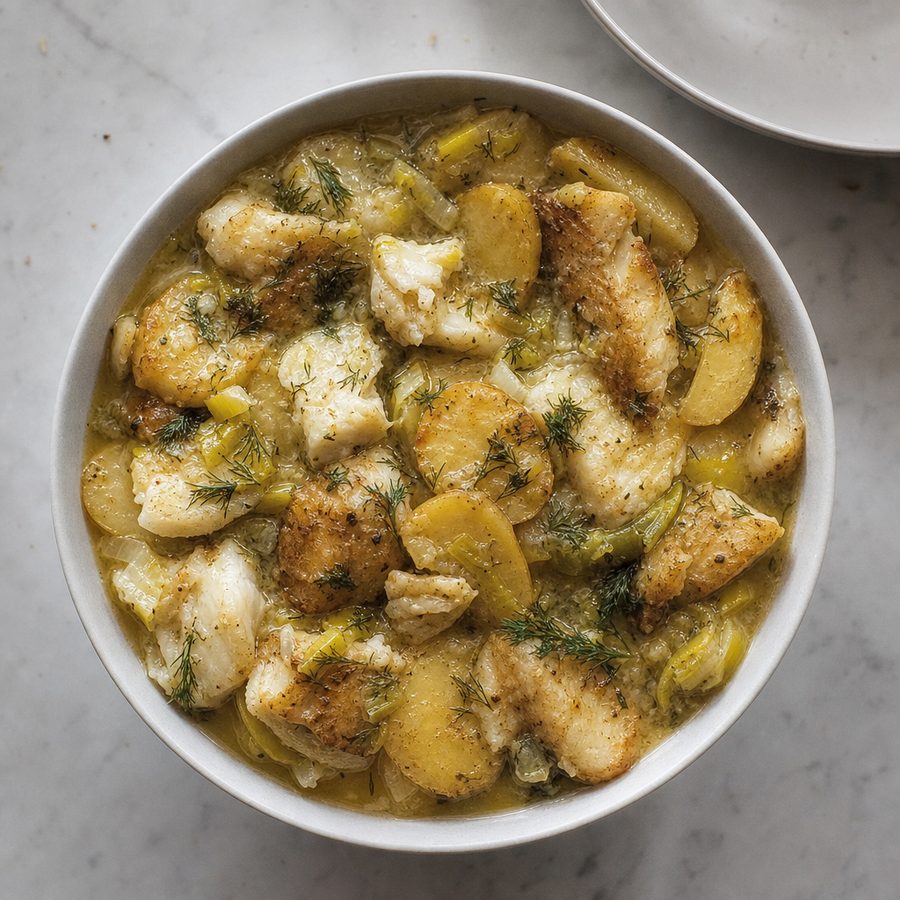
Ingredients
- 4 cod fillets (about 5 oz each)
- 3 leeks, white and light green sliced
- 4 gold potatoes, sliced
- 4 tbsp olive oil, divided
- 5 garlic cloves, sliced
- 2 tbsp lemon juice
- 3 tbsp chopped dill
- 1 1/2 tsp fresh thyme
- generous 1/2 tsp salt
Instructions
- Preheat and prep the vegetables: Preheat the oven to 400°F (200°C). Trim the roots and dark green tops from the leeks, then slice the white and light green parts into thin rounds. Rinse them well in a bowl of cold water, since grit hides between the layers and will not come out under a running tap, and drain them. Scrub the gold potatoes and slice them into thin, even rounds so they cook at the same rate. Peel and thinly slice the garlic.
- Braise the base: In an oven-safe baking dish, combine the sliced leeks, the potato rounds, the sliced garlic, and the fresh thyme leaves. Add most of the olive oil and half the salt, then toss until everything is lightly coated and spread it into an even layer. Bake for about 18 minutes, until the potatoes are beginning to soften at the edges and the leeks smell sweet.
- Add the cod: Pat the cod fillets dry with a paper towel, since a wet fillet sheds water into the dish and thins the broth the vegetables have just made. Set them on top of the softened vegetables, brush the tops with the remaining olive oil, and season with the rest of the salt.
- Bake through: Return the dish to the oven and bake for about 12 minutes, until the cod turns opaque and flakes easily when nudged with a fork, an internal temperature of 145°F (63°C), and the potatoes are fully fork-tender. Check at 10 minutes if your fillets are thin, because cod goes from just done to chalky quickly.
- Finish and serve: While the cod bakes, chop the fresh dill. Drizzle the finished dish with the lemon juice and garnish with the dill just before serving, so both stay bright rather than cooking flat, and spoon some of the pan broth over each portion.
Variations
- Swap the fish: Use haddock, halibut, or another firm white fish in place of the cod; adjust the final bake time up or down depending on thickness, cooking until the fish flakes and reaches 145°F (63°C).
- Add a green vegetable: Tuck trimmed asparagus or halved cherry tomatoes around the fish when it goes in for the final bake to add color and a fresh vegetable note.
- Herb swap: Trade the dill for chopped parsley, chives, or tarragon depending on what you have; each shifts the finish while keeping the fresh, green lift.
- Lemon and caper finish: Sprinkle drained capers and a little grated lemon zest over the top at the end for a brinier, more assertive brightness.
- Add a little heat: Toss a pinch of crushed red pepper flakes in with the leeks and potatoes before the first bake for a subtle warmth that plays against the lemon.
Storage & Leftovers
Refrigerate leftovers in an airtight container within two hours of cooking. The cod, leeks, and potatoes keep well for up to three days, though the fish is at its most tender the day it is made.
Reheat gently to protect the delicate cod. Warm a portion, covered, in a 300°F (150°C) oven or a low skillet with a splash of water until just heated through; a spoonful of the reserved pan broth helps keep it moist. Avoid a high blast in the microwave, which can turn the fish rubbery.
To get ahead, braise the leeks, potatoes, and garlic through the first bake, then cool and refrigerate them. When you are ready to eat, bring the base back to room temperature, set the raw cod on top, and finish the final bake fresh so the fish is never overcooked.
Notes & Tips
- Rinse leeks thoroughly: Leeks trap grit deep between their layers, so slice first and swish the rounds in cold water, letting the sand sink before you lift them out. Skipping this is the fastest way to end up with a gritty base.
- Slice potatoes evenly: Cut the gold potatoes into thin, uniform rounds so they finish tender at the same time as the fish. Thick, uneven slices are the usual reason the potatoes are still firm when the cod is done.
- Choose the right cod: Look for fillets that are firm, translucent, and smell clean like the sea, not fishy. Even, center-cut pieces of similar thickness cook more predictably than thin tail ends.
- Thaw frozen fillets fully: If using frozen cod, thaw it completely in the refrigerator and pat it very dry before baking, or the extra water will dilute the pan broth and steam the fish unevenly.
- Know when it is done: Cod is ready when it turns from translucent to opaque and the flakes separate easily with a fork; an instant-read thermometer should show 145°F (63°C) at the thickest point.
- Serve it with the broth: Spoon the lemony pan juices over each serving, and offer crusty bread or a simple green salad alongside to round out the plate and soak up the liquid.
Nutrition & Mindful Eating
- Leeks, potatoes and cod cook in one dish and end up tasting of each other. The leeks melt into the liquid, the potatoes soak it up, and the fish steams gently on top, giving you protein, starch and something green in one spoonful.
- Cod is at its best treated gently like this. Baked over the vegetables it stays moist and comes apart in large soft flakes, and it brings protein and iodine into a dish that otherwise leans on the vegetables.
- Leeks are the sweetness in this. Braised long enough, they lose their oniony bite completely and go silky, and the prebiotic fibers they carry feed the bacteria in your gut while the slow cooking makes them gentle on the stomach.
- Yukon golds hold together where other potatoes fall apart, so you get whole tender pieces that have taken on the leek and garlic around them, plus the potassium and steady starch that give this dinner its base.
- Dill and thyme go in at different points and do different things, the thyme cooking down into the braise and the dill scattered over at the end where it stays grassy and sharp, and the lemon over the top pulls the whole dish upward.
- As you eat, spoon some of the buttery braising liquid up with every bite and notice the dill and lemon coming off the warm plate, and let this be a meal you sit down for.
Frequently Asked Questions
Can I use frozen cod instead of fresh?
Yes. Thaw the fillets completely in the refrigerator, then pat them thoroughly dry before setting them on the vegetables, so excess water does not dilute the pan broth or steam the fish unevenly.
My potatoes were still firm when the cod was done. What went wrong?
The potato slices were likely too thick or uneven. Slice them thin and uniform, and make sure they get their full head start in the oven before the cod goes on, so they are already turning tender when the fish is added.
How do I know when the cod is cooked through?
The fish turns from translucent to opaque and flakes easily when nudged with a fork. For certainty, an instant-read thermometer at the thickest part should read 145°F (63°C).
Can I make this in a regular baking dish, or does it need to be special?
Any oven-safe dish works, such as a ceramic baker, glass dish, or cast-iron pan. Choose one wide enough to hold the fillets in a single layer over the vegetables so everything cooks evenly.