
Baked Cod In Tomato-Herb Sauce
Flaky cod fillets baked in a garlicky tomato sauce brightened with red bell pepper, oregano, and torn fresh basil, with a gentle warmth of chili and a finish of black pepper.
Why You'll Love This Recipe
For anyone who wants something a little special without much effort or a long list of steps. Cod is mild and forgiving, so it appeals to people who are cautious about fish, and the tomato sauce does most of the flavor work while the oven does the cooking. It comes together in one skillet and one baking dish, which makes cleanup easy and the whole thing approachable for a beginner cook.
Build a real sauce before the fish ever goes in. Softening the onion and bell pepper slowly draws out their sweetness, the garlic goes in last so it stays fragrant instead of bitter, and a ten-minute simmer with oregano concentrates the tomatoes into something savory and rounded. Baking the cod gently in that sauce keeps the fillets moist from all sides and lets them pick up the flavor, rather than drying out over direct heat. Finishing with torn basil off the heat keeps its aroma fresh and green.
The pleasure of it is the contrast between tender, flaky fish and a bright, garlicky sauce with real body from the peppers and tomatoes. Cod delivers a generous amount of protein that keeps you full, while the vegetables and olive oil add color, fiber, and richness without heaviness. It lands as a light but filling meal, the kind you can eat often and still feel good afterward.
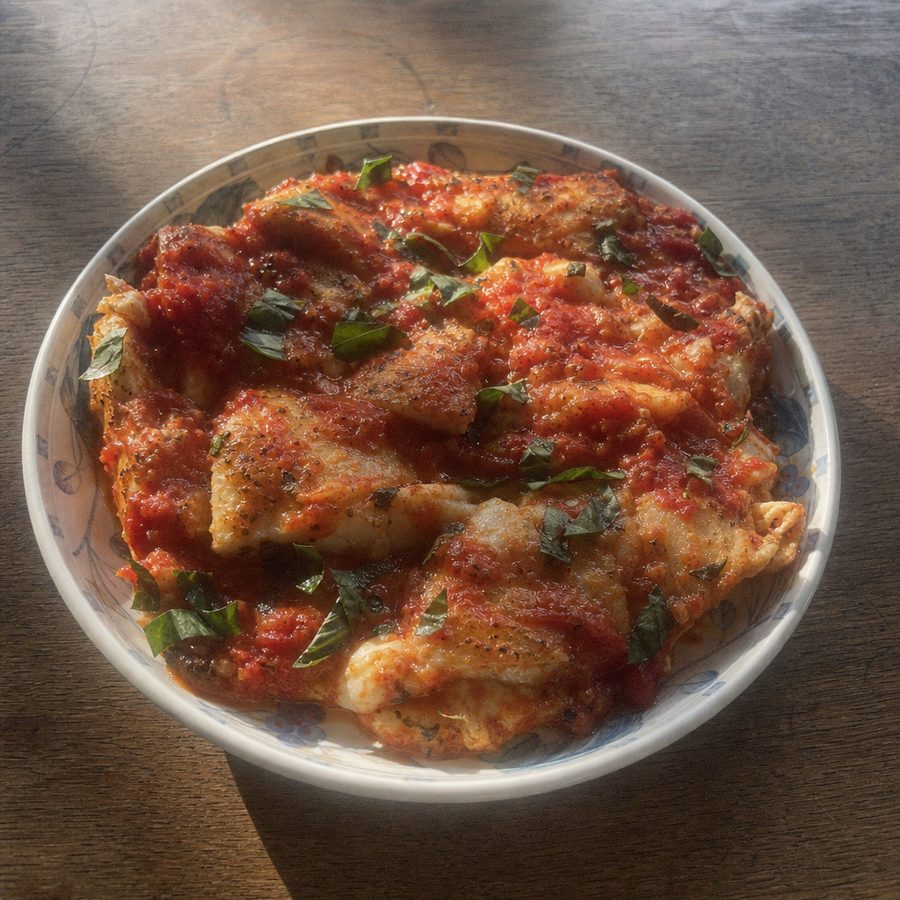
Ingredients
- 4 cod fillets (about 150 g each)
- 2 cups no-salt-added crushed tomatoes
- 1 medium onion, finely diced
- 5 garlic cloves, minced
- 1 large red bell pepper, diced
- 1/2 cup torn fresh basil
- 3 tbsp olive oil
- 2 tsp dried oregano
- 1/4 tsp sea salt
- 1/4 tsp black pepper
Instructions
- Prep the aromatics: Peel and finely dice the onion, peel and mince the garlic, and dice the red bell pepper into small, even pieces. Pat the cod fillets dry with paper towels and set them aside on a plate.
- Build the sauce base: Warm the olive oil in a wide skillet over medium heat. Add the onion and bell pepper and cook, stirring now and then, until softened and translucent, about 6 to 8 minutes. Add the garlic and cook until fragrant, about 1 minute, so it does not brown.
- Simmer the sauce: Stir in the crushed tomatoes and the dried oregano. Bring to a gentle bubble, then lower the heat and simmer, stirring occasionally, for about 10 minutes, until the sauce thickens slightly and tastes rounded rather than raw. Stir in the sea salt.
- Assemble: Preheat the oven to 400°F (200°C). Pour the sauce into a baking dish and spread it into an even layer. Settle the cod fillets into the sauce, then spoon some sauce over the top of each fillet to keep them moist.
- Bake: Bake, uncovered, for 15 to 18 minutes, until the cod turns opaque and flakes easily when pressed with a fork; the thickest part should reach 145°F (63°C) on an instant-read thermometer.
- Finish and serve: Tear the fresh basil and sprinkle it over the fish and sauce. Add a crack of black pepper and serve warm, spooning extra sauce over each fillet.
Variations
- Extra heat: Add a pinch of red pepper flakes to the sauce while the onion and pepper soften, or stir in a little minced fresh chili for a sharper, brighter burn.
- Briny depth: Stir a handful of chopped pitted olives and a spoonful of capers into the sauce in the last few minutes for a salty, savory edge. Both add sodium, so ease back on the sea salt.
- Green finish: Fold in a couple of large handfuls of baby spinach after the sauce simmers and let it wilt before adding the fish, for more greens and color in every bite.
- Different fish: Swap the cod for another firm white fish such as haddock or halibut. Adjust the bake time to the thickness of the fillets, cooking just until the fish flakes.
- Herb swap: Use torn fresh parsley or a little chopped fresh dill in place of the basil at the finish for a cleaner, more herbal note that leans away from sweetness.
Storage & Leftovers
Store leftovers in an airtight container in the refrigerator for up to three days. Keep the fish under the sauce, which helps it stay moist and makes reheating more forgiving.
Reheat gently to avoid overcooking the already-cooked fish. Warm a portion in a covered skillet over low heat, or in a covered dish in a low oven, just until heated through. A splash of water stirred into the sauce loosens it if it has thickened in the fridge. A microwave works in short bursts at reduced power, but the fish will be more tender if reheated slowly.
To get ahead, make the tomato sauce up to two days in advance and refrigerate it on its own. When you are ready to cook, spread the cold sauce in the baking dish, tuck in the fresh fillets, and bake as directed, adding a couple of extra minutes since the sauce starts cold.
Notes & Tips
- Buy cod smart: Look for fillets that are firm, translucent, and smell clean and briny rather than fishy. Thick, center-cut pieces cook more evenly than thin tail ends, which can overcook before the rest is done.
- Thaw frozen fillets fully: If using frozen cod, thaw it overnight in the fridge and pat it very dry before it goes into the sauce. Excess water thins the sauce and steams the fish instead of letting it bake gently.
- Know when it is done: Cod is ready the moment it turns from glossy and translucent to opaque and flakes with light pressure. When in doubt, check that the thickest point reaches 145°F (63°C); pull it right away, since it firms up as it rests.
- Season the sauce, not just the fish: Taste the sauce before the fish goes in and adjust then, while you can still stir. Because the salt is modest, a squeeze of lemon or a little more oregano can lift the flavor without reaching for more salt.
- Make it a full plate: The sauce is generous and made for soaking up, so serve the fish over cooked whole grains, alongside crusty bread, or with a simple green salad to round out the meal.
- Double the sauce: The tomato sauce keeps and freezes well on its own, so make a larger batch while the skillet is out and freeze half for a fast dinner another night.
Nutrition & Mindful Eating
- The sauce and the fish are not separate things here. The cod releases its juices into the tomatoes as it bakes and the tomatoes season the fish back, so you get savory protein and a pan of cooked vegetables in the same forkful.
- Cod is mild by nature, which is exactly why it belongs in a sauce this assertive. It absorbs the oregano and garlic around it and still breaks into clean white flakes, carrying the protein that makes this dinner rather than a side.
- Tomatoes cooked down in olive oil go deeper and sweeter than they ever taste raw, and simmering them in fat like this is also what makes their lycopene easier for your body to take up.
- Onion, garlic and bell pepper are the base of the sauce, softening long enough that their sharpness turns sweet, and the pepper in particular brings both its own fruity sweetness and a good dose of vitamin C.
- Dried oregano goes in early where it has time to bloom in the oil, and the fresh basil goes on at the end where the heat of the dish releases its smell as it reaches the table. That is the moment the sauce smells finished.
- As you eat, notice how easily the fork goes through the fish and how the basil rises off the sauce as you break into it, and let the meal be something you sit with for a while.
Frequently Asked Questions
Can I use frozen cod instead of fresh?
Yes. Thaw it fully in the refrigerator overnight, then pat it thoroughly dry before settling it into the sauce. Wet fillets release water that thins the sauce and can leave the fish steamed rather than tender.
How do I keep the cod from turning rubbery?
Watch the time and pull it as soon as it flakes and turns opaque, ideally at 145°F (63°C) in the thickest part. Cod overcooks quickly, and baking it right in the sauce protects it by surrounding it with gentle, moist heat.
Why is my sauce watery?
Either the tomatoes did not simmer long enough or the fish shed extra moisture. Let the sauce reduce until it coats a spoon before adding the cod, and pat the fillets dry first. Simmering the sauce a few extra minutes after baking also tightens it.
Can I make this ahead for guests?
Yes. Make the sauce up to two days ahead and refrigerate it separately, then spread it in the dish, add the fresh fillets, and bake just before serving so the cod is at its best. Add the basil only at the end.