
Baked Egg Pepper Rings
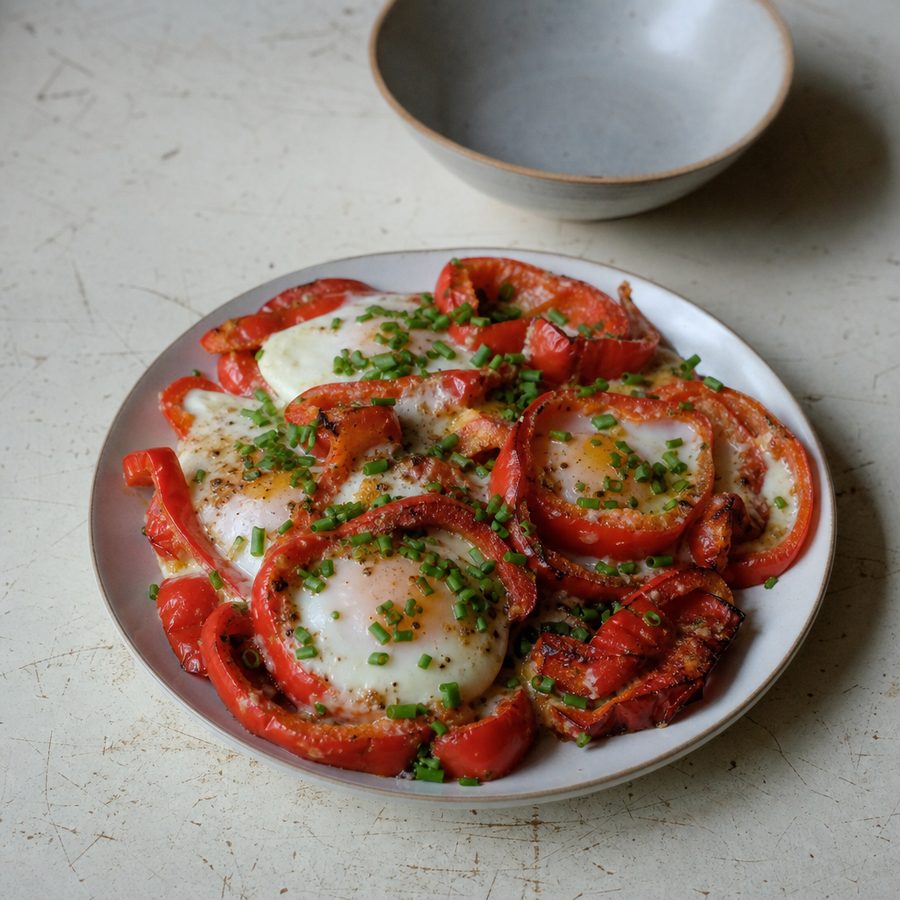
Sweet red bell pepper rings cradle a baked egg, brushed with olive oil and finished with fresh chives and a dusting of paprika.
Why You'll Love This Recipe
This is a simple, colorful hot snack that turns a couple of everyday ingredients into something that looks and eats like a small meal. A sweet red pepper ring becomes an edible vessel for a baked egg, seasoned with just salt, paprika, and fresh chives. It suits anyone who wants a quick, warm bite with real protein behind it, and because it comes together on a single sheet in the oven, it fits a busy morning or an afternoon that needs steadying without much hands-on work.
The pepper is both the container and the seasoning. As the ring bakes, the pepper softens and its natural sweetness deepens, which plays against the savory egg and the mild, slightly smoky note of the paprika. Brushing the rings with olive oil helps the edges take on a little color and keeps them from drying out, while cracking each egg into a cup first and easing it in gently keeps the yolk whole and the white contained. The chives go on only after baking, so they stay bright and fresh rather than wilting into the dish.
It satisfies because the egg brings substantial, staying protein and the pepper adds a juicy, tender crunch with real vegetable body, so a small portion feels like more than it looks. There is richness from the yolk and olive oil, brightness from the raw chives, and gentle warmth from the paprika, all without anything heavy or processed. It is naturally free of grains and dairy, which keeps it light on the stomach while still eating like something warm and nourishing.
Ingredients
- 2 large red bell peppers, cut into 1-inch rings
- 6 large eggs
- 1 tbsp olive oil
- 2 tbsp chopped chives
- 1/2 tsp paprika
- 1/4 tsp salt
Instructions
- Preheat and prep the pan: Preheat the oven to 375°F (190°C). Brush a rimmed baking sheet lightly with olive oil, or line it with parchment and brush the parchment, so the rings and any stray egg lift away cleanly.
- Cut the pepper rings: Stand each red bell pepper on its side and slice crosswise into rings about 1 inch thick. Cut out and discard the stem, and pull away the seeds and the pale inner membrane so each ring is an open, clean hoop. Choose rings that sit reasonably flat and have no splits in the wall, since those hold the egg best, and trim any that wobble until they sit steady on the pan.
- Chop the chives: Finely chop the chives and set them aside for garnishing at the end. They go on after baking rather than before, since 14 minutes in a hot oven takes every bit of freshness out of a chive.
- Arrange and oil the rings: Lay the pepper rings flat on the prepared sheet, spaced apart, and brush the top edges and the inner walls with olive oil until they glisten, which keeps the edges from drying out and helps them take a little color.
- Fill and season: Crack one egg into a small cup, then slide it into a pepper ring so the yolk settles in the center, and repeat for each ring. Working slowly keeps the yolk intact and helps the white stay inside the wall. Season each egg with salt and a light dusting of paprika.
- Bake until set: Bake for 12 to 14 minutes, until the whites are fully opaque and firm to a light touch and the yolks are set to your liking, still slightly jiggly in the center for a soft yolk or firm throughout for a set one.
- Garnish and serve: Sprinkle the chopped chives over the top and serve warm, lifting each ring with a thin spatula. Give them a minute on the pan before you move them, since a just-baked white tears if you rush it.
Variations
- Mixed pepper colors: Use a combination of yellow and orange bell peppers alongside the red for a range of sweetness and a brighter platter; the method stays exactly the same.
- Smoky version: Swap the paprika for smoked paprika to give the egg a deeper, campfire-like warmth that pairs well with the sweet pepper.
- Cheesy top: Sprinkle a little shredded cheese over each egg in the last few minutes of baking so it melts and browns lightly; this adds dairy.
- With a little heat: Add a pinch of red pepper flakes or a dusting of cayenne along with the salt for a gentle kick against the sweet pepper.
- Herb-forward finish: Trade the chives for chopped fresh dill, parsley, or cilantro scattered on after baking to change the whole character of the dish.
Storage & Leftovers
Refrigerate leftovers in an airtight container once fully cooled, and eat within three to four days. The pepper will soften and release a little moisture as it sits, so blot any pooled liquid before storing to keep the rings from getting soggy.
To reheat, warm the rings in a 325°F (163°C) oven or toaster oven until heated through, about eight to ten minutes, which keeps the pepper tender and the white from turning rubbery. A microwave works in a pinch on short bursts, but the egg firms up quickly, so stop as soon as it is warm.
To get ahead, cut and seed the pepper rings and chop the chives the night before, storing them separately in the refrigerator. In the morning you only need to oil, fill with eggs, season, and bake, which cuts the active work down to a few minutes.
Notes & Tips
- Pick the right pepper: Choose large, evenly rounded bell peppers with flat shoulders; wide, shapely peppers give you rings with tall, unbroken walls that hold an egg far better than small or lopsided ones.
- Cut from the middle: The rings from the center of the pepper are the most even and open, so save the tapered end pieces for another use rather than trying to fill their irregular shapes.
- Crack into a cup first: Breaking each egg into a small cup before pouring it in lets you keep the yolk whole and catch any shell, and it gives you much more control easing the egg into the ring.
- Judge doneness by the white: The whites tell you when it is ready: they should be fully opaque with no clear, glassy spots. Pull them earlier for a runny yolk or leave them a couple of minutes longer for a firm one.
- Seat rings that wobble: If a ring rocks on the pan, trim a thin sliver off the bottom edge so it sits flat; a level ring keeps the egg pooled in the center instead of running out one side.
- Serve it as a plate: These are filling on their own but round out easily into a meal alongside sliced avocado, a handful of greens, or fresh tomato; the sweet pepper takes to almost any simple, fresh partner.
Nutrition & Mindful Eating
- Pepper and egg make a complete little thing between them. The ring softens and holds its shape as a vessel, the white sets against it and the yolk stays loose, giving you protein and a whole vegetable in one round.
- The egg is what makes this filling. Baked just long enough, the yolk stays soft and runs into the pepper when you cut it, and that yolk is where the choline and the gold pigments live.
- Bell pepper roasted goes sweet in a way it never is raw, its walls collapsing slightly and its edges catching color, and the deep red of it is vitamin C and carotenoid pigment showing up as flavor.
- Paprika dusted over the top browns slightly and gives the egg a warm rust color, the olive oil helps the pepper edges catch, and the chives scattered on at the end are the fresh sharp thing in a soft mild snack.
- A couple of rings hold you longer than their size suggests, and the protein in the egg is doing most of that, along with the bulk and water of the pepper around it.
- As you eat, break the yolk on purpose and watch it run down into the pepper, then take the first bite slowly enough to taste the sweetness of the roasted pepper under the egg.
Frequently Asked Questions
Why does the egg leak out under the pepper ring?
That usually means the ring wall had a small split or did not sit flush against the pan. Choose rings with unbroken walls, press each one lightly onto the sheet before filling, and pour the egg in slowly so it settles rather than sloshing over an edge. A little seepage is normal and still bakes up fine.
Can I make these with a runny yolk?
Yes. Pull them from the oven closer to the 12-minute mark, as soon as the whites turn fully opaque; the yolks will still be soft and slightly jiggly in the center. For a firm yolk, leave them the full 14 minutes or a touch longer.
My pepper rings were still crisp after baking. How do I get them softer?
Cut the rings a little thinner so they cook through faster, and make sure you brushed the inner walls with olive oil, which helps them soften. You can also give the empty rings a few minutes in the oven before adding the eggs for a more tender bite.
Can I bake these in a muffin tin instead of on a sheet?
You can. Setting each pepper ring into a muffin cup helps contain the egg and keeps the rings upright, which is handy if your peppers are uneven. Oil the cups first and watch the timing, as the eggs may set a minute or two sooner in the deeper wells.