
Baked Feta With Olives and Tomatoes
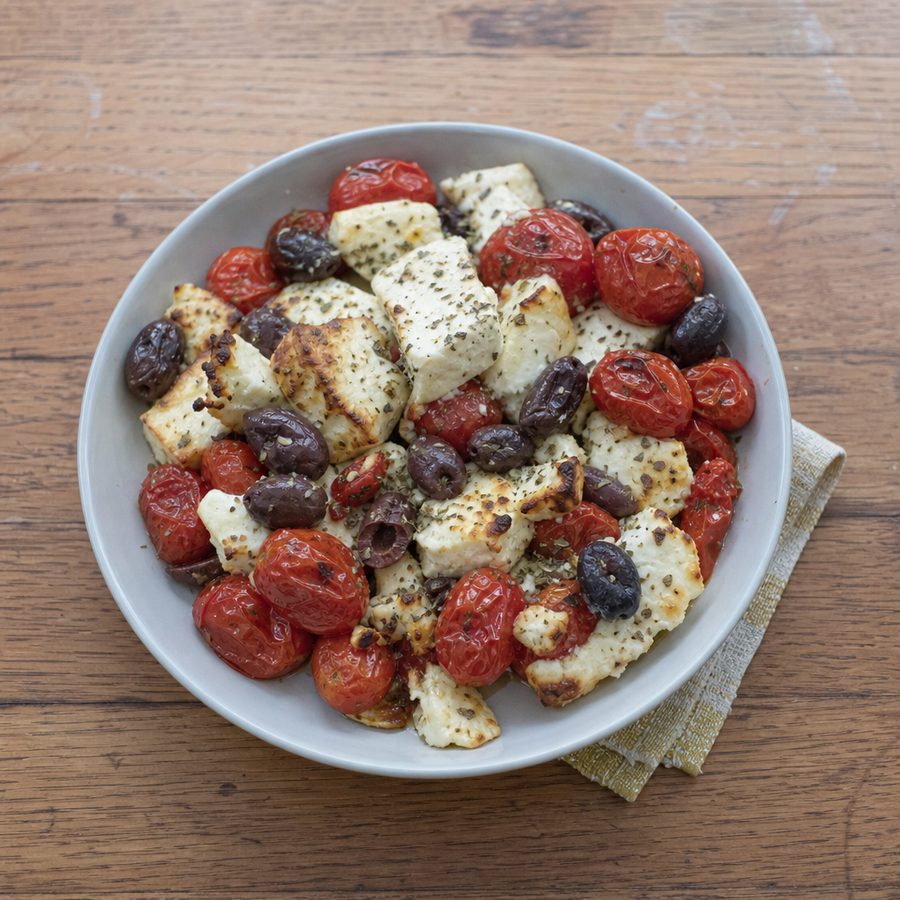
A warm block of feta baked until soft and golden at the edges, surrounded by cherry tomatoes that burst into a sweet-tart juice, briny kalamata olives, olive oil, and dried oregano.
Why You'll Love This Recipe
Feta goes soft and warm in the oven, and it turns into a snack that feels indulgent while leaning on whole, simple ingredients. It comes together in one dish with almost no hands-on work, which makes it a good fit for a weeknight when you want something hot and satisfying without a real cooking project. It is also generous enough to put in the middle of the table for people to share.
The magic is what heat does to each component. Baking the cherry tomatoes concentrates their sugars and coaxes them into bursting, releasing a jammy juice that becomes the sauce. The feta softens into a spoonable, creamy texture rather than melting into strings, and its saltiness balances the sweetness of the tomatoes. The kalamata olives add a briny, almost meaty depth, while the olive oil carries the oregano's aroma through the whole dish. Stirring at the end is the key step, since it turns three separate elements into one cohesive, saucy mixture.
Salt, fat, and acid together, the three things that make food taste complete. The feta brings protein and calcium, the olive oil and olives contribute heart-friendly unsaturated fats that help you feel full, and the tomatoes add fiber, vitamin C, and the antioxidant lycopene. Scooped up warm, it feels rich and comforting while staying light, so it holds you over between meals without weighing you down.
Ingredients
- 7 oz block feta
- 1 1/2 cups cherry tomatoes
- 1/2 cup pitted kalamata olives
- 4 tsp olive oil
- 1 1/2 tsp dried oregano
Instructions
- Heat the oven with a rack in the middle: Heat the oven to 400°F (200°C) and set a rack in the middle position. The middle matters with a small dish like this: too high and the feta colors before the tomatoes have had time to give up any juice, too low and the tomatoes stew instead of splitting.
- Choose a dish that fits snugly: Set the block of feta in the center of a small baking dish and arrange the rinsed cherry tomatoes and the pitted olives around it in a single layer. The dish should hold everything with very little room to spare, because the tomato juices are the sauce and they need to pool around the cheese rather than spread out thin across a big pan and burn.
- Oil and season everything, not just the cheese: Drizzle the olive oil evenly over the feta, the tomatoes, and the olives, then scatter the dried oregano over the top. Dried oregano needs fat and heat to give up its aroma, so oiling the tomatoes as well as the cheese is what carries that flavor into the sauce instead of leaving it as dust on the surface of the feta.
- Bake until the tomatoes split and bubble: Bake for 22 to 25 minutes, until the tomatoes have slumped and split open, their juices are bubbling around the edges of the dish, and the feta is soft with lightly golden patches. Waiting for the tomatoes to actually burst is the whole thing; pulled early they are still tight little balls and there is no sauce in the dish at all.
- Stir it together while it is hot: Take the dish out and stir gently but firmly, breaking the feta down into the tomato and olive juices until everything comes together into one loose, creamy mixture. Do it while it is hot, since the feta softens in the oven and firms up again as it cools, and a dish stirred five minutes too late stays as three separate things in a pan. Serve warm.
Variations
- Spicy: Sprinkle red pepper flakes over the top before baking, or tuck a sliced fresh chili in among the tomatoes for a slow, warming heat that cuts the richness.
- Garlic and herb: Add whole peeled garlic cloves to the dish before baking; they turn soft and sweet, and a handful of fresh basil or torn parsley stirred in at the end brightens everything.
- Extra vegetables: Add thin slices of red onion or strips of bell pepper alongside the tomatoes so they soften and caramelize in the same juices.
- Lemon and honey: Finish with a squeeze of fresh lemon and a light drizzle of honey after baking for a sweet-tart contrast; note that the honey adds a touch of sugar.
- Nutty crunch: Scatter chopped walnuts or pine nuts over the top for the last few minutes of baking so they toast; this adds tree nuts and a bit of crunch against the creamy feta.
Storage & Leftovers
Refrigerate leftovers in an airtight container for up to three days. The tomato juices will thicken as they chill, and the flavors actually deepen overnight, so day-two leftovers taste even more savory.
To reheat, warm it in a small oven-safe dish at 350°F (175°C) for about ten minutes, until it is hot and loose again. A short spell under the broiler at the end will revive the golden edges. You can also microwave a portion in short bursts, stirring between them, though the texture stays creamiest in the oven.
To get ahead, assemble the feta, tomatoes, and olives in the baking dish, cover, and refrigerate for up to a day before baking. Add the olive oil and oregano and slide it into the oven straight from the fridge, adding a couple of extra minutes to the bake time.
Notes & Tips
- Buy block feta, not crumbles: A solid block packed in brine softens into a creamy, scoopable center, while pre-crumbled feta is drier and often coated to prevent clumping, so it never melds the same way. Feta made from sheep's milk tends to be creamier and tangier than cow's-milk versions.
- Use a dish that fits: Choose a baking dish just large enough to hold the feta with the tomatoes and olives snug around it. Too much empty space lets the juices spread thin and dry out instead of pooling into a sauce.
- Pick ripe, firm tomatoes: The riper the cherry tomatoes, the sweeter the sauce, since baking concentrates whatever sugar is already there. On-the-vine tomatoes at their peak give the best burst and jammy juice.
- Watch the edges for doneness: You want the tomatoes fully split and bubbling and the feta's edges just turning golden. If the feta looks pale and the tomatoes are still tight, give it a few more minutes; the golden edges signal the flavor has developed.
- Taste before adding salt: Both the feta and the kalamata olives are already salty, so taste the finished mixture before reaching for any extra salt. A crack of black pepper is usually all it needs.
- Serve with something to scoop: This is at its best warm with warm pita, toasted crusty bread, or cucumber and endive spears for dipping. Have your scoopers ready before it comes out of the oven so you can eat it while the feta is still soft.
Nutrition & Mindful Eating
- Feta, olives and tomatoes are three strong flavors that happen to fit. The cheese is salty and creamy, the olives are briny and slightly bitter, the tomatoes are sweet and acidic, and roasting them together makes each one rounder than it was cold.
- Feta out of the brine is firm and crumbly, and heat turns it into something you can spread with the back of a spoon while it keeps its sharp tang, bringing protein and calcium into a dish otherwise made of vegetables and oil.
- Kalamata olives are the deepest note in the dish, purple and meaty and salty in a way that carries a long distance, and the fat in them is the same kind that makes olive oil worth pouring.
- Tomatoes roasted in a hot dish shrink and concentrate, their sugars catching at the edges, and they bring vitamin C and potassium along with the acidity that keeps something this salty from settling too heavily.
- Dried oregano scattered over the whole dish blooms in the hot oil and gives it a dry, woodsy warmth, and that oil at the bottom, by then full of cheese and olive and tomato, is the best part of the whole thing to mop up.
- As you eat, take some of the oil from the bottom of the dish with each bite and notice how the salt of the olives sets off the sweetness of the tomato, and take this one slowly.
Frequently Asked Questions
Why is my feta not melting into a smooth sauce?
Feta does not melt like mozzarella or cheddar; it softens and becomes creamy but keeps some structure. If yours stayed firm, it may have needed a few more minutes, or you may have used a drier pre-crumbled feta. Start with a brine-packed block and stir it into the hot tomato juices at the end to loosen it.
Can I make this without the olives?
Yes. The olives add brininess and depth, but the dish still works with just the feta, tomatoes, oregano, and oil. Without them the flavor is a little milder and less salty, so you may want a touch more oregano or a crack of pepper to compensate.
What can I serve it with?
It shines as a warm dip with pita, toasted crusty bread, or crackers, and cucumber and endive spears make crisp, lighter scoopers. You can also spoon it over grilled vegetables or fold it into warm grains as a topping.
Can I use a different tomato?
Cherry or grape tomatoes work best because they burst cleanly and hold their sweetness. If you only have larger tomatoes, cut them into chunks so they slump and release juice, but expect a slightly wetter, less concentrated sauce.