
Baked Halibut With Romesco
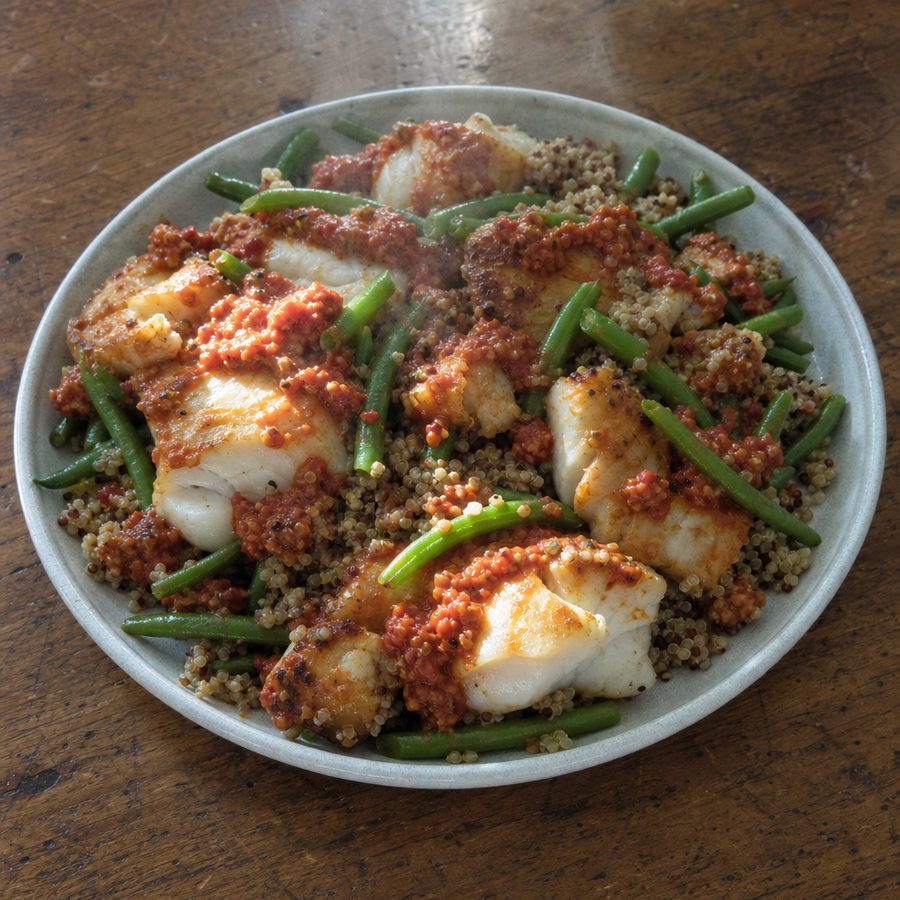
Roasted halibut draped in a smoky sauce of charred red bell peppers, crushed tomatoes, garlic, and smoked paprika, served over quinoa with garlicky green beans and a squeeze of lemon.
Why You'll Love This Recipe
This is a bright, satisfying weeknight dinner for anyone who wants a plate built around white fish and vegetables without much fuss. Halibut is a firm, mild white fish that holds its shape and does not fall apart, which makes it forgiving for cooks who feel nervous about seafood. Everything roasts on sheet pans at one temperature, so the active work is mostly blending a sauce and trimming beans.
The dish works because the romesco does the heavy lifting. Roasting the red bell peppers until their skins blister concentrates their natural sugars and adds a gentle smokiness, which the smoked paprika deepens further. Blended with roasted garlic, crushed tomatoes, olive oil, and lemon juice, it becomes a thick, tangy, savory blanket that clings to the mild fish and lifts the whole plate. Baking the halibut just until it flakes keeps it moist rather than dry and rubbery.
Fish, grain, and vegetable, each doing its share. Halibut brings firm, high-quality protein that keeps you full, the quinoa contributes whole-grain carbohydrate and fiber, and the green beans and the pepper sauce add vegetables, color, and vitamins. Olive oil ties it together, and the lemon and parsley keep each bite feeling fresh rather than heavy. The romesco is worth making in a double batch while the oven is on, since it keeps for the better part of a week and turns plain roasted vegetables or a piece of chicken into something worth sitting down to.
Ingredients
- 4 halibut fillets (about 600 g)
- 2 large red bell peppers
- 4 cups green beans, trimmed
- 1/2 cup crushed tomatoes
- 5 garlic cloves
- 2 tsp smoked paprika
- 3 1/2 tbsp olive oil
- 2 tbsp lemon juice
- 3 cups cooked quinoa
- 1/4 cup chopped parsley
- 3/4 tsp salt
Instructions
- Heat the oven and get the quinoa going: Heat the oven to 425°F (220°C). Rinse the quinoa in a fine-mesh sieve under cold water to wash off its bitter coating, then simmer it for about 15 minutes, until the grains are tender and the little tails have uncoiled, and fluff it with a fork. Trim the green beans, peel the garlic, and chop the parsley while it cooks, so the oven work can run without interruption.
- Roast the peppers until the skins blister: Halve the red peppers and remove the seeds and stems, then set them cut side down on a sheet pan with a few garlic cloves and roast for about 15 minutes, until the skins are blistered and charred and the flesh is soft. Cut side down is the whole trick, because the skin takes the direct heat and lifts away from the flesh underneath, so it peels off in sheets once the peppers have cooled slightly.
- Blend the romesco thick, not thin: Put the roasted peppers and garlic into a blender with the crushed tomatoes, smoked paprika, olive oil, lemon juice, and salt, and blend until smooth and thick. Keep it thick enough to hold its shape on a spoon, since a loose romesco runs off the fish and pools on the plate rather than sitting on top where you taste it first. Taste and adjust the salt.
- Bake the fish among the beans, 12 to 14 minutes: Mince the remaining garlic, toss the green beans with it and olive oil directly on a sheet pan, and spread them out. Pat the halibut dry, tuck the fillets among the beans, drizzle lightly with oil, and bake for 12 to 14 minutes, until the fish is opaque, flakes easily, and reads 130 to 135°F (54 to 57°C), which is halibut cooked to medium and the point most cooks aim for. The FDA figure for any seafood is 145°F (63°C), and halibut taken that far turns firm and dry, so cook it to whichever of the two you would rather eat. Tucking the fillets among the beans rather than setting them on bare metal shields them from the pan's direct heat, which is what keeps a firm fish like halibut from drying at the edges.
- Sauce it at the plate: Spoon the romesco generously over each fillet, scatter the parsley, and serve with the quinoa and beans, with any extra sauce on the side. The sauce goes on at the plate rather than in the oven, because roasting it a second time would dull the smoked paprika and the raw lemon in it, which are the two things holding it up.
Variations
- Add a nutty crunch: Blend a handful of toasted almonds into the romesco for a more traditional, textured sauce. This adds nuts.
- Swap the fish: Trade the halibut for cod, salmon, or another firm fillet; adjust the bake time to the thickness so it flakes but stays moist.
- Change the grain: Serve the fish and romesco over farro, brown rice, or couscous instead of quinoa. Couscous adds gluten.
- Turn up the smoke and heat: Add a pinch of hot smoked paprika or a small roasted chili to the blender for a romesco with more warmth and a low, lingering heat.
- Brighten with citrus and herbs: Finish with extra lemon zest and a scattering of fresh basil or mint alongside the parsley for a livelier, more aromatic plate.
Storage & Leftovers
Store leftovers in an airtight container in the refrigerator for up to three days. Keep the romesco in its own container if you can, since the sauce holds up better than fish that has been sitting in it.
Reheat the halibut gently, either in a covered dish in a low oven around 300°F (150°C) until just warmed through, or in short bursts in the microwave at reduced power so it does not overcook and turn dry. Warm the quinoa and green beans separately, adding a splash of water to the quinoa to loosen it. Reheat the romesco on its own and spoon it over at the end.
The romesco is the ideal make-ahead component: blend it up to three days in advance and keep it chilled, or freeze it for up to two months. Cooked quinoa also keeps well ahead of time, so on a busy night you only need to roast the fish and beans.
Notes & Tips
- Pick the right halibut: Look for fillets that are firm, translucent, and smell clean like the sea, not fishy. Even thickness cooks more evenly; if one end is thin, tuck it under so the fillet bakes uniformly.
- Peel the peppers for a silkier sauce: Letting the roasted peppers steam under a bowl or in a covered container for a few minutes makes the charred skins slip off easily, giving you a smoother romesco without bitter bits of char.
- Dry the fish before baking: Patting the halibut dry with a paper towel helps the surface firm up in the oven instead of steaming, so the romesco sits on top rather than sliding off.
- Use the fork test for doneness: The fish is ready when it turns opaque and the flakes separate with gentle pressure from a fork. If it still looks glassy in the center, give it another minute or two.
- Season the romesco to taste: The sauce is where you control the flavor. Taste after blending and adjust with more lemon for brightness, more paprika for smoke, or a touch more salt to make everything pop.
- Double the romesco: The sauce keeps well and freezes, so it is worth making extra. Spoon it over eggs, roasted vegetables, or grains later in the week.
Nutrition & Mindful Eating
- Fish, sauce and grain each earn their place on this plate. The halibut is firm and mild, the romesco is smoky and sweet and thick, and the quinoa underneath soaks up whatever runs off, so protein, fiber and fat all land together.
- Halibut holds together in thick meaty flakes where softer fish would fall apart, which is why it can stand up to a sauce this loud, and the protein it carries is what makes a plate this colorful into an actual dinner.
- Roasted red peppers and tomatoes blended together are what make romesco sweet, and the smoked paprika and garlic are what make it savory. Between them they carry the vitamin C and the red pigments that give the sauce its color.
- Quinoa cooks up light and separate with a faint nutty bite, and it does more than sit under the fish, soaking up the romesco while adding its own fiber and complete protein to the plate.
- Green beans roasted until they blister keep a squeak to them, the parsley over the top is grassy and clean, and the lemon squeezed across everything at the end is what cuts through the smoke of the sauce.
- As you eat, get some sauce onto every bite and notice how the smoke of the paprika lands against the lemon, and stay at the table long enough for the meal to feel like one.
Frequently Asked Questions
How do I know when the halibut is done without overcooking it?
Halibut is cooked when it turns from translucent to opaque and flakes easily when nudged with a fork, around an internal temperature of 130 to 135°F (54 to 57°C). Halibut firms up fast, so it goes from perfect to dry quickly; start checking at 12 minutes and pull it as soon as it flakes.
Can I make the romesco ahead of time?
Yes, and it actually improves as the flavors meld. Blend it up to three days ahead and refrigerate, or freeze it for up to two months. Bring it to room temperature or gently warm it before spooning it over the fish.
Do I have to peel the roasted peppers?
Peeling gives a smoother, sweeter sauce and removes any bitterness from the charred skin. If you are short on time you can blend them with the skins on, but let the peppers steam a few minutes first and the skins will slip right off.
Can I use frozen halibut?
Yes. Thaw it fully in the refrigerator overnight, then pat it very dry before baking so it roasts rather than steams. Frozen fillets work well as long as excess moisture is removed.