
Baked Mackerel With Braised Red Cabbage
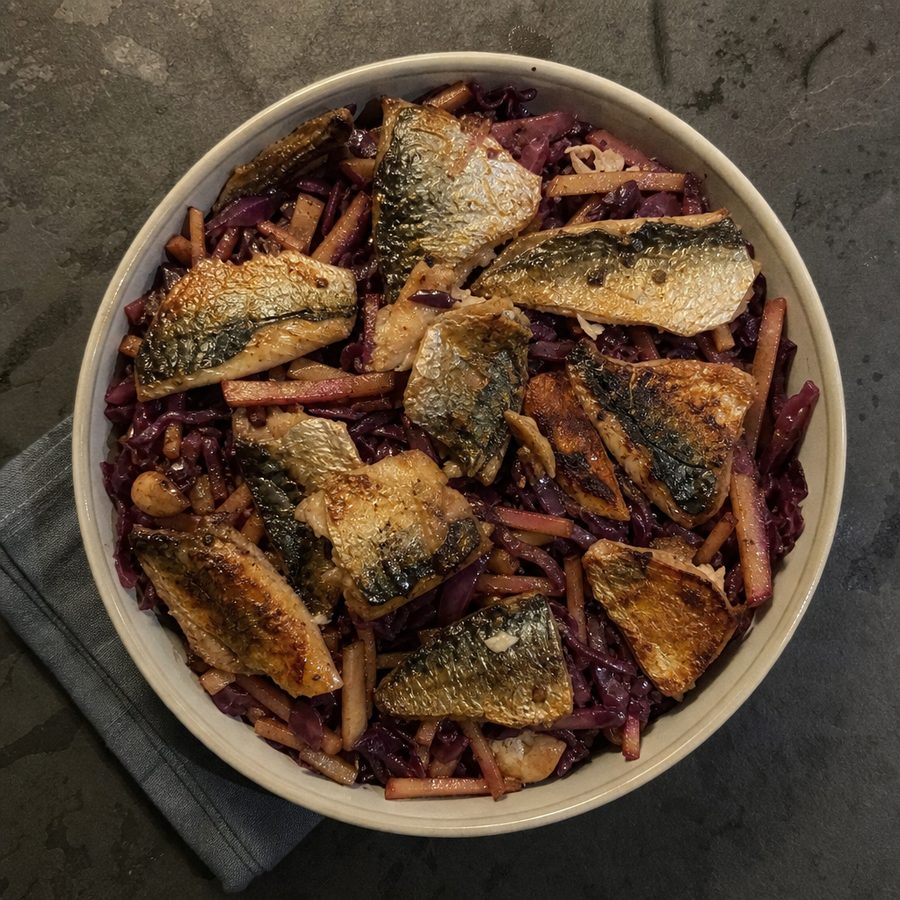
Rich baked mackerel fillets rubbed with thyme and olive oil, laid over red cabbage slowly braised with apple, onion, and balsamic and finished with a squeeze of fresh lemon.
Why You'll Love This Recipe
This is a plate built for a cold-weather weeknight, for anyone who wants a fast, deeply flavored dinner without a long ingredient list. Oily mackerel is one of the most affordable rich fish at the counter, and here it sits over a sweet-tart tangle of red cabbage and apple that turns a humble head of cabbage into something that tastes slow-cooked. It comes together in about the time it takes the oven to do its work, which makes it realistic for a Tuesday.
A low, covered braise, and time. Cooking the shredded cabbage under a lid with the onion, apple, and balsamic lets it steam in its own moisture until the fibers soften and the color deepens to a jewel red. The balsamic reduces slightly and its sweetness balances the natural bite of the cabbage, while the apple melts down and rounds everything out. Meanwhile the mackerel roasts hot and quick in a dry oven, so its skin firms up and the flesh stays moist and just set. Finishing the cabbage with raw lemon juice off the heat keeps that brightness sharp instead of dull.
It fills you up on contrast: the fish is full-flavored and full of the good fats that keep you full, while the cabbage is tender but still has body and a clean, tangy edge that cuts the richness. Mackerel is an excellent source of long-chain omega-3 fats and protein, and the cabbage and apple bring fiber and color-rich plant compounds to the plate. It eats like comfort food but leaves you feeling light rather than heavy.
Ingredients
- 4 mackerel fillets (about 640 g total)
- 1/2 head red cabbage, shredded
- 1 large apple, thinly sliced
- 1 onion, sliced
- 2 tbsp ghee (use avocado oil to keep it dairy-free)
- 2 tbsp olive oil
- 2 tbsp balsamic vinegar
- 1 tbsp fresh lemon juice
- 1 tbsp fresh thyme
- 3/4 tsp salt
Instructions
- Shred the cabbage thin and cut out the core: Peel and thinly slice the onion. Halve the red cabbage through the core, cut the tough white core away, and shred the leaves into thin ribbons. Core and slice the apple, and strip the thyme leaves from their stems. Take the core out properly, because it never softens the way the leaves do and it turns up as hard white chips in an otherwise silky braise.
- Soften the onion first, about 5 minutes: Melt the ghee in a large skillet over medium heat, add the onion, and cook for about 5 minutes, stirring now and then, until it is soft and translucent. The onion goes in alone so that it has time to sweeten; added with the cabbage it would still be sharp and raw at the end, because a covered pan full of cabbage steams rather than browns.
- Braise the cabbage and apple, about 20 minutes: Add the shredded cabbage, the apple, the balsamic vinegar, and part of the salt, stir to coat, then cover and turn the heat to medium-low. Braise for about 20 minutes, stirring once or twice, until the cabbage is silky and tender and the apple has broken down into it. Add a splash of water if it looks dry before it is tender, since the vinegar reduces faster than the cabbage softens.
- Bake the mackerel while the cabbage goes: Heat the oven to 425°F (220°C) and line a baking sheet. Pat the mackerel dry, lay the fillets skin side down, and rub the flesh with the olive oil, thyme, and remaining salt. Bake for about 12 minutes, until the flesh is opaque, flakes easily, and reaches 145°F (63°C). Skin side down on the parchment keeps the delicate flesh off the hot metal, so it cooks through gently rather than tightening on the underside.
- Finish the cabbage with lemon, off the heat: Stir the lemon juice into the braised cabbage with the heat off and taste for salt. The acid lifts the sweetness of the apple and cuts the richness of the fish, and it goes in at the end because lemon simmered in a covered pan loses its edge within a couple of minutes. Spoon a bed of cabbage onto each plate, lay a fillet on top, and serve while the fish is hot and the cabbage still glossy.
Variations
- Swap the fish: Trout, sardine, or arctic char fillets stand in nicely for the mackerel, all of them rich and quick to bake. Adjust the oven time to the thickness of the fillets and pull them when the flesh flakes.
- Pear instead of apple: Trade the apple for a ripe but firm pear for a softer, more floral sweetness in the braise. It breaks down a touch faster, so keep an eye on it toward the end.
- Add fennel: Slice a bulb of fennel thin and soften it alongside the onion before the cabbage goes in. It adds a gentle anise note and more body to the base.
- Warm it with cinnamon: A pinch of ground cinnamon or a small cinnamon stick added to the braise turns the cabbage and apple cozier and more autumnal. Fish out the stick before serving.
- Finish with honey: For a rounder sweet-tart balance, stir a little honey into the cabbage along with the balsamic; this adds sugar. Taste as you go so it complements rather than overwhelms the tang.
Storage & Leftovers
Store leftovers in an airtight container in the refrigerator. The braised cabbage keeps well for up to four days and actually deepens in flavor overnight. The cooked mackerel is best within two days, since oily fish takes on a stronger aroma the longer it sits; keep the fish and cabbage in separate containers if you can.
Reheat the cabbage gently in a skillet over medium-low heat with a splash of water to loosen it, stirring until warmed through. Mackerel is best rewarmed slowly in a low oven, around 275°F (135°C), just until heated so it does not dry out or turn rubbery; a quick warm in a covered skillet works too. Many people enjoy the fish cold or at room temperature over the reheated cabbage, which sidesteps the reheating question entirely.
To get ahead, braise the cabbage a day or two in advance and refrigerate it, since it holds beautifully and reheats without losing texture. Leave the lemon out until you rewarm it and add the fresh juice at the last moment so it stays bright. Bake the mackerel fresh the day you serve, as it takes only minutes once the cabbage is ready.
Notes & Tips
- Buy the freshest mackerel you can: Mackerel is oily and turns quickly, so look for fillets that smell clean and briny, not fishy, with firm, glossy flesh. Run your fingertips along each fillet and pull any stray pin bones with tweezers before it goes in the oven.
- Shred the cabbage evenly: Cut the ribbons as uniformly thin as you can so the cabbage braises at the same rate; thick, uneven chunks will still be crunchy when the thin bits are already soft. A sharp knife or the slicing side of a box grater both work well.
- Pick a firm, tart apple: A crisp, tart-leaning apple holds its shape better through the braise and plays against the balsamic. A very soft, sweet apple can dissolve completely, which is fine if you want the cabbage saucier.
- Let doneness guide the fish, not the clock: Ovens and fillet thickness vary. The fish is done when it turns opaque and the flakes separate easily under a fork; an instant-read thermometer should show 145°F (63°C) at the thickest part.
- Balance the sweet and sour at the end: Taste the cabbage after the lemon goes in. If it reads too sweet, add a few more drops of lemon; if too sharp, a small pinch of salt softens the edge. The goal is a clear sweet-tart balance under the rich fish.
- Make it a fuller plate: This is a light, protein-forward dinner. Round it out with a side of roasted root vegetables or a simple green salad if you want more on the table.
Nutrition & Mindful Eating
- The mackerel, the cabbage and the apple balance each other on the plate. The fish is rich and full flavored, the cabbage turns silky and sweet sour in the pan, and the apple softens into it so the richness never sits too heavily.
- Mackerel is a proper oily fish, which is why the flesh stays moist all the way through the oven heat, and that same oil is where its long chain omega-3 fats sit.
- Red cabbage turns a deep jewel color as it braises, and the anthocyanins behind that color are the same plant pigments researchers have linked to heart health. The slow cook takes its raw edge off entirely.
- Balsamic vinegar, thyme and a squeeze of lemon keep this from tasting like one flat rich note. The vinegar goes in with the cabbage so it has time to mellow, and the lemon goes over the fish at the very end.
- Fish this rich holds you for a long stretch. The protein and the fat in the mackerel do most of that, along with the fiber from the cabbage and apple, and it is why a modest fillet eats like a full dinner.
- As you eat, take a bite of the fish with a forkful of cabbage and notice how the sweet sour braise meets the richness of the mackerel, and give the meal enough time to register before the plate is empty.
Frequently Asked Questions
My mackerel smells quite strong. Is that normal?
Mackerel is an oily fish with a naturally pronounced aroma, and the smell intensifies as it sits. Very fresh fillets should smell clean and of the sea, not sour or ammonia-like. The lemon at the finish and the sweet-tart cabbage are there in part to balance that richness, and cooking it hot and quick keeps the flavor at its best.
Can I use a whole mackerel instead of fillets?
Yes. Rub a cleaned, gutted whole fish with the olive oil, thyme, and salt inside and out, and bake at the same temperature; it will take longer than fillets, so check that the flesh at the backbone is opaque and pulls away easily. Filleting it at the table over the cabbage makes for a rustic presentation.
The cabbage tastes too sweet or too sharp. How do I fix it?
This dish lives on the balance between the sweet balsamic and apple and the tart lemon. If it leans too sweet, add a little more lemon juice off the heat; if it is too sharp, a small pinch of salt rounds it out. Taste and adjust at the very end rather than at the start.
Do I need to peel the apple first?
No. The peel softens during the long braise and adds fiber and color, so you can leave it on. Just core the apple and slice it thin so it melts into the cabbage rather than staying in firm pieces.