
Baked Mackerel With Potatoes and Peas
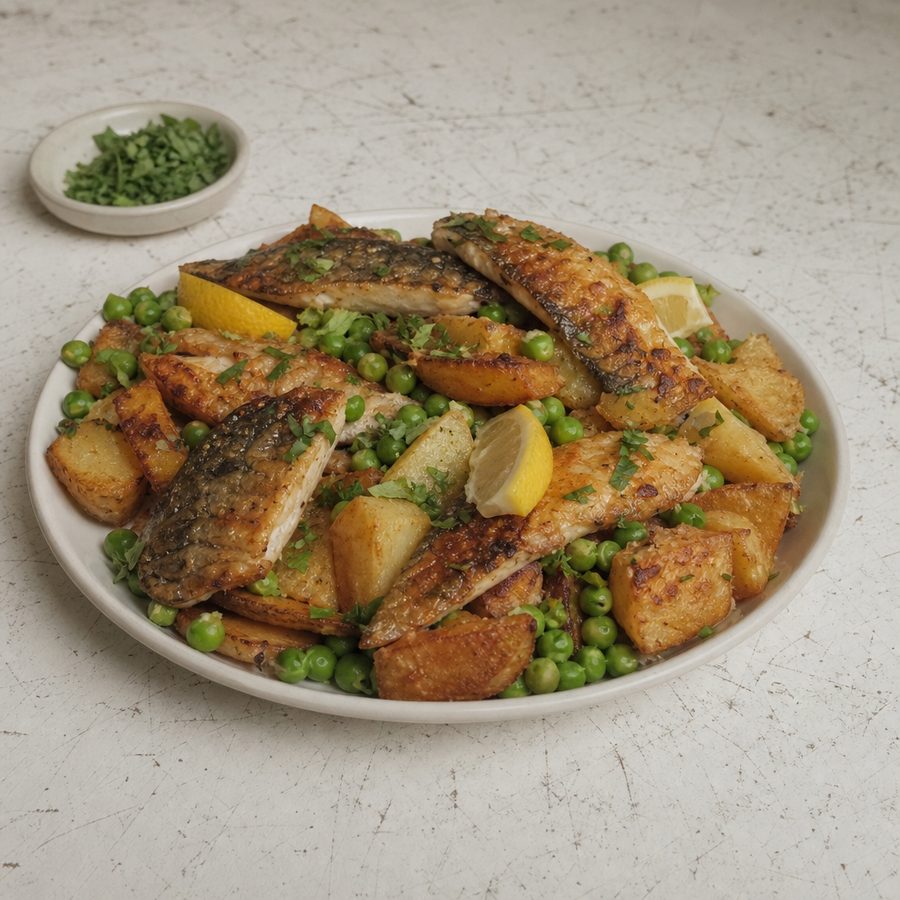
Rich mackerel fillets roasted with garlic, lemon, and paprika over crisp potato wedges, finished with sweet green peas and a shower of fresh dill and parsley.
Why You'll Love This Recipe
Hearty and warming from a single pan, without much fuss or cleanup. The mackerel roasts right alongside the potatoes, so the fish stays moist while the wedges crisp, and the peas and fresh herbs at the end keep it from feeling heavy. It suits a busy weeknight but is nice enough to set in front of guests, and it leans on the familiar, comforting flavors of fish with potatoes.
Two foods, one pan, and one of them goes in late. The potatoes get a head start in a hot oven so they have time to soften inside and crisp outside, then the mackerel goes in for the final stretch, which is all a thin, oily fillet needs. Mackerel is a rich fish, and the lemon juice and paprika cut that richness while the garlic and olive oil tie the fish and potatoes together. Adding the peas and raw chopped herbs only at the end keeps their color bright and their flavor fresh rather than muddy.
Real substance arrives on a single plate here: a generous, protein-rich fillet, starchy potatoes for real staying power, and peas that add both sweetness and fiber. Mackerel is one of the richest sources of omega-3 fats, and the herbs, lemon, and garlic give it plenty of brightness so it tastes light despite being filling. You finish the meal full and nourished rather than weighed down.
Ingredients
- 4 mackerel fillets (about 600 g)
- 4 cups cooked potato wedges
- 2 cups green peas
- 4 garlic cloves, minced
- 3 1/2 tbsp olive oil
- 2 tbsp lemon juice
- 2 tbsp chopped fresh dill
- 1/4 cup chopped parsley
- 1 1/2 tsp paprika
- 3/4 tsp salt
Instructions
- Preheat and prep: Preheat the oven to 425°F (220°C). Scrub the potatoes and cut them into wedges about a half-inch thick at the skin so they cook evenly. Peel and mince the garlic.
- Roast the potatoes: On a rimmed sheet pan, toss the potato wedges with olive oil, paprika, and half of the minced garlic until evenly coated. Spread them in a single layer, cut-sides down, and roast for 12 minutes so they begin to color and soften.
- Add the mackerel: Pat the mackerel fillets dry with paper towels. Pull the pan from the oven and tuck the fillets skin-side down among the potatoes. Drizzle the fish and potatoes with the remaining olive oil, scatter over the rest of the garlic, spoon the lemon juice over the fish, and season everything with salt.
- Bake through: Return the pan to the oven and bake for 12 to 14 minutes, until the mackerel is opaque and flakes easily with a fork and reads 145°F (63°C) at the thickest part, and the potatoes are crisp and golden at the edges.
- Cook the peas: While the fish bakes, bring a small pot of water to a boil and cook the green peas until tender and bright green, about 3 minutes, then drain. Frozen peas need only 2 to 3 minutes to heat through.
- Finish and serve: Roughly chop the fresh dill and parsley. Scatter the warm peas over the pan, then garnish with the chopped dill and parsley. Serve straight from the pan while the potatoes are hot.
Variations
- Swap the fish: Trade the mackerel for another oily fillet like salmon or trout. Both roast in about the same time; check that the thickest part flakes and reaches 145°F (63°C).
- Warm the spice: Add a pinch of smoked paprika or a little cayenne with the regular paprika for a deeper, gently smoky heat that plays well against the rich fish.
- More green on the plate: Roast a handful of green beans or asparagus alongside the potatoes when you add the fish, so everything finishes together.
- Creamy finish: Stir a spoonful of yogurt with lemon, dill, and garlic into a quick sauce to serve on the side. This adds dairy.
- Brighter and sharper: Add lemon zest and a spoonful of capers over the fish before serving for a briny, tangy lift that suits the mackerel.
Storage & Leftovers
Refrigerate leftovers in an airtight container within two hours of cooking, and use them within two days. Mackerel is a delicate, oily fish, so keep the fillets and potatoes stored together and chilled promptly for the best flavor.
Reheat in a 350°F (175°C) oven or toaster oven for about 8 to 10 minutes so the potatoes re-crisp and the fish warms gently through; a microwave works in a pinch but softens the potatoes and can make the mackerel smell stronger. Add the peas and a fresh squeeze of lemon after reheating so they stay bright.
To get ahead, cut the potato wedges and mince the garlic a day early and keep them in the fridge, with the potatoes covered in cold water so they do not brown; drain and pat them dry before tossing with oil. You can also chop the dill and parsley a few hours ahead and store them wrapped in a damp paper towel.
Notes & Tips
- Choose the freshest mackerel: Look for fillets that are firm and glossy with a clean, sea-fresh smell rather than a strong fishy one. Mackerel is oily and turns quickly, so cook it the day you buy it or the day after.
- Cut potatoes evenly: Keep the wedges a uniform thickness so they all finish at the same time. Thinner wedges crisp faster but can scorch, while thick ones may still be firm inside when the fish is done.
- Do not crowd the pan: Give the potatoes room in a single layer. Piled up, they steam and turn soft instead of crisping; use two pans if you are cooking a large batch.
- Frozen peas are fine: There is no need for fresh peas here. Frozen ones are picked and frozen at their peak and only need a couple of minutes to warm, staying sweet and tender.
- Judge fish doneness by the flake: The mackerel is ready when it turns opaque and separates into clean flakes at a nudge from a fork. If you have a thermometer, 145°F (63°C) at the thickest point is your cue; pull it right away, as thin fillets overcook fast.
- Adjust the seasoning at the end: Taste before serving and add a final squeeze of lemon or a pinch more salt if the dish needs lifting. Rich fish takes acid well, and a little brightness at the finish makes everything taste cleaner.
Nutrition & Mindful Eating
- Fish, potato and peas works because each part does something different. The mackerel carries the richness and the protein, the potatoes give the plate its comfort and its bulk, and the peas break both of those up with sweetness.
- Mackerel bakes into big soft flakes and holds its moisture because of the oil already in the fish, and that oil is where its long chain omega-3 fats and its vitamin D come from.
- Potatoes roasted with their skins on go crisp at the corners and stay creamy in the middle, and the skin is where a good share of their fiber and potassium sits.
- Green peas are sweeter than people expect and they keep that sweetness through cooking, which is what gives this plate its lift, and they bring a little plant protein and fiber with them.
- Dill, parsley, paprika and lemon are what make this taste like a dish rather than three things sharing a plate. The paprika colors the fish, the herbs go on fresh, and the lemon lands over all of it.
- As you eat, see how easily the mackerel breaks apart under the fork and how sharply the lemon cuts through it, and sit down with the plate rather than eating it standing over the pan.
Frequently Asked Questions
My mackerel tastes very strong. Is that normal?
Mackerel is naturally rich and full-flavored, which is part of its appeal, but a fishy smell means it is past its best. Buy it very fresh, cook it promptly, and lean on the lemon juice and fresh herbs, which cut the richness and keep it tasting clean.
Do I need to remove the skin from the fillets?
No. Roasting the fish skin-side down protects the flesh and the skin becomes pleasantly crisp and edible. If you prefer, you can lift the flesh off the skin once it is cooked, since it releases easily.
Can I use canned mackerel instead of fresh fillets?
This dish is built around roasting fresh fillets, so canned mackerel will not give you the same crisp result. If it is all you have, roast the potatoes and peas as written and gently fold the drained canned fish in at the end just to warm through.
Why are my potatoes not crisping up?
The usual culprits are crowding the pan or wet potatoes. Spread the wedges in a single layer with space between them, and pat them dry after cutting so the oil can crisp the surface instead of steaming it.