
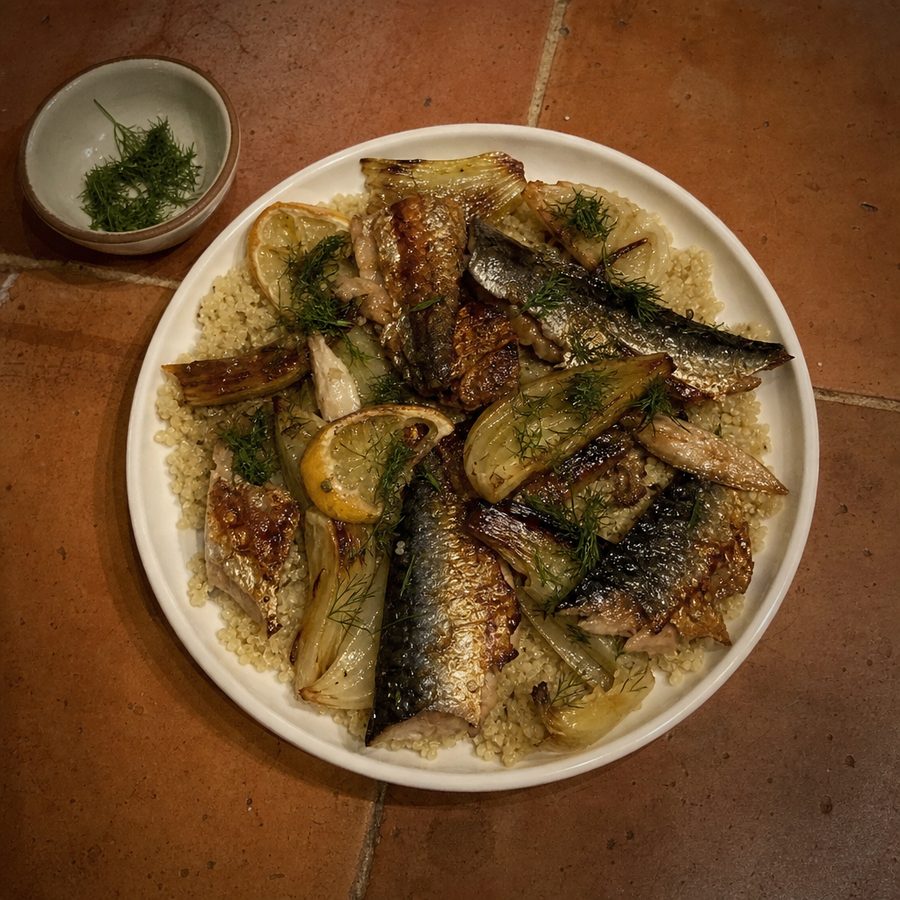
Baked Mackerel With Roasted Fennel and Lemon Quinoa
Rich, oil-basted mackerel fillets bake over caramelized fennel wedges and lemon-and-garlic quinoa, finished with fresh thyme and chopped parsley for a bright, savory plate.
Why You'll Love This Recipe
This is a weeknight-friendly sheet-pan dinner for anyone who wants a substantial, deeply savory plate of fish without much fuss or cleanup. Mackerel is one of the richest, most affordable fish at the counter, and pairing it with sweet roasted fennel and a bright, lemony grain turns an oily, assertive fillet into a balanced, crave-worthy meal. It suits cooks who like bold flavor and want dinner on the table in well under an hour.
Roasting in two waves on one pan is what does it. The fennel gets a head start at high heat so its edges caramelize and its licorice sharpness mellows into something sweet and nutty, and only then does the fish go in, so both finish together without the mackerel drying out. Basting the fillets with olive oil before baking helps the tops color and keeps the flesh moist, while stirring lemon juice and raw garlic into the warm quinoa off the heat keeps that dressing sharp and fresh rather than cooked-down and flat.
The plate satisfies on several fronts. Mackerel is loaded with long-chain omega-3 fats and delivers a generous hit of protein that keeps you full, the quinoa brings fiber and a complete set of amino acids, and the fennel adds gentle sweetness plus more fiber and volume. Bright lemon, pungent garlic, earthy thyme, and grassy parsley keep every bite lively, so the richness of the fish reads as luxurious rather than heavy.
Ingredients
- 4 mackerel fillets (about 5 oz each)
- 2 fennel bulbs, cut in wedges
- 3 cups cooked quinoa
- 4 tbsp olive oil, divided
- 3 tbsp fresh lemon juice
- 5 garlic cloves, minced
- 1 1/2 tsp fresh thyme
- 1/4 cup chopped parsley
- generous 1/2 tsp salt
Instructions
- Have the quinoa ready: This builds on quinoa that is already cooked, so have it out and ready to dress at the end. Starting from dry instead, rinse it well under cold running water in a fine-mesh sieve to wash off its natural coating, which turns bitter as it cooks. Combine it with water in a saucepan, bring it to a boil, then cover and simmer over low heat until the grains are tender and the little curled germ separates from each seed, about 15 minutes. Take it off the heat, keep it covered for 5 minutes, then fluff it with a fork.
- Prep the fennel and garlic: Preheat the oven to 425°F (220°C). Trim the stalks from the fennel bulbs, halve each bulb through the root, and cut them into wedges, leaving a bit of the core intact so the wedges hold together. Mince the garlic. On a rimmed baking sheet, toss the fennel wedges with olive oil, half of the minced garlic, the fresh thyme leaves, and some of the salt until evenly coated, then spread them in a single layer.
- Roast the fennel: Roast the fennel for 15 minutes, until it begins to soften and color at the edges. It goes in on its own first, because fennel takes roughly twice as long as mackerel does and the two would never finish together otherwise.
- Add the mackerel: Pull the baking sheet from the oven and push the fennel out to the sides to clear space in the center. Pat the mackerel fillets dry, since even an oily fish needs a dry surface to color rather than steam, and lay them skin-side down on the pan. Brush the tops with olive oil and season with the remaining salt.
- Bake the fish: Return the pan to the oven and bake for 10 to 12 minutes, until the mackerel is opaque and flakes easily with a fork and the fennel edges are golden and caramelized. The fish is done at an internal temperature of 145°F (63°C).
- Dress and plate: Chop the parsley. Stir the fresh lemon juice and the remaining minced garlic into the warm quinoa off the heat, since raw garlic and lemon both lose their edge the moment they are cooked, and taste it for salt. Spoon the quinoa onto plates, top with the roasted fennel and a mackerel fillet, and garnish with the chopped parsley.
Variations
- Swap the grain: Trade the quinoa for cooked farro, freekeh, or brown rice for a chewier base. Farro and freekeh add gluten.
- Different fish: Sardines, salmon, or trout fillets all work in place of mackerel; adjust the bake time to the thickness, since thinner fillets cook faster.
- More vegetables: Roast cherry tomatoes, thin-sliced red onion, or bell pepper strips alongside the fennel for extra color and sweetness.
- Briny accent: Scatter chopped Kalamata olives or capers over the finished plate for a salty, tangy bite that plays well against the rich fish.
- Nutty crunch: Toast sliced almonds or pine nuts and sprinkle them over the top for texture; this adds nuts.
Storage & Leftovers
Refrigerate leftovers in an airtight container within two hours of cooking and eat within two to three days. Mackerel is at its best the day it is made, but the quinoa and fennel keep well and the flavors settle in nicely overnight. Store the fish over the grain so it stays moist.
To reheat, warm the quinoa and fennel gently in a covered skillet over low heat with a splash of water to loosen it, then lay the mackerel on top for the last minute or two just until heated through. Avoid a high-power microwave blast, which can toughen the fish and make it smell strong; a gentle warm-up keeps the flesh tender. Leftover mackerel is also very good served cold, flaked over the quinoa as a salad.
To get ahead, cook the quinoa and cut the fennel wedges up to two days in advance and keep them refrigerated. When you are ready to eat, toss and roast the fennel, add the fish, and reheat the grain while everything finishes, so dinner comes together in the time it takes the oven to do its work.
Notes & Tips
- Buy the freshest mackerel you can: Look for firm, shiny fillets that smell clean and briny, not strongly fishy. Mackerel is high in oil and turns quickly, so use it the day you buy it or the day after, and press the flesh. It should spring back.
- Rinsing the quinoa matters: Quinoa is coated in natural saponins that taste soapy or bitter if left on. A thorough rinse in a fine sieve until the water runs clear is the difference between flat and pleasant.
- Save the fennel fronds: The feathery green fronds on top of the bulb are edible and taste like a milder dill. Chop a handful and sprinkle them over the plate along with, or instead of, the parsley.
- Adjust the lemon to taste: Mackerel's richness loves acid. Stir in the lemon a little at a time and taste as you go; a bright grain balances the fish, but you can add an extra squeeze at the table if you like it sharper.
- Check doneness without guessing: The fish is ready when it turns from translucent to opaque and the flakes separate easily when nudged with a fork, or when it reaches 145°F (63°C) at the thickest point.
- Round out the plate: A simple green salad or a spoonful of plain yogurt on the side cools the richness and stretches the meal, though the dish is complete as is.
Nutrition & Mindful Eating
- The fish, the fennel and the quinoa each land in a different place. Mackerel brings the richness, roasted fennel brings sweetness and a soft anise note, and the quinoa underneath catches the lemon and the oil that come off both.
- Fennel is the ingredient people underestimate. Raw it is sharp and licorice like, but half an hour in a hot oven turns it sweet and tender, and it carries fiber and vitamin C the whole way through.
- Quinoa cooks up light and slightly springy rather than sticky, which is why it suits this plate better than a heavier grain, and it happens to carry a full set of amino acids along with magnesium and fiber.
- Mackerel has enough oil in it to come through the oven without drying, and that oil is where the long chain omega-3 fats sit, alongside the vitamin D that oily fish are known for.
- Lemon, garlic, thyme and parsley are what keep a rich plate feeling awake. The lemon goes through the quinoa and not only over the fish, so the brightness runs all the way to the bottom of the bowl.
- As you eat, pay attention to the sweetness the fennel picked up in the oven and the way the lemon runs through the quinoa, and slow down enough to notice when the plate has done its job.
Frequently Asked Questions
Mackerel can taste very fishy. How do I keep it mild?
Start with the freshest fillets you can find, since strong flavor usually comes from age, not the fish itself. Patting the fillets dry, basting with olive oil, and finishing with plenty of lemon and garlic all brighten and balance the richness. Eating it hot from the oven, rather than reheated, also keeps the flavor clean.
Should I leave the skin on the mackerel?
Yes. Baking the fillets skin-side down protects the delicate flesh from the hot pan and helps them hold together, and mackerel skin is thin, tasty, and full of the same healthy fats as the flesh. It is easy to slide a spatula under the skin to lift each fillet when plating.
Can I use frozen mackerel?
You can. Thaw it fully in the refrigerator overnight, then pat it very dry before it goes on the pan so the tops color instead of steaming. Frozen fillets can release a little more water, so give them the full bake time and look for the flesh to turn opaque and flake.
Do I have to use fennel if I don't love the licorice flavor?
No. Roasting tames fennel's anise note into something sweet and mild, so give it a try, but if it is not for you, swap in wedges of red onion, thick-cut zucchini, or bell pepper, which all caramelize nicely in the same time and pair well with the fish.