
Dijon-Dill Baked Salmon With Quinoa And Asparagus
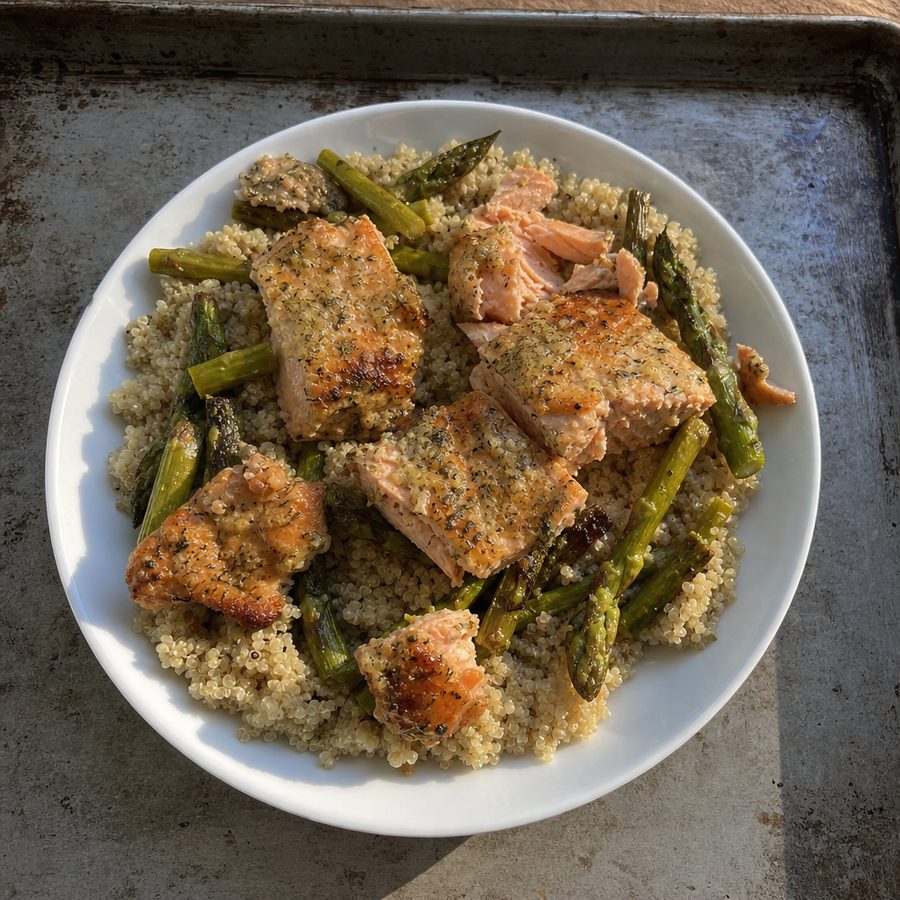
Flaky salmon fillets glazed with Dijon mustard, garlic, and fresh dill, roasted alongside tender asparagus and served over bright lemon-tossed quinoa.
Why You'll Love This Recipe
This is a weeknight-friendly dinner that still feels polished enough for company: a mustard-and-dill glazed salmon fillet resting on lemony quinoa with a tangle of roasted asparagus alongside. It comes together on a single sheet pan with one saucepan of grain, so cleanup is minimal, and it suits anyone who wants a protein-forward plate that leans on fish and vegetables rather than heavy sauces or starch. Because the flavors are fresh and clean rather than rich, it works equally well as a warm-weather supper or a cozy cool-weather one.
The Dijon glaze does double duty. Spread over the fish, the mustard, garlic, and dill cling to the surface and, in the heat of a hot oven, concentrate into a savory, slightly tangy crust that keeps the salmon moist underneath. Roasting the fish and asparagus together at a high temperature means the asparagus caramelizes lightly at the tips while the salmon cooks in about the same window, so both come out of the oven at once. Rinsing the quinoa before cooking removes its natural bitter coating, and dressing it while still warm lets the grains drink in the lemon juice and olive oil so every forkful tastes seasoned through, not just on top.
The plate is satisfying because it balances all three things that make a meal stick with you: protein from the salmon, fiber from the quinoa and asparagus, and unsaturated fat from the olive oil and the fish itself. Salmon is one of the richest sources of long-chain omega-3 fats, and pairing it with a whole grain and a green vegetable turns a single fillet into a complete, colorful dinner. The lemon and dill keep everything bright, so the meal feels light on the palate even though it leaves you full.
Ingredients
- 4 salmon fillets (about 150 g each)
- 2 1/2 cups cooked quinoa
- 1 large bunch asparagus, trimmed
- 2 tbsp Dijon mustard
- 1/3 cup chopped fresh dill
- 3 tbsp fresh lemon juice
- 3 garlic cloves, minced
- 3 tbsp olive oil
- 1/2 tsp sea salt
Instructions
- Preheat and prep the pan: Preheat the oven to 425°F (220°C) and line a sheet pan with parchment or foil. Mince the garlic and finely chop the fresh dill, keeping the dill in two piles since half goes into the glaze and half into the quinoa.
- Have the quinoa ready: This builds on quinoa that is already cooked, so have it warm and ready to dress at the end. Starting from dry instead, rinse it in a fine-mesh strainer under cold water for about thirty seconds to wash off its bitter coating, combine it with roughly twice its volume of water, bring it to a boil, then cover and simmer over low heat until the water is absorbed and the grains uncurl into little spirals, about 15 minutes. Keep it covered for 5 minutes, then fluff it with a fork.
- Glaze the salmon: In a small bowl, stir together the Dijon mustard, half of the chopped dill, the minced garlic, and part of the olive oil into a spreadable paste. Pat the salmon fillets dry, since a wet fillet sheds the glaze straight into the pan, and arrange them skin-side down on the sheet pan, then spread the glaze evenly over the tops and sides.
- Add the asparagus: Snap or trim the woody ends off the asparagus, since a spear breaks naturally right where it stops being fibrous. Toss the spears with a little of the olive oil and a pinch of the sea salt, then arrange them in a single layer around the fillets on the same pan.
- Roast: Roast for 12 to 14 minutes, until the salmon flakes easily with a fork and reaches an internal temperature of 145°F (63°C) at the thickest part, and the asparagus is bright green and tender-crisp. Thicker fillets may need an extra minute or two.
- Dress the quinoa and plate: Toss the quinoa with the fresh lemon juice, the remaining olive oil, the rest of the chopped dill, and the remaining sea salt while it is still warm, because warm grains take up a dressing and cold ones only wear it. Spoon the quinoa onto plates, then top each portion with a salmon fillet and a share of the asparagus.
Variations
- Honey-mustard glaze: Whisk a little honey into the Dijon glaze for a sweeter, glossier crust that caramelizes more deeply in the oven. Note that this adds sugar.
- Whole-grain mustard: Swap in coarse whole-grain mustard, or use a mix of Dijon and whole-grain, for a grainier texture and a milder, seedier bite on the fish.
- Swap the green vegetable: When asparagus is out of season, use trimmed green beans or broccoli florets in its place; roast a couple of minutes longer, since they take more time to soften than asparagus.
- Lemon-herb quinoa upgrade: Stir chopped fresh parsley or chives and a little grated lemon zest into the quinoa along with the lemon juice for a brighter, greener grain base.
- Trout instead of salmon: Use skin-on trout fillets in place of the salmon; they are thinner, so start checking for doneness a few minutes early. This keeps the dish centered on a rich, omega-3-heavy fish.
Storage & Leftovers
Store leftover salmon, quinoa, and asparagus in an airtight container in the refrigerator for up to three days. Keeping the components in separate compartments, or at least the fish apart from the grain, helps the salmon hold its texture and keeps the asparagus from steaming soft against warm quinoa.
Reheat gently to avoid drying out the fish. A short spell in a 275°F (135°C) oven, covered loosely with foil, warms the salmon through without toughening it; the quinoa reheats well in a covered dish with a splash of water to loosen it. The asparagus is best warmed only briefly, or simply eaten cold, since a second long round of heat turns it limp.
To get ahead, cook and dress the quinoa and trim the asparagus a day in advance, and mix the Dijon glaze and store it covered in the refrigerator. Then all that is left at dinnertime is to spread the glaze on the fish and roast, which brings the meal together in well under half an hour. Salmon is also good served cold, so leftovers make an easy next-day lunch flaked over the quinoa.
Notes & Tips
- Buy even fillets: Ask the fishmonger for center-cut fillets of similar thickness so they finish roasting at the same time; thin tail pieces overcook while thick shoulders are still translucent.
- Check doneness by flake: Salmon is done when it turns from translucent to opaque and flakes with gentle pressure from a fork; if you use a thermometer, pull it at 145°F (63°C) at the thickest point, where it will still be moist.
- Rinse the quinoa: Do not skip rinsing the quinoa under cold water first. Its natural coating, called saponin, tastes soapy and bitter, and a quick rinse washes it away for a cleaner, nuttier grain.
- Dress the quinoa warm: Toss the quinoa with the lemon juice and oil while it is still warm so the grains absorb the dressing; cold quinoa sits on top of the flavor instead of soaking it in.
- Fresh dill matters: Fresh dill carries this dish; dried dill is much weaker and grassy. If you must substitute dried, use a fraction of the amount, and stir extra fresh lemon juice in at the end to keep things lively.
- Adjust the lemon and salt last: Taste the finished quinoa before plating and adjust with a squeeze more lemon or a pinch more salt; the acidity is what keeps the whole plate from tasting flat.
Nutrition & Mindful Eating
- Salmon, quinoa and asparagus divide the work between them. The fish is rich and soft, the quinoa gives the plate something to sit on, and the asparagus adds the green snap that keeps the whole thing from eating too soft.
- Salmon bakes into large moist flakes and stands up to a mustard crust without losing itself, and the fat that keeps it that tender is where its long chain omega-3 fats sit.
- Quinoa cooked in lemon rather than plain water tastes seasoned all the way through, and its light springy grains carry fiber and a full set of amino acids, which is unusual for something that cooks like a grain.
- Asparagus wants a short cook. Pulled while the stalks still have some resistance, it stays grassy and sweet, and it brings folate and fiber to a plate that is otherwise on the soft side.
- Dijon, dill, garlic and lemon are the flavor spine. The mustard sets into a savory crust in the oven, the dill goes on at the end where its aroma is strongest, and the lemon ties the fish to the grain.
- As you eat, run a fork through the mustard crust into the flakes underneath and catch the dill coming up as you do, then pause partway through the plate to see how full you already are.
Frequently Asked Questions
How do I keep the salmon from drying out?
Roast it just until it turns opaque and flakes, around 12 to 14 minutes, and pull it at an internal temperature of 145°F (63°C) at the thickest part. The Dijon glaze on top acts as a moisture barrier, and because the fish keeps cooking slightly from residual heat after it leaves the oven, it is better to stop a touch early than to leave it in too long.
Can I use skinless salmon?
Yes. Skinless fillets work fine on a lined pan; just handle them gently when serving, since the skin normally helps hold the fillet together. Skin-on fillets are a little more forgiving because the skin protects the underside from the hot pan.
Can I make this with frozen salmon?
Absolutely. Thaw the fillets fully in the refrigerator, then pat them very dry before glazing, since surface moisture keeps the mustard crust from setting and can make the fish steam rather than roast.
What can I serve with this to round out the meal?
The plate already has protein, a grain, and a vegetable, so it stands on its own. If you want more, a simple green salad or a few lemon wedges on the side complement the dill and mustard without competing with them.