
Baked Tilapia With Tomato-Caper Sauce and Brown Rice
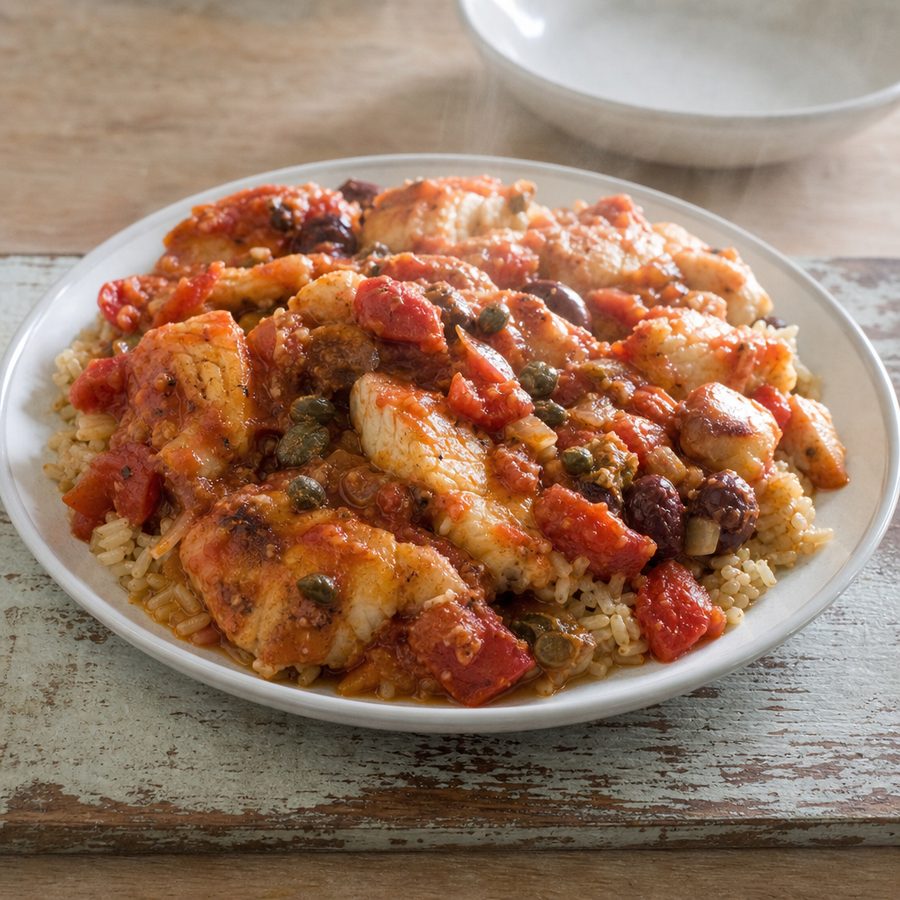
Mild tilapia fillets bake in a tangy sauce of crushed tomatoes, kalamata olives, garlic, and oregano, then get brightened with lemon and parsley and served over nutty brown rice.
Why You'll Love This Recipe
This is a light, quick dinner for a busy weeknight when you want something that feels finished but does not ask much of you. Tilapia is a mild, quick-cooking fish that takes on the flavor of whatever it sits in, so it is forgiving for anyone who feels unsure about cooking seafood. It suits cooks who want a mild protein and a whole grain on the table in under an hour without a long ingredient list or fussy technique.
The sauce is what carries the dish. Softening the onion and garlic in olive oil first builds a savory base, and a short simmer lets the crushed tomatoes thicken and the kalamata olives and oregano release their salty, herbal notes into the sauce. Baking the fish directly in that sauce keeps the delicate fillets moist and seasons them from below, while the lemon juice added at the end lifts everything and keeps the tomato from tasting flat.
A generous piece of protein, a savory tomato sauce with the richness of olive oil and olives in it, and chewy brown rice that soaks up the juices and adds whole-grain fiber. The rice gives it staying power so you feel full, the fish keeps it light, and the bright, briny sauce makes each bite taste like more than the sum of a short ingredient list.
Ingredients
- 4 tilapia fillets (about 5 oz each)
- 1 3/4 cups crushed tomatoes
- 3 cups cooked brown rice
- 1/3 cup kalamata olives, halved
- 3 tbsp olive oil
- 5 garlic cloves, minced
- 1 small onion, diced
- 2 tbsp lemon juice
- 1 1/2 tsp dried oregano
- 1/4 cup chopped parsley
- 1/2 tsp salt
Instructions
- Cook the brown rice: Rinse the brown rice under cold water until the water runs clear. Add it to a pot with water and a pinch of salt, bring to a boil, then cover, lower to a gentle simmer, and cook until the grains are tender and the water is absorbed, about 40 minutes. Keep covered off the heat until you are ready to serve.
- Prep and preheat: Preheat the oven to 400°F (200°C). Dice the onion, mince the garlic, halve the kalamata olives, and roughly chop the parsley. Pat the tilapia fillets dry with a paper towel so the sauce clings well.
- Build the sauce: Warm the olive oil in an ovenproof skillet or saucepan over medium heat. Add the onion and cook until softened and translucent, about 4 minutes, then add the garlic and cook until fragrant, about 30 seconds. Stir in the crushed tomatoes, halved olives, dried oregano, and salt, then simmer gently for 8 minutes until slightly thickened.
- Assemble: Pour the sauce into a baking dish and spread it into an even layer. Settle the tilapia fillets into the sauce, then spoon some of the sauce over the top of each fillet so they stay moist as they bake.
- Bake: Bake for 14 to 16 minutes, until the fish turns opaque and flakes easily when pressed with a fork, or reaches an internal temperature of 145°F (63°C) at the thickest part.
- Finish and serve: Squeeze the lemon juice over the fish and sprinkle with the chopped parsley. Serve each fillet with plenty of sauce spooned over warm brown rice.
Variations
- Swap the fish: Use cod, haddock, or another mild white fish in place of tilapia. Thicker fillets may need a few extra minutes in the oven; cook until the fish flakes easily.
- Add a green vegetable: Stir a few big handfuls of baby spinach into the sauce during the last minute of simmering, or tuck halved cherry tomatoes around the fillets before baking for extra color and freshness.
- Make it spicy: Add a pinch of red pepper flakes when you cook the garlic for a gentle heat that plays well against the briny olives.
- Brighten with capers: Stir a spoonful of rinsed capers into the sauce along with the olives for an extra layer of salty, tangy flavor.
- Swap the grain: Serve the fish and sauce over farro, quinoa, or whole-wheat couscous instead of brown rice. Note that farro and couscous add gluten.
Storage & Leftovers
Store leftovers in an airtight container in the refrigerator for up to 3 days. Keep the fish and sauce together so the fillets stay moist, and store the rice in its own container if you can, since it holds up best separately.
Reheat gently to protect the delicate fish. Warm the fillet and sauce in a covered dish in a 300°F (150°C) oven or in a covered skillet over low heat until just heated through, adding a splash of water to the sauce if it has thickened. A microwave works in a pinch at reduced power, but go slowly so the fish does not turn rubbery.
To get ahead, make the tomato-caper sauce and cook the brown rice up to 2 days in advance and refrigerate them separately. On the night you want to eat, reheat the sauce, pour it into the baking dish, tuck in fresh fillets, and bake, so dinner comes together in the time it takes to heat the oven.
Notes & Tips
- Pat the fish dry: Tilapia releases a lot of water. Drying the fillets before they go into the sauce keeps the dish from turning watery and helps the sauce stay thick and glossy.
- Taste before you salt: Kalamata olives are already salty, so taste the sauce after it simmers before adding more salt. You may find it needs none, especially once the olives have released their brine.
- Start the rice first: Brown rice takes about 40 minutes, longer than the fish, so get it simmering before you do anything else and it will be ready when the fillets come out of the oven.
- Know when the fish is done: Tilapia turns from translucent to opaque white and flakes easily when gently pressed. If you have a thermometer, the thickest part should read 145°F (63°C). Pull it as soon as it flakes to keep it tender.
- Buy fillets of even thickness: Choose fillets that are similar in size and thickness so they finish baking at the same time. Thin, uneven pieces cook fast and can dry out.
- Add the lemon at the end: Stir or squeeze the lemon juice in only after baking. Its brightness fades with heat, so a fresh hit at the finish is what makes the whole dish taste lively.
Nutrition & Mindful Eating
- The fish, the sauce and the rice work as one plate. Tilapia is gentle and needs company, the tomato and olive sauce gives it salt and depth, and the brown rice underneath catches everything that runs off the top.
- Tilapia bakes quickly and comes out in clean white flakes, which is the whole appeal of it. It takes on whatever it is cooked with, and it carries a lot of complete protein for how mild it eats.
- Brown rice keeps its bran, which is why it stays chewy and keeps its bite under a wet sauce, and that same bran is where its fiber and its nutty flavor come from.
- Crushed tomatoes and kalamata olives are the backbone of the sauce. The tomatoes cook down and sweeten, the olives give up their brine and their monounsaturated fat, and the oregano runs warm and woodsy all through it.
- Garlic, onion, oregano, lemon and parsley finish it. The onion and garlic soften into the base, the dried oregano blooms in the hot oil, and the lemon and parsley go on last so the plate arrives tasting fresh.
- As you eat, look at how the briny sauce has colored the rice underneath and taste what it does to such a mild fish, and give yourself the length of the meal rather than rushing it.
Frequently Asked Questions
Can I use frozen tilapia?
Yes. Thaw the fillets fully in the refrigerator first, then pat them very dry before settling them into the sauce. Frozen fish holds extra water, so skipping the drying step can thin out the sauce.
My sauce turned out watery. What happened?
This usually comes from moisture released by the fish or from not simmering the sauce long enough. Pat the fillets dry before baking, and let the tomato sauce simmer until it thickens slightly before you add the fish.
How do I know the tilapia is cooked without a thermometer?
The flesh turns from translucent to solid opaque white and flakes apart easily when you press it with a fork. If it still looks glassy or resists flaking, give it another minute or two.
Can I make this without the olives?
You can, though the olives add much of the briny, savory backbone of the sauce. If you leave them out, taste and adjust with a little extra lemon juice and a small pinch more salt to keep the sauce from tasting flat.