
Baked Trout With Spinach, Lemon, and Olives
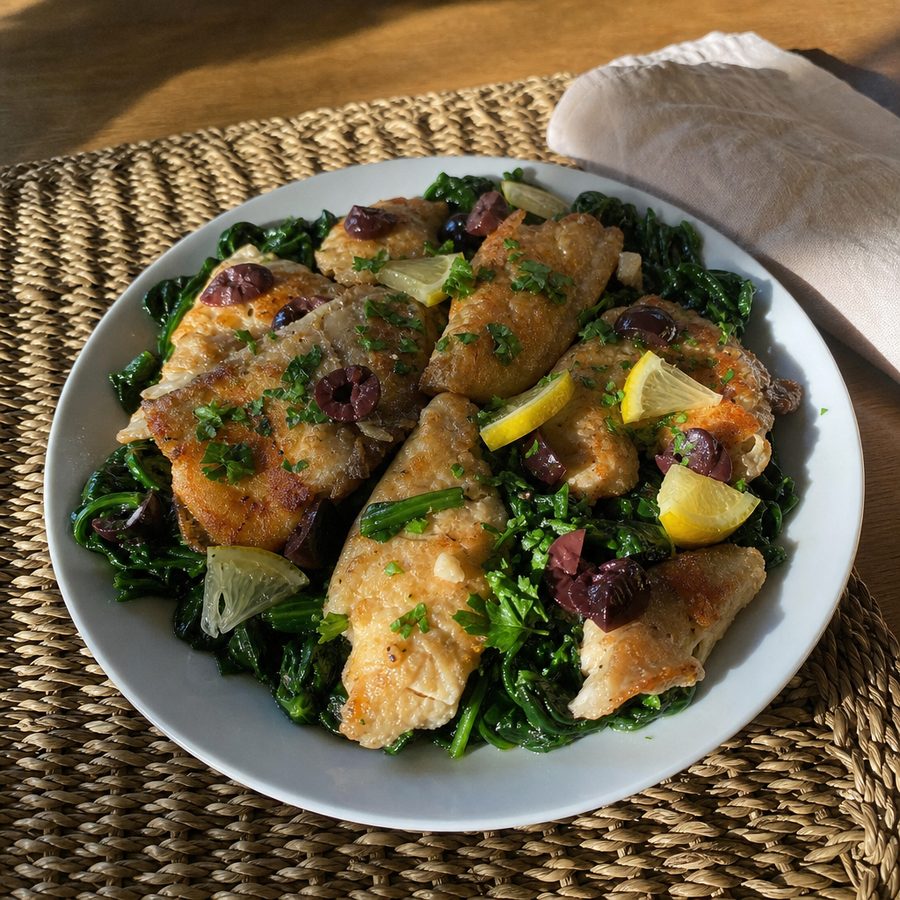
This baked trout comes together on one pan with wilted spinach, briny olives, and a bright lemon-dill oil that keeps the fish tender and the greens fresh.
Why You'll Love This Recipe
If weeknight dinners tend to feel rushed, this is the kind of meal you can lean on. It suits anyone who wants real food without a sink full of pans, and it works whether you cook for one skeptical eater or a full table. Trout is forgiving in the oven, spinach cooks down in minutes, and the whole thing lands on the table in under half an hour with almost no fuss.
The method leans on gentle oven heat so the fish stays moist instead of drying out. Trout carries omega-3 fatty acids, the kind of fat tied to a calmer inflammatory response, and baking it in olive oil keeps those fats intact. Spinach adds folate and plant antioxidants, while the olives and lemon bring the salt and acid that make everything taste finished. Garlic and dill round out the flavor without a long list of seasonings or any hard-to-find pantry items.
The pleasure is the contrast on the plate. You get flaky, tender fish against soft greens, the salty pop of olives, and a slick of warm lemon oil tying it together. A whole trout fillet is a serious amount of protein, and it holds you for hours rather than leaving you hunting for a snack. It feels a little special for how simple it is, which is a good reason to cook it often.
Ingredients
- 1 1/4 lb trout fillets
- 7 cups spinach
- 1/3 cup olives
- 4 cloves garlic
- 3 tbsp olive oil
- 2 tbsp lemon juice
- 2 tbsp dill
- 1/3 tsp salt
Instructions
- Heat the oven: Heat your oven to 400°F (200°C) and rub a large baking dish with a little of the olive oil. Use a dish wide enough for the fillets to lie side by side, since fish crowded into a small dish steams itself instead of baking.
- Make the lemon-dill oil: In a small bowl, stir together the olive oil, the lemon juice, the minced garlic, the chopped dill, and the salt until it looks loose and green. Mix it in the bowl rather than pouring each thing straight over the fish, because the oil carries the garlic and the dill evenly and on their own they land in patches.
- Wilt the spinach: Pile the spinach into the baking dish, drizzle it with about a third of the oil, and toss so it starts to soften while the oven finishes heating. Seven cups looks absurd going in and cooks down to a small fraction of that.
- Add the trout: Lay the trout fillets skin-side down over the spinach, spoon the rest of the oil across the top, and scatter the olives around the fish. The bed of greens keeps the fillets up off the hot floor of the dish, which is what stops their undersides overcooking.
- Bake to done: Bake for 15 to 18 minutes, until the trout flakes easily with a fork and reaches about 145°F (63°C) at the thickest part. Check the thin end of a fillet first, since it is always done before the middle is.
- Rest and serve: Let the fish sit for two or three minutes so the juices settle back into it, then spoon the pan juices over each fillet and serve with the wilted spinach underneath.
Variations
- Swap the green: Trade the spinach for chopped chard or kale, giving the sturdier greens a few extra minutes in the pan to soften.
- Change the fish: Use arctic char or a thin salmon fillet in place of trout, keeping the same oven temperature and checking for flake at 145°F (63°C).
- Add capers: Stir a spoonful of drained capers in with the olives for an extra briny edge that plays well with the lemon.
- Warm it up: Stir a little grated horseradish or fresh ginger into the lemon-dill oil if you like some heat behind the herbs, since both bring it without the nightshades the autoimmune protocol leaves out.
- Make it a bowl: Serve the fish and greens over cauliflower rice to stretch it into a fuller plate without adding many carbs.
Storage & Leftovers
Let leftovers cool to room temperature, then move the trout and spinach into an airtight container. Kept in the fridge, the fish holds its texture for up to three days, though the greens will soften further and give off a little liquid, which you can simply spoon off before reheating.
To reheat, warm the fish gently in a low oven around 300°F (150°C) or in a covered skillet over low heat, just until it is heated through. High heat will dry out the trout and turn it rubbery, so go slow and pull it off the moment it is warm.
Freezing cooked trout is possible but tends to change its texture, so I would keep it to the fridge if you can. If you do freeze, wrap portions tightly and use them within a month, thawing overnight in the refrigerator before a slow, gentle reheat rather than straight from frozen.
Notes & Tips
- Pat the fish dry: I always blot the trout with a paper towel first so the oil clings and the top browns instead of steaming.
- Mince garlic fine: Chop the garlic small so it softens fully in the oven and does not leave you with sharp raw bites.
- Taste your olives: Since olives vary in saltiness, I taste one first and hold back a pinch of the salt if they run briny.
- Watch the thickness: Thin tail ends cook faster than the middle, so check those first and pull the fish as soon as it flakes.
- Save the juices: Do not pour off the pan liquid; it carries the lemon, garlic, and fish flavor worth spooning back over everything.
- Use fresh dill: If you have fresh dill, stir most in at the end so its flavor stays bright rather than cooking away.
Nutrition & Mindful Eating
- Trout, spinach and olives make a small complete plate. The fish is tender and mild, the spinach collapses into the oil and juices underneath it, and the olives carry the salt and the depth so nothing tastes plain.
- Trout is one of the easier fish to bake well, because the fat in it keeps the fillet moist all the way through the heat, and that same fat is where its omega-3s sit alongside a generous amount of protein.
- Spinach cooks down to a fraction of what goes in, which is how a whole bag of it ends up tucked under one fillet, and it brings folate and lutein along with a soft mineral sweetness once wilted.
- Olives do the seasoning work here. They soften slightly in the heat, release their oil into the pan juices, and bring monounsaturated fat and vitamin E inside a flavor strong enough to carry the whole dish.
- Lemon, garlic and fresh dill are what make this taste alive. All three are stirred into the oil before anything meets the oven, so the flavor runs through the spinach and the fish rather than sitting on top.
- As you eat, notice how the lemon lifts the brine of the olives and how much of the fish the spinach has soaked up underneath, and let the plate hold your attention for the length of it.
Frequently Asked Questions
Can I use a different fish?
Yes. Arctic char, salmon, or a firm white fish like cod all work here; just keep the oven at 400°F (200°C) and cook until the fillets flake at about 145°F (63°C).
My fish came out dry. What happened?
Trout cooks quickly, so a few extra minutes can push it past done. Start checking at 15 minutes and pull it the moment it flakes, since it keeps cooking as it rests.
Can I make this ahead?
You can prep the lemon-dill oil and mince the garlic a day early, then bake just before serving. Leftovers keep for three days and reheat best gently in a low oven.
Is there any starch on the plate?
None. The plate is fish, greens, olives, and olive oil, so what fills you is the protein and the healthy fat rather than a side of rice or potatoes.