
Golden Baked Tuna Cakes
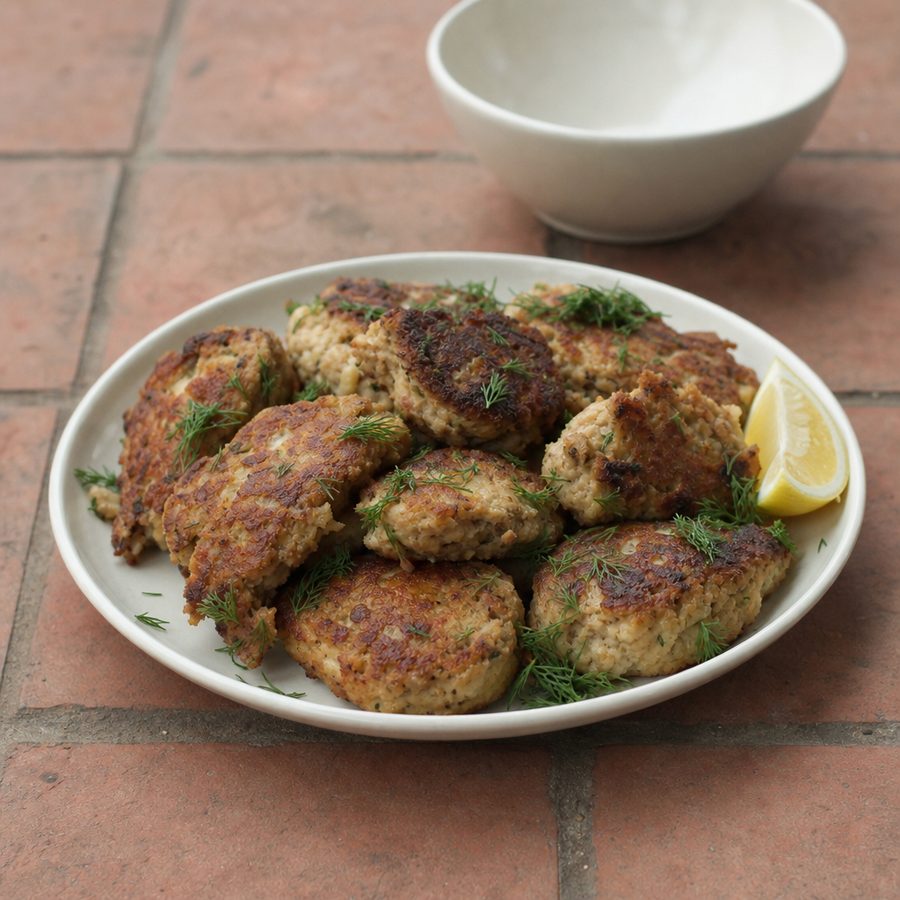
Flaky canned tuna is bound with egg and almond flour, brightened with Dijon, lemon, scallion, and fresh dill, then shaped into little patties and baked until the tops turn golden and firm.
Why You'll Love This Recipe
These little baked tuna cakes are for anyone who wants a savory, protein-forward bite that comes together from pantry staples without a lot of fuss. Canned tuna is inexpensive and always on hand, and here it becomes something more than a sandwich filling: crisp-edged patties you can eat with your fingers, pack for lunch, or set out as an afternoon snack. Because they bake rather than fry, they are light on their feet and easy to make in a single batch on one sheet pan.
The binder has to be balanced. Egg and almond flour hold the flaked fish together without turning it dense, while draining the tuna thoroughly and pressing each patty firmly keeps them from crumbling in the oven. Dijon, lemon juice, and fresh dill do the flavor work, cutting the richness of the fish with sharpness and brightness so each bite tastes clean rather than heavy. Brushing the tops with olive oil and flipping the patties once gives both sides a golden, lightly crisp surface.
A real hit of protein from the tuna and the eggs, with just enough fat from the olive oil and the almond flour to keep you full well past the point a lighter snack would have worn off. The herbs and citrus give them a fresh, bright character. Eaten warm from the oven, they feel like a little meal, which is exactly why they earn a place in the regular rotation.
Ingredients
- 2 cans tuna in water, drained
- 2 large eggs
- 1/3 cup almond flour
- 2 scallions, minced
- 2 tsp Dijon mustard
- 1 tbsp lemon juice
- 2 tbsp chopped fresh dill
- 1 tbsp olive oil
- 1/4 tsp salt
Instructions
- Preheat and line the pan: Preheat the oven to 400°F (200°C) and line a sheet pan with parchment paper. The parchment keeps the delicate patties from sticking and makes cleanup easy.
- Prep the aromatics: Trim the scallions and mince them finely, both the white and green parts. Pull the dill fronds from their stems and chop them. Set both aside.
- Drain the tuna: Open the cans of tuna and drain them well, pressing the fish gently against the lid to squeeze out as much water as you can. Excess moisture makes the patties fall apart, so take a moment here. Flake the drained tuna into a mixing bowl with a fork.
- Mix the batter: To the bowl of flaked tuna, add the eggs, almond flour, minced scallion, Dijon mustard, lemon juice, chopped dill, and salt. Stir with a fork until the mixture is evenly combined and holds together when you press it. It should feel moist but shapeable; if it seems too wet to hold, let it rest a couple of minutes so the almond flour absorbs the liquid.
- Shape the patties: Scoop up portions of the mixture and press each firmly between your palms into a small, compact patty about three-quarters of an inch thick. Compacting them well helps them stay together during baking. Arrange the patties on the lined sheet pan, leaving a little space between each one.
- Brush and bake: Brush the top of each patty lightly with olive oil. Bake for 16 to 18 minutes, using a thin spatula to carefully flip each patty once about halfway through. They are done when both sides are golden and the patties feel firm rather than soft in the center. Serve warm.
Variations
- Smoky paprika: Stir a pinch of smoked paprika into the mixture for a warm, gently smoky depth that plays well against the lemon and dill.
- Salmon swap: Replace the canned tuna with drained canned salmon for a richer, rounder flavor and a rosier color; the method stays exactly the same.
- Grated cheese: Fold a little grated Parmesan into the batter for a saltier, more savory patty with crisper edges. Note that this adds dairy.
- Lemon-caper: Add rinsed, chopped capers along with a little extra lemon juice for a briny, tangy version that leans bright and sharp.
- Spiced heat: Mix in a pinch of red pepper flakes or a little cayenne for a slow, warming heat that wakes up the whole patty.
Storage & Leftovers
Store leftover tuna cakes in an airtight container in the refrigerator for up to three days. Let them cool completely before covering so condensation does not build up and soften them. Slip a paper towel into the container to absorb any extra moisture and keep the surfaces from going soggy.
To reheat and bring back the golden edges, warm them in a 350°F (175°C) oven or toaster oven for about eight to ten minutes until heated through. A dry skillet over medium heat also works well and re-crisps the surface. Avoid the microwave if you can, since it steams the patties and softens the crust, though it is fine in a pinch for a quick warm-up.
For make-ahead, you can mix the batter and shape the patties a day in advance, then keep them covered on the sheet pan in the refrigerator until you are ready to bake. Baked cakes also freeze well: freeze them in a single layer, then transfer to a bag, and reheat straight from frozen in the oven, adding a few extra minutes.
Notes & Tips
- Drain like you mean it: The single biggest factor in patties that hold together is dry tuna. Press the fish firmly against the can lid, and if you have a fine strainer, give it an extra squeeze there. Watery tuna leads to patties that spread and crumble.
- Let the batter rest if it seems loose: Almond flour keeps absorbing moisture for a few minutes after mixing. If your mixture feels too wet to shape, wait two or three minutes and it will firm up on its own before you add more flour.
- Choose your tuna: Solid or chunk light tuna in water both work; solid white gives a firmer, meatier bite while chunk light is more economical and a touch softer. Either way, buy it packed in water rather than oil so you control the fat and moisture.
- Dried dill in a pinch: Fresh dill gives the brightest flavor, but if you only have dried, use a smaller amount since it is more concentrated, and crush it between your fingers first to wake up the aroma.
- Flip with care: These are more tender than a fried crab cake, so use a thin, wide spatula and slide it fully under each patty before turning. Letting the first side bake until golden before flipping helps it stay intact.
- Serve them with a dip: A spoonful of plain yogurt whisked with lemon and extra dill makes a quick sauce alongside, or set them over a simple green salad to turn the snack into a light plate. A squeeze of fresh lemon at the table lifts everything.
Nutrition & Mindful Eating
- Tuna, egg and almond flour hold the cakes together. The tuna is the substance and the flavor, the egg binds it, and the almond flour takes up the moisture so the patties keep their shape as they bake.
- Canned tuna does the heavy lifting. Drained well, it flakes into strands that give the cakes their texture rather than turning to paste, and it carries complete protein and a share of omega-3 fats.
- Almond flour brings a fine, faintly sweet crumb and a nuttiness that suits the fish, and it comes with vitamin E, magnesium and enough of its own fat to help the edges go golden in the oven.
- Dijon, dill and lemon are what lift these above a plain fish cake. The mustard adds a sharp savory backbone, the dill is unmistakable against the tuna, and the lemon at the end pulls it all forward.
- Scallions go in raw and keep a little of their sharpness through baking, giving each cake a fresh green bite, and between that and the protein in the tuna and egg, a couple of these eat like a real snack.
- As you eat, break one open and let the steam and the dill reach you first, then take the second only after the first has settled, so you can tell where your hunger actually is.
Frequently Asked Questions
Why are my tuna cakes falling apart?
Almost always it comes down to moisture. If the tuna is not drained and pressed well, the extra water keeps the egg and almond flour from binding. Drain thoroughly, pack each patty firmly between your palms, and let the mixture rest a couple of minutes before shaping so the almond flour can absorb the liquid.
Can I make these without almond flour?
The almond flour is what binds and lightens the patties without wheat. If you leave it out entirely they will be too wet to hold, so you would need another binder in its place. Keep in mind that swapping in a wheat-based crumb would change the makeup of the dish by adding gluten.
Do I have to flip them?
Flipping once gives you a golden, lightly crisp surface on both sides, which is worth it. If you would rather not risk them breaking, you can leave them unflipped and simply bake until the tops are golden and the centers feel firm, though only the top will crisp up.
What can I serve these with to make a meal?
They are hearty enough to anchor a light plate. Set them over a crisp green salad, alongside roasted vegetables, or with a lemony yogurt dip and fresh dill. A wedge of lemon squeezed over the top just before eating pulls all the flavors together.