
Roasted Beet Lentil Hummus
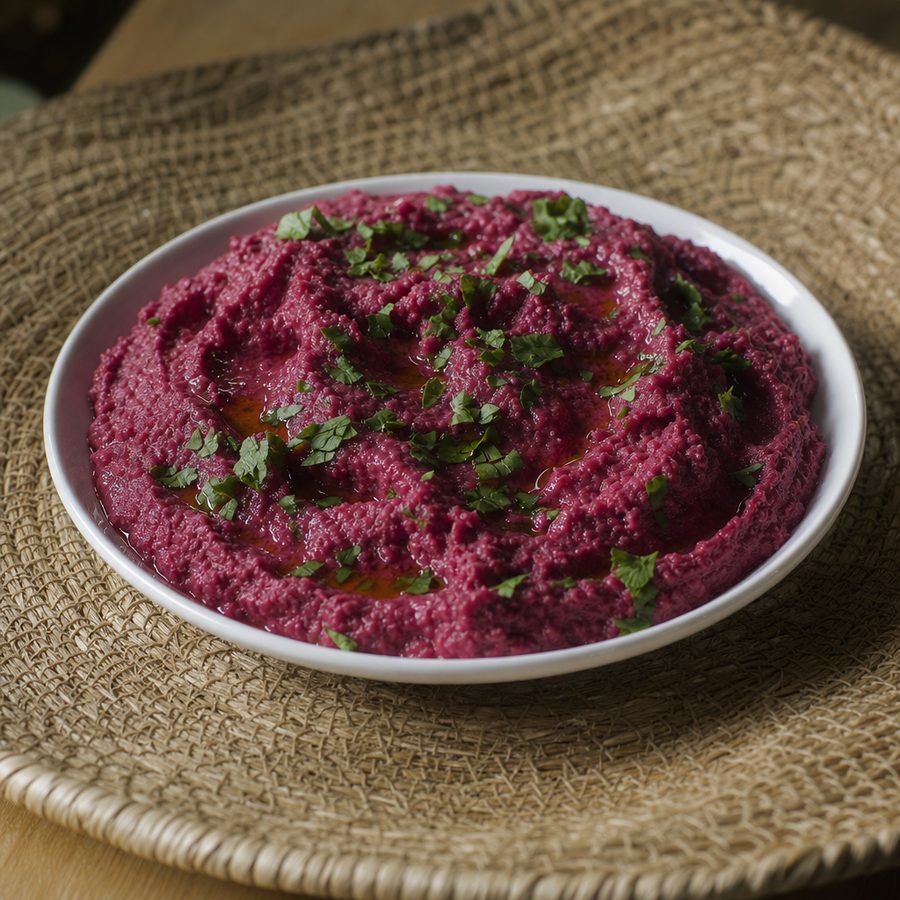
This ruby-colored hummus blends roasted beets with lentils and tahini for an earthy, lemony Mediterranean dip that looks striking and comes together fast.
Why You'll Love This Recipe
The color is the first thing anyone says about this, and it comes from nothing but beets. Lentils in place of chickpeas make the base softer and earthier, and they blend far smoother than a chickpea ever will, which is why this needs no ice water and no peeling of skins to get there. Roast the beets on a Sunday while something else is in the oven, and a batch of this on Monday covers the week: it sits in a jar, it goes on everything, and it gets better by Wednesday.
Roasted beets are what make this dip memorable. Roasting concentrates their natural sweetness and gives the hummus its deep magenta color, while the beets themselves bring antioxidants, including the pigments that create that ruby tone. Those same pigments are studied as part of what makes beets interesting nutritionally. Alongside the cumin and garlic, the beets turn a familiar spread into something with real character and a little surprise.
The finishing touches matter as much as the base. Olive oil adds its polyphenols and a smooth mouthfeel, lemon juice brightens the earthiness, and cumin ties it all together with warmth. The result is a snack built entirely from vegetables, legumes, seeds, and olive oil. Scoop it with cucumber or carrot, spread it on flatbread, or spoon it into a bowl, and you have variety in a single dish.
Ingredients
- 2 medium roasted beets
- 1 1/2 cups cooked lentils
- 3 tbsp tahini
- 2 tbsp olive oil
- 2 tbsp lemon juice
- 1 tsp cumin
- 2 cloves garlic
- 1/3 tsp salt
Instructions
- Peel the beets and cut them small: Peel the roasted beets and cut them into chunks no bigger than a walnut. A food processor chops from the bottom up, so a large piece rides on top of the blade and comes out in shreds while everything underneath turns to paste. Work on a sheet of parchment or a plate rather than a wooden board, since roasted beet stains anything porous within seconds, and rinse the knife before it touches anything pale.
- Grate the garlic into the lemon juice: Grate the two cloves on a rasp straight into the lemon juice and leave them there for ten minutes while you get everything else ready. Raw garlic is sharp and it gets sharper in a dip that sits overnight, but acid takes the edge off it in minutes and leaves the sweetness behind. Grating rather than chopping matters here too, because a whole clove dropped into a processor never quite breaks down and somebody gets it in a single bite.
- Load the processor in the right order: Put the lentils and the beets in first, then the tahini, the olive oil, the salt, the cumin, and the lemon juice with the garlic in it. Heavier things at the bottom means the blade has something to bite on from the start. Run it for thirty seconds, then stop and scrape the sides and the lid, where a surprising amount of unblended lentil collects and stays out of the way of the blade.
- Run it longer than feels necessary: Put the lid back on and run it for a full two minutes, stopping once more to scrape. Everything looks finished at forty seconds and it is not: lentil skins need considerably longer to break down than chickpeas do, and the difference between a dip that is grainy and one that is properly creamy is a minute you will be tempted to skip. If it stiffens up as it goes, add a tablespoon of cold water at a time with the motor running.
- Taste it for salt and lemon, then let it settle: Taste it and adjust. Beets are sweet, lentils are earthy, and tahini is bitter, so what this usually wants is more salt and another squeeze of lemon to pull the three together. Then leave it for ten minutes before you serve it, because the cumin and the garlic keep spreading through it as it stands. Spread it into a shallow bowl, drag a spoon through the middle, and pour the last of the olive oil into the trench.
Variations
- Extra garlic: Add another clove for a punchier, more savory dip if you love garlic.
- Smoky cumin: Swap in smoked cumin or add smoked paprika for a warmer, deeper background.
- Ginger note: Blend in a small piece of fresh ginger for a bright, slightly spicy edge against the beets.
- Chickpea mix: Replace half the lentils with chickpeas for a firmer, more classic hummus texture.
- Herb topping: Finish with chopped mint or dill for a fresh, cooling contrast to the earthy base.
Storage & Leftovers
Keep the hummus in an airtight container in the fridge for up to five days. The color stays vivid and the flavor deepens as the cumin and garlic settle. Give it a stir before serving, and loosen with a little water if it firms up in the cold.
This hummus freezes reasonably well thanks to the beets and tahini. Freeze in a sealed container for up to two months, leaving room at the top for expansion, then thaw overnight in the fridge and blend or stir to bring the smooth texture back.
For taking to work or sharing with friends, portion the hummus into small containers and keep them cold in a lunch bag until serving. A drizzle of olive oil across the top before sealing protects the surface and keeps the finish glossy and fresh.
Notes & Tips
- Use pre-roasted beets: I often buy vacuum-packed roasted beets to skip the oven and save real time on a busy day.
- Wear gloves: I wear gloves when handling beets so my hands don't stain a deep pink for hours.
- Loosen with water: I add a tablespoon of cold water if the hummus feels stiff, which makes it silky.
- Toast the cumin: I toast the cumin briefly when I have a minute, since it wakes up the flavor.
- Taste for lemon: I always taste for lemon at the end, because the beets can need that brightness to balance them.
- Save a beet wedge: I set aside a small piece of beet to swirl on top for a pretty finish.
Nutrition & Mindful Eating
- Beets, lentils and tahini are an unusual trio and they cover for one another well. The beets bring the sweetness and the color, the lentils give the dip its body along with fiber and plant protein, and the tahini smooths the whole thing into something spreadable.
- Roasting the beets rather than boiling them is what makes this taste of something. The sugars concentrate, the earthiness deepens, and the pigments turning the bowl magenta are antioxidants doing double duty as color.
- Cooked lentils are the backbone here. They blend into a thicker, more substantial base than a lighter bean would give, and the fiber and protein they carry are why a small scoop goes a long way.
- Tahini is ground sesame and nothing else, which is why a spoonful changes the texture so completely. It brings a nutty, faintly bitter depth against the sweet beets, along with calcium and magnesium.
- Cumin, garlic and lemon are the three things that keep this lively. The cumin warms it, the raw garlic sharpens it, and the lemon goes in generously at the end where its brightness carries.
- As you eat, taste how earthy the beets stay underneath the lemon and let the color alone slow you down, giving the snack your attention rather than eating it standing over the container.
Frequently Asked Questions
Can I use chickpeas instead of lentils?
Yes, chickpeas make a firmer, more traditional hummus. The color and beet flavor stay the same, though the texture turns a bit thicker and the fiber shifts slightly.
Can I make it in advance?
Definitely. It keeps for up to five days in the fridge and often tastes better on day two once the cumin and garlic settle in.
How big is one serving?
One serving is about a third of a cup, which pairs nicely with vegetable sticks or flatbread. The recipe yields six servings.
Where does the fiber come from?
Mostly from the lentils, which bring more fiber than chickpeas do. Beets add antioxidants, tahini adds minerals, and olive oil brings polyphenols on top of that.