
Bison Cheddar Burgers
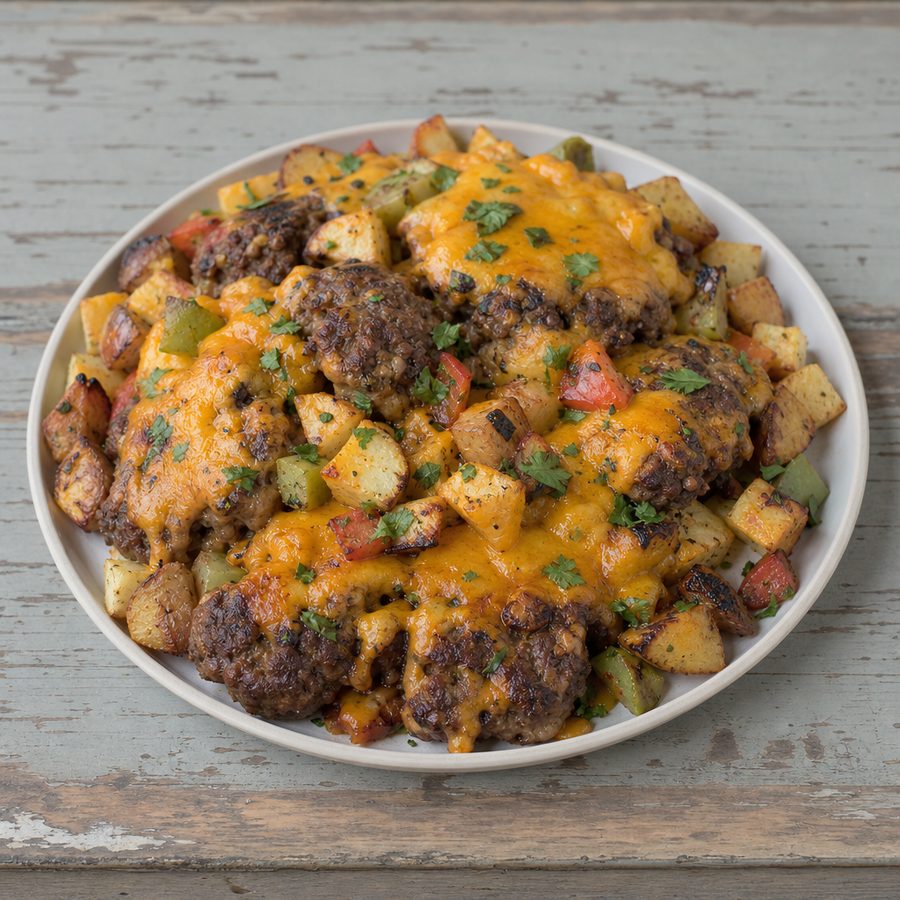
Juicy seared ground bison patties salted simply and crowned with melted shredded cheddar, all cooked in golden butter for a rich, savory finish.
Why You'll Love This Recipe
This is a fast, deeply savory hot plate built around one excellent ingredient: ground bison. It suits anyone who wants a substantial, meat-forward meal with very little fuss and a short shopping list, and it comes together quickly enough for a weekday while feeling more special than an ordinary burger. If you like the taste of beef but want something a touch firmer and more distinct in flavor, this is for you.
A deeply savory meat, and two rich fats behind it. Bison has little marbling of its own, so searing it in butter gives the crust something to brown in and keeps the surface from drying, while the cheddar melted under a lid adds a creamy, salty layer that carries through every bite. The single dimple pressed into each patty and the light hand while shaping keep the meat tender and flat, and pulling it at medium rather than well-done is the difference between juicy and chalky.
The result is filling. Bison is an excellent source of high-quality protein, which is the nutrient that does the most to keep you satisfied between meals, and the cheddar and butter add richness and fat-soluble nutrients that make a modest portion feel complete. Salt is the only seasoning it needs, letting the natural, slightly sweet flavor of the meat and the sharp tang of the cheese do the work.
Ingredients
- 1 3/4 lb ground bison
- 1 cup shredded cheddar
- 2 tbsp butter
- 3/4 tsp salt
Instructions
- Shape the patties: Divide the ground bison into equal portions and gently form each into a patty a little wider than the meat is thick, since it will shrink and plump as it cooks. Handle the meat lightly and stop as soon as it holds together; overworking it makes the cooked patty dense. Press a shallow dimple into the center of each patty with your thumb so it stays flat instead of doming. Salt both sides.
- Heat the skillet: Set a heavy skillet, preferably cast iron, over medium-high heat and add the butter. Let it melt and stop foaming, swirling to coat the surface, so the patties meet a hot, evenly buttered pan. Give it a good 2 minutes to come up to heat, since a pan that is not properly hot grays the meat instead of searing it.
- Sear the first side: Lay the patties in the pan without crowding them and let them sear undisturbed 3 to 4 minutes, until the underside is deep brown and releases easily. Bison dries out easily, so resist pressing down on the patties, which squeezes out the juices you want to keep.
- Flip and finish cooking: Turn the patties once and cook the second side another 3 to 4 minutes. Bison cooks faster than fattier beef and dries out if pushed too far, so aim for medium: an instant-read thermometer in the center should read about 145 to 150°F (63 to 65°C), and the meat should feel firm with a little give.
- Melt the cheddar: Sprinkle the shredded cheddar evenly over the patties, then cover the skillet with a lid for 1 minute. The trapped heat and steam melt the cheese into a smooth, glossy blanket without overcooking the meat underneath.
- Serve: Transfer the patties to plates and spoon any browned butter from the skillet over the top. Serve hot, while the cheddar is still molten.
Variations
- Swap the cheese: Trade the cheddar for shredded gouda, Swiss, or another good melting cheese for a different depth of flavor. This keeps it a dairy-topped patty.
- Add a fried egg: Slide a butter-fried egg over each finished patty so the runny yolk pools into the cheese. This adds egg.
- Top with bacon: Lay a couple of strips of crisped bacon over the melted cheddar for a smoky, salty crunch. This adds pork.
- Change the meat: Use ground beef or ground lamb in place of the bison; both carry the butter-and-cheddar treatment well, though beef will be a bit fattier and lamb more assertive.
- Stuff the patty: Tuck a little of the shredded cheddar into the center of each patty before sealing and shaping it, so the cheese melts into a molten core. This keeps it a dairy-rich patty.
Storage & Leftovers
Refrigerate leftover patties in an airtight container once they have cooled, and use them within three to four days. Keeping the cheese on is fine; it firms up cold and re-melts nicely when reheated.
To reheat without drying out the meat, warm the patties gently in a covered skillet over low heat with a small pat of butter, turning once, just until heated through. A brief spell under a lid re-melts the cheddar. Avoid a hard blast in the microwave, which can turn bison rubbery.
To get ahead, shape and salt the raw patties, stack them between sheets of parchment, and keep them covered in the refrigerator for up to a day before searing. They can also be frozen raw on a tray until solid, then transferred to a bag; thaw overnight in the refrigerator before cooking.
Notes & Tips
- Buy the right grind: Look for ground bison with a little more fat in the grind if you can choose, since it sears better and stays juicier. If only the driest grind of bison is available, the butter in the pan matters even more.
- Let the meat lose its chill: Take the bison out of the refrigerator while the skillet heats so the surface is not ice cold going into the pan; it will brown faster and cook more evenly.
- Trust the thermometer: With bison, the window between juicy and overdone is narrow. An instant-read thermometer pulled at medium is the most reliable way to nail it, far better than guessing by time alone.
- Shred your own cheddar: A block of cheddar shredded at home melts smoother than pre-shredded bags, which are coated with starch to keep them loose. It is worth the extra minute for that glossy, even melt.
- Use a lid you trust: Any lid or even a sheet of foil that traps steam over the skillet will melt the cheese in about a minute. If you do not have a lid that fits, an inverted metal bowl works.
- Season to taste: Salt is the only seasoning here, so salt both sides of the raw patty and then taste the first cooked one; adjust how heavily you salt the rest of the batch from there.
Nutrition & Mindful Eating
- Bison, cheddar and butter are the entire recipe and each covers something the others do not. The bison brings the deep, faintly sweet flavor and the protein, the cheddar brings salt and melt, and the butter adds the richness that rounds the whole patty out.
- Ground bison cooks faster than most beef and is best pulled off the heat sooner than you think. The flavor is cleaner and slightly sweeter, and the meat carries heme iron, zinc and B12.
- Sharp cheddar laid on in the last minute under a lid melts into the patty rather than sliding off it, and it brings calcium and a second source of protein along with the salt that makes bison taste like itself.
- Butter in the pan does two jobs. It browns and gives the crust its nutty smell, and it keeps the patty juicy through a hard sear.
- A burger like this holds you for a long stretch, with the protein doing most of that work and the cheddar and butter making it eat like a proper meal rather than a quick plate.
- As you eat, give the browned butter and the melted cheddar a moment before the first bite, then let the sweet, mineral flavor of the bison come through, staying with the plate long enough to feel when you are satisfied.
Frequently Asked Questions
How done should bison be cooked?
Medium is the sweet spot. Bison has almost no marbling, so cooking it past medium dries it out quickly. Pull the patties when the center reads about 145 to 150°F (63 to 65°C) and still feels juicy with a little give.
Does bison taste gamey?
Not really. Ground bison tastes much like beef, a touch sweeter and cleaner, without a strong gamey edge. The butter and melted cheddar round it out even more, so it is approachable even if it is your first time cooking it.
Can I use frozen bison?
Yes. Thaw it fully in the refrigerator overnight before shaping the patties so it cooks evenly. Pat the surface dry before salting and searing, since excess moisture gets in the way of a good brown crust.
Why do my patties fall apart in the pan?
That usually means they were moved too soon. Let each side sear undisturbed until it forms a browned crust and releases from the pan on its own; flipping too early or too often is what breaks bison patties. The thumb dimple in the center also helps them hold their shape.