
Bison, Kale, and Sweet Potato Hash
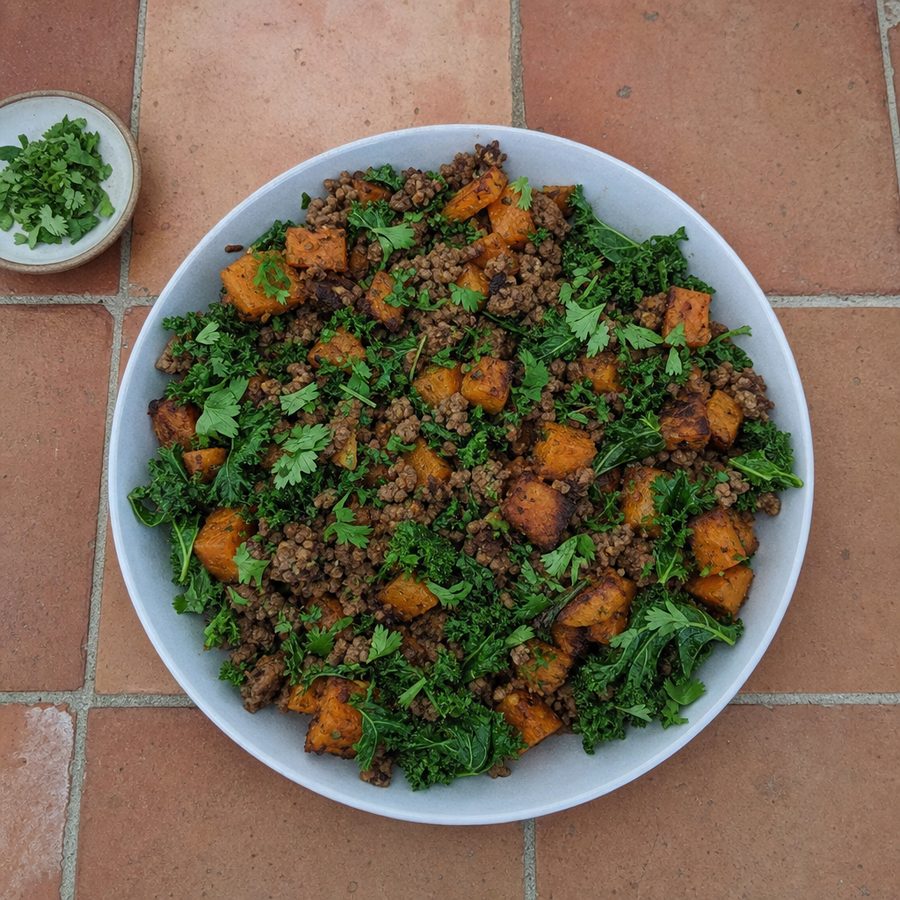
Ground bison browns with tender diced sweet potato, sweet onion, and torn kale, all scented with fresh garlic and rosemary and cooked in avocado oil until the greens crisp at the edges.
Why You'll Love This Recipe
A single skillet gets you a hearty, protein-forward breakfast with no eggs, no dairy, and no bread. It comes together in a single pan in well under half an hour, which makes it realistic on a weekday, and it is built around whole ingredients you can pronounce. It suits people cooking around food sensitivities as much as anyone who simply wants a filling savory start to the day.
The sweet potato goes in first and gets a lid, so the trapped steam softens the cubes through before the meat ever hits the pan. Bison browns fast and cooks through quickly, so by the time it is done the potato is already tender and the two finish together. Rosemary and garlic go in with the meat rather than at the start, so their aroma stays bright, and the kale goes in last and cooks just long enough to wilt and catch a little color at the edges.
Soft, sweet, and savory land in every bite: creamy sweet potato, deeply browned bison, and kale with crisped edges for texture. Bison brings a good amount of protein, sweet potato adds slow-digesting carbohydrate and fiber, and kale contributes even more fiber along with a bright, mineral note. Together they make a plate that keeps you full for hours rather than leaving you hungry an hour later.
Ingredients
- 1 1/4 lb ground bison
- 1 large sweet potato, diced
- 3 cups kale, stemmed and torn
- 1 small onion, diced
- 3 cloves garlic, minced
- 1 tsp fresh rosemary, minced
- 2 tbsp avocado oil
- 1 tsp salt
Instructions
- Prep the vegetables and herb: Peel the sweet potato and cut it into small, even dice, about half-inch cubes, so it cooks through in the same time as the meat. Dice the onion and mince the garlic. Strip the rosemary leaves from their woody stem and mince them fine. Pull the kale leaves off their tough center stems and tear the leaves into bite-size pieces.
- Soften the sweet potato and onion: Heat the avocado oil in a large skillet over medium heat until it shimmers. Add the diced sweet potato and onion, stir to coat, then cover and cook, stirring once or twice so nothing sticks, until the sweet potato is nearly fork-tender and the onion is translucent, about 10 minutes. The lid is what does the work here, since the trapped steam softens the cubes through before anything has a chance to brown.
- Brown the bison: Push the vegetables to the side, add the ground bison, the garlic, and the minced rosemary, and break the meat into small crumbles with a wooden spoon. Cook, stirring and continuing to break it up, until the bison is browned all the way through with no pink remaining, about 6 to 8 minutes. Bison browns without rendering much fat into the pan, so keep the oil you started with rather than pouring anything off.
- Wilt the kale: Stir in the torn kale and the salt. Cook, tossing often, until the kale wilts down and turns deep green with a few crisp, browned edges, about 3 to 4 minutes.
- Finish and serve: Taste and add a little more salt if it needs it. Serve it hot, straight from the skillet, since the crisp edges on the kale soften within a few minutes of leaving the heat.
Variations
- Swap the greens: Trade the kale for stemmed and torn Swiss chard or a few big handfuls of spinach. Chard wilts a touch faster than kale, and spinach faster still, so add it near the very end and cook just until collapsed.
- Different root: Use peeled, diced butternut squash in place of the sweet potato for a slightly less sweet, more savory base. Keep the dice small so it softens in the same covered ten minutes.
- Add mushrooms: Stir sliced cremini mushrooms in with the onion and sweet potato. They release moisture as they cook and add an earthy, meaty depth that plays well against the bison.
- Herb change: Swap the rosemary for minced fresh thyme or sage. Both are woodsy and pair naturally with bison and sweet potato; use a little less sage, as it is stronger.
- Add crisped bacon: Cook chopped bacon first, then use its rendered fat in place of some of the avocado oil and fold the crisp pieces in at the end. This adds pork and a smoky, salty edge; hold back on the added salt to compensate.
Storage & Leftovers
Cooled leftovers keep well in an airtight container in the refrigerator for up to four days. The flavors actually deepen overnight as the rosemary and garlic settle into the meat and potato.
Reheat in a skillet over medium heat with a small drizzle of avocado oil, spreading the hash in a thin layer and leaving it undisturbed for a minute or two so the sweet potato and kale edges crisp again. A microwave works in a pinch but softens the texture; if you use one, heat in short bursts and stir between them.
To get ahead, dice the sweet potato and onion and tear the kale the night before, storing them in separate covered containers in the refrigerator. You can also cook the whole batch, portion it out, and refrigerate for grab-and-go breakfasts through the week.
Notes & Tips
- Cut the sweet potato small and even: The single biggest factor in this dish is dice size. Half-inch cubes soften through in the covered ten minutes; larger chunks stay crunchy in the center and throw off the timing with the meat.
- Do not skip covering the pan: The lid traps steam that cooks the sweet potato from the inside. Without it, the outsides brown before the centers ever soften. If you want more browning at the end, take the lid off for the last couple of minutes.
- Choose your bison: Ground bison is sold in a range of fat ratios. A drier grind gives a cleaner-tasting hash but can dry out, so watch it closely once browned; a slightly fattier grind is more forgiving and needs a touch less oil.
- Strip the kale stems: The center ribs stay tough and stringy no matter how long they cook. Fold each leaf in half and pull the leafy part away from the rib, then tear it up; discard the ribs or save them for stock.
- Season at the end, in stages: Salt draws water out of the kale and concentrates as the pan cooks down, so add it with the greens, then taste at the very end before adding more. It is easy to over-salt if you season early.
- Double it for the week: This reheats better than most breakfasts, so cook a large batch at once. Spread it on a sheet pan to cool quickly before packing, which keeps the kale from steaming and going slimy in the container.
Nutrition & Mindful Eating
- Bison, sweet potato and kale make a hash with three clear parts. The meat is savory and quick cooking, the sweet potato is soft and sweet, and the kale stays a little chewy, so the pan holds protein, whole vegetable carbohydrate and something green at once.
- Ground bison browns fast and tastes cleaner and slightly sweeter than beef, which suits a breakfast pan, and it carries iron and B12 into the first meal of the day.
- Sweet potato diced small and left undisturbed in the oil gets the caramelized faces that make a hash worth eating, and the orange running through it is beta-carotene.
- Kale added near the end behaves better in a hot pan than you might expect. The thin edges crisp, the rest goes tender, and it keeps its vitamin C and its faintly bitter bite against all that sweet potato.
- Rosemary, onion and garlic are the smell of this pan. The rosemary is woody enough to stand up to the heat, the onion goes sweet and jammy, and the garlic goes in last so it perfumes the pan rather than burning in it.
- As you eat, smell the rosemary hanging over the pan and feel a crisped edge of kale give way against the soft sweet potato, and let breakfast be a sit-down rather than a handful.
Frequently Asked Questions
My sweet potato is still hard when the meat is done. What went wrong?
The cubes were probably too big, or the pan was not truly covered during the first stage. Cut the sweet potato into small, even half-inch dice next time, and keep the lid on so the steam can soften it. If it happens mid-cook, add a splash of water, cover, and give it a few more minutes before adding the meat.
Can I use ground beef or turkey instead of bison?
Yes. The method is the same. Beef is richer and fattier, so you may want to spoon off some rendered fat; turkey is milder and drier, so watch it closely so it does not tighten up. Bison sits between the two, sweeter than beef but fuller than turkey.
Why is my bison dry?
Bison has almost no marbling to protect it, so it goes from done to overdone quickly. Cook it just until no pink remains and pull it off the heat promptly. Using a slightly fattier grind, or keeping the avocado oil in the pan rather than draining it, also helps.
Is this a full breakfast on its own, or should I serve something with it?
It stands on its own as a filling, protein-and-vegetable breakfast. If you want to round it out, a side of avocado slices or some fresh fruit pairs well and keeps everything in the same simple, whole-food spirit.