
Bison Mozzarella Meatballs
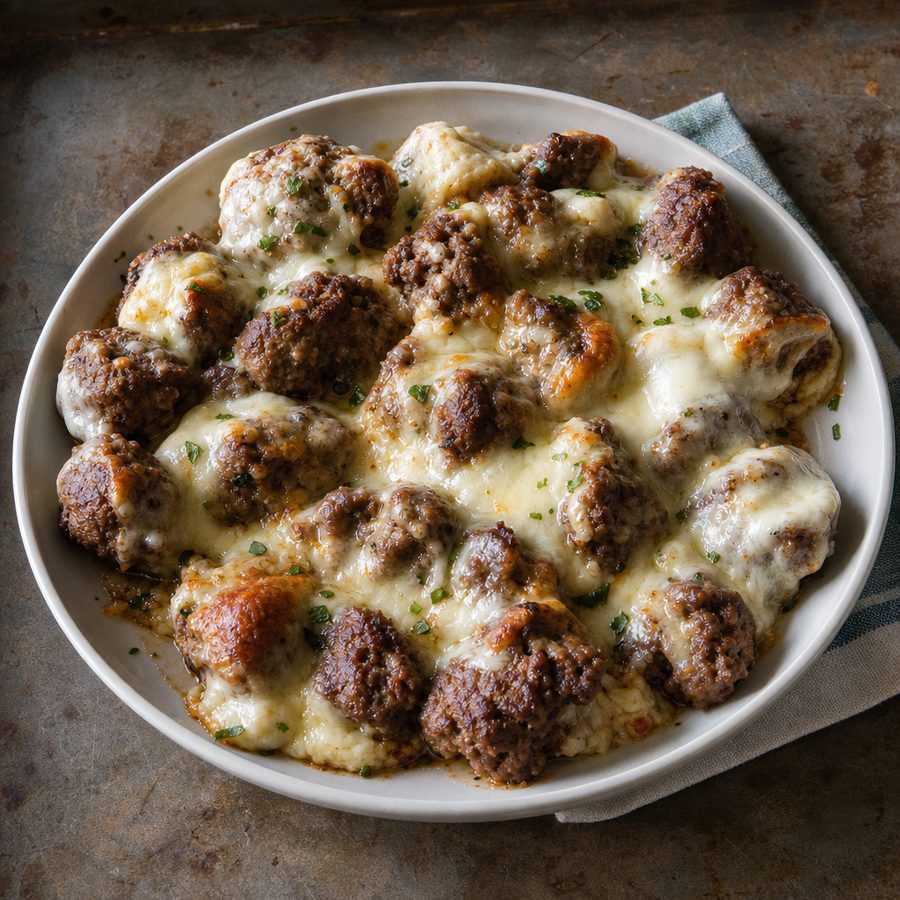
Juicy ground bison meatballs bound with egg and grated parmesan, seared until browned and finished under a blanket of melted shredded mozzarella.
Why You'll Love This Recipe
These are simple, protein-dense meatballs for anyone who wants a satisfying, savory lunch built entirely from meat, eggs, and cheese. Bison has a clean, slightly sweet flavor and a firmer bite than beef, and here it is bound with egg and sharp parmesan so the meatballs hold together and taste rich without any filler. If you are eating a meat-forward way and want something you can make in one skillet, this is a reliable everyday plate.
A proper sear, and then a covered melt. Browning the meatballs on all sides in a hot, dry skillet builds a deeply savory crust and lets the bison render just enough fat to cook in. Because bison dries out so easily, the parmesan mixed into the meat adds fat and salt that keep the interior moist, while the lid traps steam at the end to melt the mozzarella into a soft, stretchy top without drying out the meat underneath.
What makes this filling is the sheer density of protein and the contrast of textures: a browned, firm exterior, a tender center, and a layer of melted cheese pulling it all together. Bison delivers iron and B vitamins, the eggs and cheeses add complete protein and calcium, and the whole thing is rich and satisfying, so a modest portion leaves you full and steady rather than sluggish.
Ingredients
- 1 3/4 lb ground bison
- 2 large eggs
- 2/3 cup grated parmesan
- 1 1/4 cup shredded mozzarella
Instructions
- Mix the meat: In a large bowl, combine the ground bison, eggs, and grated parmesan. Mix gently with your hands just until everything is evenly distributed; overworking the meat makes the finished meatballs dense, so stop as soon as it comes together.
- Roll: Divide the mixture and roll it between your palms into 16 evenly sized meatballs, each about the size of a golf ball. Keeping them uniform means they cook through at the same rate.
- Heat the pan: Set a large heavy skillet over medium heat and let it warm for a minute or two. Bison releases little fat of its own, so what does render will keep them from sticking, but a well-heated pan helps them release cleanly.
- Brown: Add the meatballs to the skillet, leaving space between them, and sear, turning every few minutes so they brown on all sides, until cooked through, about 14 to 16 minutes. They are done when firm to the touch and an instant-read thermometer inserted into the center reads 160°F (71°C).
- Melt the cheese: Sprinkle the shredded mozzarella over the meatballs, then cover the skillet with a lid. Let it sit off or over low heat until the cheese is fully melted and glossy, about 2 minutes. Serve warm.
Variations
- Extra crispy crust: Sear the meatballs a few minutes longer over slightly higher heat before adding the cheese for a darker, crunchier exterior and a more pronounced browned flavor.
- Cheddar top: Swap the shredded mozzarella for shredded sharp cheddar for a tangier, more assertive melted layer. This keeps it all dairy but changes the flavor.
- Bacon-wrapped: Wrap each meatball in a thin strip of bacon before searing for a smoky, extra-savory result. This adds pork and more fat, so brown them slowly to render the bacon fully.
- Beef and bison blend: Replace part of the bison with ground beef for a richer, fattier meatball that stays especially juicy. This adds beef and a higher fat content.
- Cheese-stuffed: Press a small cube of mozzarella into the center of each meatball before rolling it closed, so you get a molten cheese core in addition to the melted top. This adds more dairy.
Storage & Leftovers
Keep leftover meatballs in an airtight container in the refrigerator for up to four days. Let them cool to room temperature before sealing so condensation does not collect and soften the cheese.
To reheat, warm them gently in a covered skillet over low heat, or in a 300°F (150°C) oven, until heated through. Low and slow keeps the bison from drying out and re-melts the mozzarella; a quick blast in the microwave works in a pinch but can toughen the meat.
You can mix and roll the meatballs a day ahead and keep them raw and covered in the refrigerator, then sear them fresh when you want to eat. They also freeze well cooked: freeze in a single layer, transfer to a bag, and thaw overnight before reheating.
Notes & Tips
- Choose your bison fat level: Ground bison has a deep flavor but can run dry. If your store carries a slightly higher-fat grind, it will give you a more forgiving, juicier meatball.
- Wet your hands to roll: The bison mixture can be sticky. Lightly dampen your palms with water before rolling and the meatballs will form into smooth, even rounds much more easily.
- Use a thermometer: Bison browns quickly on the outside while the center is still cooking, so color alone can fool you. An instant-read thermometer reading 160°F (71°C) in the middle is the surest sign they are done.
- Grate your own parmesan: A wedge you grate yourself melts and binds better than the pre-grated tubs, which often contain anti-caking agents that keep it from blending smoothly into the meat.
- Don't crowd the skillet: Leave space between the meatballs so they sear rather than steam. If your pan is small, brown them in two batches for a better crust.
- Double the batch: These reheat and freeze well, so it is worth mixing and rolling a large batch at once. Cook what you need and freeze the rest raw or cooked for fast lunches later.
Nutrition & Mindful Eating
- Bison, egg and the two cheeses are the whole recipe and they balance one another. The bison is deeply flavored, the egg keeps the meatballs tender, and the parmesan and mozzarella bring salt, melt and richness, so each one carries a lot of protein in a small package.
- Ground bison makes a meatball with a deep, faintly sweet flavor of its own, and it stays juicy as long as you brown it fast and stop early. The iron, zinc and B12 it carries are what red meat is genuinely good at.
- The egg is the reason these come out tender rather than dense. It loosens the mix just enough for the meatballs to stay soft, and the yolk contributes its own fat, protein, and choline.
- Parmesan mixed through the bison seasons it from within. Aged hard cheese has a savory concentration that salt alone cannot reach, and it brings calcium and protein alongside.
- The mozzarella in the middle is the whole trick. It melts into a soft molten center that pulls when you cut in, and the contrast between that and the browned crust outside is what people remember.
- As you eat, cut the first one open and watch the mozzarella stretch before you taste it, then slow down between meatballs enough to notice when you have had your fill.
Frequently Asked Questions
Why are my bison meatballs coming out dry?
Bison has almost no marbling, so it is easy to overcook. Pull them the moment the center hits 160°F (71°C), avoid overworking the meat when mixing, and reheat leftovers gently and covered rather than in a hot microwave.
Can I use ground beef instead of bison?
Yes. Ground beef works with the same method and will give you a richer, fattier result. Because beef usually has more fat, you may find the meatballs release even more easily in the pan.
Do I need to add oil to the skillet?
Usually not right away. Start the meatballs in a hot dry skillet and the meat will render some fat as it browns. If your bison is a dry grind and starts to stick, add a little animal fat to help them release.
How do I know when they are fully cooked?
The most reliable way is an instant-read thermometer inserted into the center, which should read 160°F (71°C). The meatballs will also feel firm rather than squishy and will be browned on all sides.