
Bison and Roasted Root Vegetable Bowl
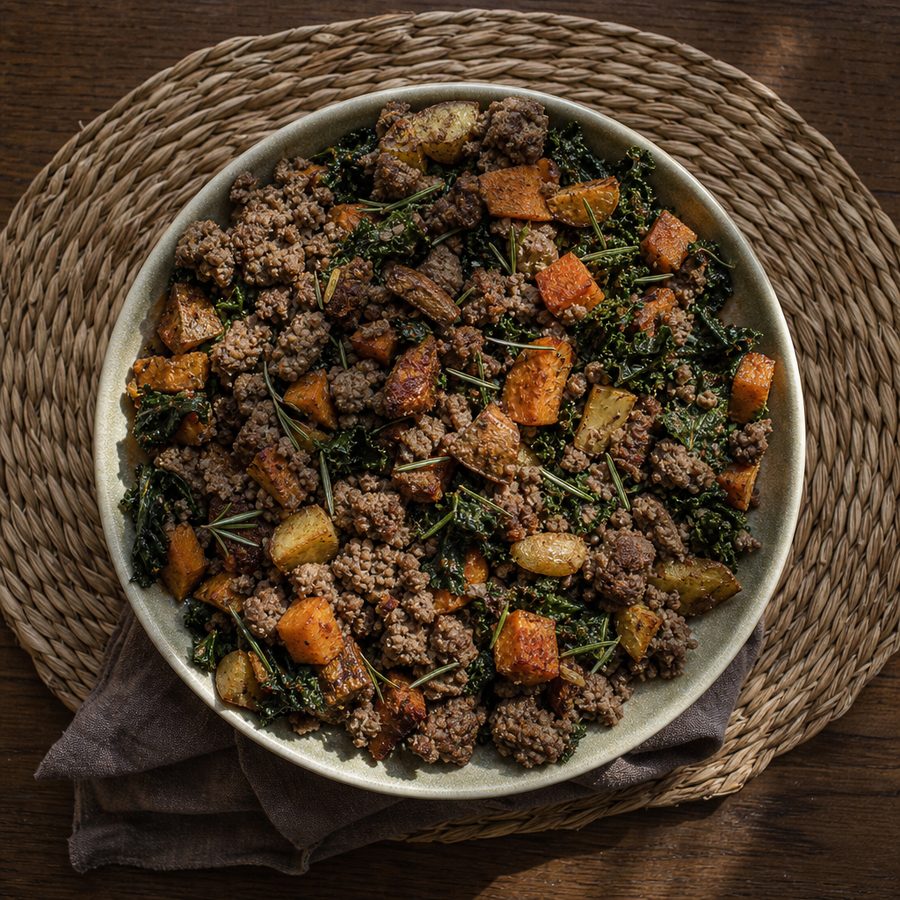
Ground bison folded with fresh rosemary, spooned over caramelized parsnip, carrot and beet with garlicky wilted kale, and finished with olive oil and a drizzle of balsamic.
Why You'll Love This Recipe
Ground bison and a generous mix of roasted roots and greens make a filling midday meal that leaves you steady rather than sluggish. It leans on ground bison and a generous mix of roasted roots and greens, so it eats like comfort food while quietly delivering protein, fiber and a spread of vegetables. It is also a good fit for people cooking around a short, clean ingredient list who still want a plate with real depth of flavor.
The engine here is caramelization. Roasting the parsnips, carrots and beets at a high temperature drives off their moisture and browns their natural sugars, which is why they taste sweet and deep rather than watery. Cooking the beets in the same heat concentrates their earthiness, and the quick sauté of kale with garlic keeps the greens tender but still vivid. Folding the rosemary into the hot bison at the end, rather than cooking it for a long time, keeps its pine-like aroma bright, and the balsamic drizzle adds a sharp, sweet lift that ties the sweet roots and savory meat together.
The satisfaction comes from contrast and substance. The bison is rich and meaty without being heavy, the roots are soft and sweet, and the kale brings a little bite and structure so the bowl never feels one-note. Protein and fiber together make this the kind of lunch that keeps you comfortably full into the afternoon, while the range of colorful vegetables means every bowl carries a broad mix of vitamins and minerals along with plenty of flavor.
Ingredients
- 3 1/2 cups cooked ground bison
- 3 parsnips, diced
- 3 carrots, diced
- 2 beets, diced
- 4 cups chopped kale
- 3 tbsp olive oil
- 3 cloves garlic, minced
- 1 tbsp chopped fresh rosemary
- 1 tbsp balsamic vinegar
- 3/4 tsp salt
Instructions
- Prep the vegetables: Preheat the oven to 425°F (220°C). Peel the parsnips, carrots and beets, then dice them all into even half-inch cubes so they roast at the same rate. Mince the garlic, chop the rosemary, and roughly chop the kale, discarding the tough center stems. Keep the beets in a separate pile, since they bleed color onto whatever they touch.
- Roast the roots: Toss the parsnips, carrots and beets with most of the olive oil and the salt on a rimmed sheet pan, then spread them in a single layer with a little space between the pieces. Roast for about 25 minutes, stirring once halfway, until the edges are browned and caramelized and a fork slides easily into a parsnip cube.
- Brown the bison: While the roots roast, warm a skillet over medium-high heat and add the ground bison. Break it into crumbles with a wooden spoon and cook until it is browned and no longer pink, about 6 to 8 minutes, to an internal temperature of 160°F (71°C). Bison dries out fast, so pull it off the heat as soon as it loses its pink color to keep it moist.
- Wilt the kale: In the last few minutes, heat the remaining olive oil in a second skillet over medium heat. Add the minced garlic and cook until fragrant, about 30 seconds, then add the chopped kale. Toss with tongs until it collapses and turns bright green and tender, about 3 to 4 minutes.
- Combine and finish: Fold the chopped rosemary into the warm bison. Spoon the roasted roots and wilted kale into each bowl, top with the bison, and finish with a drizzle of balsamic vinegar over everything.
Variations
- Change the protein: Swap the bison for ground lamb or ground venison, both of which stand up well to the sweet roots and rosemary; brown and drain them the same way.
- Different herb: Trade the rosemary for chopped fresh sage or thyme. Sage brings a savory, autumnal note, while thyme is softer and more floral against the roasted roots.
- Brighten the finish: In place of the balsamic, finish with a squeeze of fresh orange or lemon and a little grated zest for a lighter, more citrusy lift over the caramelized vegetables.
- Add more roots: Fold diced sweet potato in with the parsnips, carrots and beets before roasting for extra sweetness and body; cut it the same size so everything cooks evenly.
- Swap the greens: Use shredded Brussels sprouts or chopped Swiss chard instead of the kale. Brussels sprouts crisp and brown when sautéed, while chard wilts faster and turns silky.
Storage & Leftovers
Store leftovers in an airtight container in the refrigerator for up to four days. Keeping the components together is fine, though the beets will tint the parsnips and carrots a deeper red the longer they sit, which is only a cosmetic change.
To reheat, warm a portion in a skillet over medium heat with a small splash of water to keep the roots from drying out, stirring until heated through. If the microwave is what you have, cover the bowl and take it slowly. Bison toughens when it heats too fast.
For make-ahead lunches, roast the roots and brown the bison in advance and refrigerate them separately. Wilt fresh kale and assemble the bowls the day you plan to eat, or portion everything into containers so a full bowl is ready to reheat straight from the fridge.
Notes & Tips
- Choose smaller beets: Pick firm, small-to-medium beets with smooth skin. They are sweeter and more tender than large ones, which can turn woody in the center and take longer to roast through.
- Manage the pink: If you would rather the parsnips and carrots stay their own color, roast the diced beets on a separate corner of the pan or their own small tray. Everything still finishes at the same time.
- Cut for even roasting: Uniform half-inch cubes are the difference between roots that all finish together and a pan where the carrots scorch while the beets stay firm. Take an extra minute at the cutting board.
- Do not overcook the bison: Because bison has so little fat, it goes from juicy to dry quickly. Pull it from the heat the moment it is browned through, and let any carryover heat finish the job.
- Season the kale to taste: Taste the greens before plating. Kale can handle a bit more salt than you expect, and a pinch stirred in at the end brings out its flavor against the sweet roots.
- Double the roots: Roasted roots keep and reheat beautifully, so it is worth filling a second sheet pan while the oven is hot. They make quick work of assembling bowls later in the week.
Nutrition & Mindful Eating
- The roasted roots, the greens and the bison each do a different job. Parsnip, carrot and beet come out of the oven sweet and caramelized, the kale keeps a little chew and a lot of green, and the meat gives the bowl its center.
- Ground bison browns dark in the pan and tastes cleanly savory, which is exactly what a bowl full of sweet roasted vegetables needs, and the protein and iron it carries are what turn a tray of vegetables into dinner.
- Parsnips and carrots become the sweetest part of the bowl once their edges go brown and almost candied, and the carrots carry the beta-carotene behind that orange along with the fiber that makes roots this filling.
- Beets roast down dense and nearly jammy, and the deep red that stains everything around them comes from betalain pigments, which have been studied for antioxidant activity.
- Rosemary and garlic go into the pan with the oil, and the balsamic goes over everything while it is still hot, which is what keeps a tray of sweet roasted roots from tasting like one long note.
- As you eat, let the sweetness the oven pulled out of the roots meet the rosemary and the sharp edge of the balsamic, and take the bowl slowly rather than racing to the bottom of it.
Frequently Asked Questions
Can I use a bison steak or roast instead of ground bison?
Yes. Cook the bison to your liking, let it rest a few minutes, then slice it thin against the grain and lay it over the roots and kale. Keep an eye on it, since whole cuts of bison dry out just as fast as the ground meat.
My beets turned everything in the bowl pink. Did I do something wrong?
Not at all. Beets release a natural red pigment that bleeds onto anything they touch, especially once cut and cooked. It is purely cosmetic and does not affect the taste. Roast the beets separately if you want to keep the other roots their own color.
Can I make this ahead for weekday lunches?
It is a strong meal-prep option. Roast the roots and brown the bison ahead, then refrigerate and portion into bowls. It keeps for up to four days and reheats well with a small splash of water to keep the roots moist.
What can I use if I cannot find parsnips?
Add more carrots, or use another firm root like rutabaga or peeled turnip cut to the same size. They roast and caramelize on a similar timeline, though turnip is a little more peppery and less sweet than parsnip.