
Black-Eyed Pea And Egg Skillet
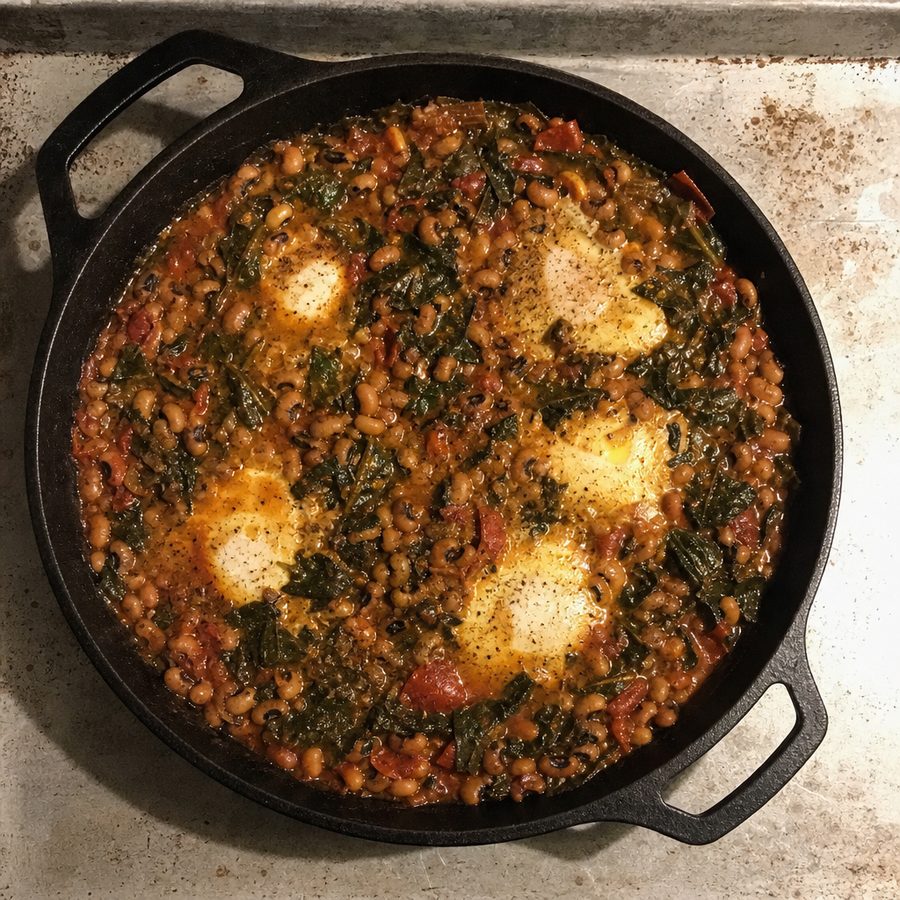
Smoky black-eyed peas simmered with collard greens, onion, garlic, and crushed tomatoes, then finished with eggs cooked right in the pan and warmed with smoked paprika and thyme.
Why You'll Love This Recipe
Humble, filling ingredients carry this one from start to finish: black-eyed peas, collard greens, and eggs, brought together in a single skillet with smoked paprika and thyme. It suits anyone who wants a warm, savory meal without much fuss or a long shopping list, and it comes together in about half an hour in a single pan, which makes it a friendly weeknight option for cooks of any skill level.
Order matters here more than anything in the ingredient list. Softening the onion first and then blooming the garlic, smoked paprika, and thyme in the oil pulls their flavor forward before any liquid goes in, so the smokiness carries through the whole dish. Simmering the collards with the crushed tomatoes and peas lets the greens turn tender and soak up the tomato, while cooking the eggs directly in the simmering mixture under a lid gently steams the whites and leaves the yolks as soft or firm as you like.
Creamy peas, tender greens, a bright tomato base, and a rich egg yolk that loosens and runs down into the whole bowl. It is high in protein from the eggs and peas and high in fiber from the peas and collards, a combination that tends to feel filling and steady rather than heavy, and it stays dairy-free while still eating like a hearty, comforting meal.
Ingredients
- 8 large eggs
- 2 1/2 cups black-eyed peas, drained
- 5 cups chopped collard greens
- 1 1/4 cups crushed tomatoes
- 1 medium onion, chopped
- 3 cloves garlic, minced
- 1 tbsp olive oil
- 1 1/2 tsp smoked paprika
- 1 tsp dried thyme
- 1/2 tsp salt
Instructions
- Prep the aromatics and greens: Peel and chop the onion, and mince the garlic. Strip the collard greens from their tough center stems, stack the leaves, and chop them into roughly bite-size ribbons. Set everything within reach of the stove.
- Build the flavor base: Warm the olive oil in a large skillet over medium heat. Add the chopped onion and cook, stirring now and then, until soft and translucent, about 5 minutes. Stir in the minced garlic, smoked paprika, and dried thyme and cook until fragrant, about 30 seconds, so the spices bloom in the oil without scorching.
- Simmer the peas and greens: Drain and rinse the black-eyed peas. Add the chopped collard greens, crushed tomatoes, black-eyed peas, and salt to the skillet. Stir to combine, then reduce the heat to a gentle simmer. Cook, stirring occasionally, until the greens are tender and the mixture has thickened, about 12 minutes. If it looks dry before the greens soften, add a splash of water to keep it saucy.
- Cook the eggs in the pan: Use the back of a spoon to make four evenly spaced wells in the simmering mixture. Crack an egg into each well. Cover the skillet with a lid and cook until the whites are fully set and no longer translucent, about 6 minutes for runny yolks and a minute or two longer for firmer yolks.
- Rest and serve: Remove the skillet from the heat as soon as the yolks reach the doneness you like, since they keep firming from residual heat. Spoon the peas and greens into bowls, keeping an egg with each portion, and serve warm.
Variations
- Extra smoky heat: Stir a pinch of chipotle powder or a spoonful of minced canned chipotle into the base along with the smoked paprika for a deeper, spicier backbone.
- Kale or chard: Swap the collard greens for chopped kale or Swiss chard; softer chard will be tender in less time, so start checking the greens a few minutes early.
- Bright and herby finish: Finish each bowl with chopped fresh cilantro or parsley and a squeeze of lemon to lift the smoky tomato base with a fresh, tangy note.
- Creamy topping: Spoon a dollop of plain yogurt or a drizzle of tahini over the top; the yogurt adds dairy, while tahini keeps it dairy-free and lends a nutty richness.
- Corn and pepper: Add chopped bell pepper with the onion and stir in corn kernels with the peas for extra sweetness and a heartier, chunkier base.
Storage & Leftovers
Store leftovers in an airtight container in the refrigerator for up to four days. The peas and greens actually deepen in flavor overnight; the eggs are best eaten within a day or two, as the yolks firm up in the cold.
To reheat, spoon the peas and greens into a skillet or bowl and warm gently over low heat or in short bursts in the microwave, adding a splash of water to loosen the tomato base if it has thickened. Warm just until hot through so the egg does not turn rubbery.
To get ahead, make the peas-and-greens base through the simmer step, cool it, and refrigerate. When you want dinner, reheat the base in the skillet, make the wells, and cook the eggs fresh so the yolks are at their best.
Notes & Tips
- Strip the collard stems: The center rib of a collard leaf stays chewy even after simmering, so pull the leaf away from it and use only the tender green; chop the ribbons small so they wilt evenly.
- Canned or cooked peas: Canned black-eyed peas make this fast; drain and rinse them to wash off the packing liquid. If you cook dried peas from scratch, simmer them until fully tender before they go in, since they will not soften much in the tomato base.
- Watch the yolks closely: Whites set from the outside in, so lift the lid at the six-minute mark and give the skillet a gentle shake; a slight jiggle in the yolk means still-runny, while a firm top means set through.
- Adjust the salt at the end: Crushed tomatoes and canned peas vary in how salty they are, so taste the base before you add the eggs and adjust so the greens taste seasoned rather than flat.
- Use a lid that fits: A snug lid traps the steam that cooks the tops of the eggs; if yours does not seal well, cover the skillet with a sheet of foil so the whites set evenly.
- Round out the plate: A slice of crusty bread or a spoonful of cooked rice alongside soaks up the smoky tomato sauce and makes the bowl go further.
Nutrition & Mindful Eating
- The peas, the greens and the eggs make this a full dinner in a single skillet. The peas go creamy, the collards keep some chew even after they soften, and the yolks loosen into both once you break them.
- Cracking the eggs straight into the simmering skillet lets the whites set in the sauce while the yolks stay soft, and those eggs bring the complete protein that makes this filling enough to be supper.
- Black-eyed peas hold their shape better than most beans and taste faintly of the earth they came from, and they carry fiber and plant protein that give the skillet its body.
- Collard greens need time, and the long simmer is what turns them from tough to silky while they take on the flavor of the tomatoes and garlic around them. They bring folate and vitamin K along with that dark green.
- Smoked paprika, garlic and fresh thyme cooked into the oil at the start are where the smoke and the savory backbone come from, and the crushed tomatoes carry all of it through the whole pan.
- As you eat, break a yolk into the greens and watch it thicken the sauce, then keep to a pace that lets you taste the smoke and the thyme rather than clearing the skillet in a hurry.
Frequently Asked Questions
Can I use frozen or fresh black-eyed peas instead of canned?
Yes. Cook them until fully tender first, whether from frozen or dried, because they soften very little in the acidic tomato base. Once tender, add them at the simmer step just as you would canned.
My eggs are taking longer than six minutes to set. What went wrong?
Usually the heat is too low or the lid is not sealing in steam. Keep the base at a steady, visible simmer and make sure the lid fits snugly; if it does not, cover the pan with foil so the steam sets the whites from the top.
How do I keep the collard greens from being tough?
Remove the tough center stems, chop the leaves into small ribbons, and give them the full simmer until they are silky and tender. Collards are sturdier than most greens, so they need those twelve minutes to soften.
Can I make this ahead for meal prep?
Make the peas-and-greens base ahead and refrigerate it, then reheat and cook the eggs fresh when you serve. The eggs are best just-cooked, but the base keeps and reheats well for several days.