
Braised Lamb with Carrots and Fennel
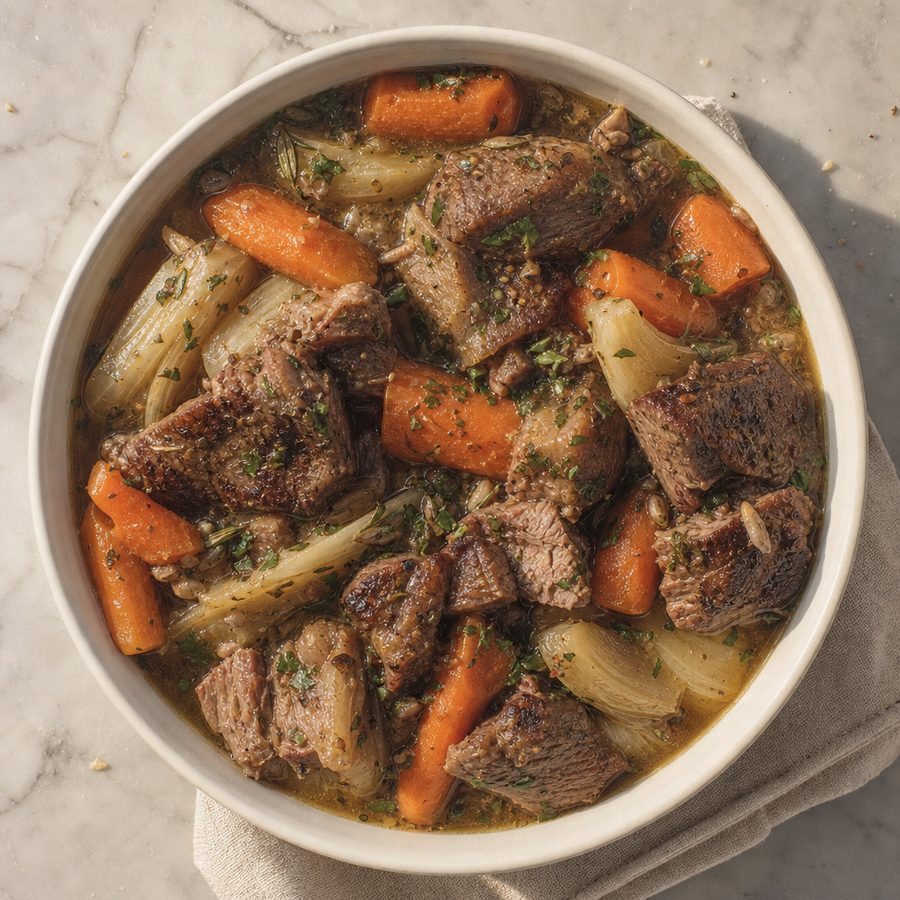
Cubes of lamb shoulder are slow-braised with sweet carrots, wedges of fennel, onion, garlic and balsamic vinegar until fork-tender, finished with rosemary and thyme.
Why You'll Love This Recipe
This is a slow, forgiving braise for a cool evening, meant for anyone who wants a warming, one-pot dinner without a long list of hard-to-find ingredients. Lamb shoulder, carrots, and fennel do most of the work while the pot sits covered on low heat, so it suits a relaxed weekend cook as much as someone feeding a family who wants real food with clean, honest flavors.
This is built in two stages: browning the lamb first develops a deep, savory crust and leaves fond on the bottom of the pot, and that fond gets dissolved back into the braise when you add the balsamic vinegar and water. As the covered pot simmers, the collagen in the shoulder slowly breaks down into gelatin, which is what turns a chewy cut fork-tender and gives the sauce its rich body. The fennel softens and turns mild and sweet, echoing the natural sugars the carrots release.
The plate holds together on the balance of tender, well-browned meat against sweet root vegetables and the gentle anise note of fennel, tied together by rosemary and thyme. Lamb is a source of protein, the carrots and fennel add fiber and color, and olive oil brings a smooth richness, so the dish feels hearty and complete on its own while still leaning on whole vegetables rather than heavy starch.
Ingredients
- 1 1/2 lb boneless lamb shoulder, cubed
- 4 carrots, cut into thick coins
- 1 large fennel bulb, cut into wedges
- 1 onion, sliced
- 4 cloves garlic, minced
- 2 tbsp olive oil
- 2 tbsp balsamic vinegar
- 2 tsp chopped rosemary
- 1 1/2 tsp fresh thyme
- 3/4 tsp salt
Instructions
- Prep the vegetables: Cut the carrots into thick coins, trim the fennel bulb and cut it into wedges through the core so the layers stay attached, slice the onion, and mince the garlic. Chop the rosemary and pull the thyme leaves from their stems. Cut the boneless lamb shoulder into even cubes and pat the pieces dry with a paper towel so they brown rather than steam.
- Sear the lamb: Warm the olive oil in a Dutch oven over medium-high heat until it shimmers. Add the lamb cubes in a single layer, working in batches so the pot is not crowded, and brown them on all sides until deeply colored, about 6 to 8 minutes per batch. Transfer the browned lamb to a plate and set aside.
- Soften the aromatics: Lower the heat to medium and add the sliced onion and minced garlic to the same pot. Cook, stirring, until the onion is softened and translucent and the garlic is fragrant, about 3 minutes. Do not let the garlic scorch.
- Deglaze the pot: Pour in the balsamic vinegar along with enough water to cover the bottom of the pot, and scrape up the browned bits stuck to the base with a wooden spoon. Let it bubble for a minute so the vinegar loses its sharp edge.
- Braise until tender: Return the lamb and any collected juices to the pot, then add the carrot coins, fennel wedges, chopped rosemary and thyme, and the salt. Bring to a gentle simmer, cover, and cook over low heat until the lamb is fork-tender and the carrots and fennel are soft, about 40 minutes. Stir once or twice and add a splash of water if the liquid reduces too far. Taste and adjust the salt before serving.
Variations
- Bone-in for richer flavor: Swap the boneless shoulder for bone-in lamb shoulder chops or shanks. The bones add body and a deeper flavor to the braising liquid; just extend the simmer until the meat pulls easily from the bone.
- Parsnip and turnip: Trade some of the carrots for parsnip and turnip cut into similar-sized pieces. They braise in the same time and bring an earthier, slightly peppery sweetness alongside the fennel.
- Orange and rosemary: Add strips of orange zest and a squeeze of orange juice with the herbs. The citrus brightens the rich lamb and plays well with fennel's anise note, and the juice adds a little natural sugar.
- Olive and herb: Stir in pitted, halved green or black olives during the last few minutes of braising for a briny, savory depth. This adds sodium, so ease back on the salt when you season.
- Beef chuck instead of lamb: Use cubed beef chuck in place of the lamb for a milder, familiar flavor. This changes the meat; chuck is well marbled and braises tender in about the same time.
Storage & Leftovers
Cool any leftovers and store them in an airtight container in the refrigerator, where the braise keeps well for up to four days. The flavor often deepens by the next day as the herbs and balsamic settle into the meat and vegetables.
Reheat gently in a covered pot over low heat, adding a splash of water to loosen the sauce, and stir now and then until the lamb is warmed through. Low and slow keeps the meat tender; a hard, fast reheat can make it tough and dry.
This dish is a strong make-ahead candidate. You can braise it fully a day or two in advance and refrigerate it, or brown the lamb and cut all the vegetables ahead of time so the final cook comes together quickly. It also freezes well for up to three months; thaw overnight in the refrigerator before reheating.
Notes & Tips
- Choose the right cut: Look for lamb shoulder with visible marbling and a little fat cap rather than leg meat. Shoulder has the connective tissue that melts during the long braise and keeps the meat moist, while leg tends to turn dry and firm.
- Dry the meat before searing: Pat the lamb cubes thoroughly dry and give them room in the pot. Wet or crowded meat steams and turns gray instead of building the brown crust that flavors the whole braise.
- Use the fennel fronds: Save the feathery fronds from the top of the fennel bulb and chop a few over the finished dish for a fresh, green anise note and a bit of color at the table.
- Tell when it's done: The lamb is ready when a fork slides in and twists a piece apart with almost no resistance. If it still feels tight or springy, cover it and give it another ten to fifteen minutes.
- Adjust the seasoning at the end: Balsamic vinegar and the vegetables both sweeten as they cook, so taste right before serving. A small extra pinch of salt or a few drops more vinegar can sharpen a braise that tastes flat.
- What to serve alongside: Spoon the braise and its sauce over mashed cauliflower or roasted root vegetables to soak up the liquid, or serve it in shallow bowls so none of the sauce is lost.
Nutrition & Mindful Eating
- Lamb, carrots and fennel spend a long time in the same pot and end up tasting like one thing. The meat gives the sauce its body, the vegetables give it sweetness, and the balsamic keeps something this rich from sitting heavy.
- Lamb shoulder is the cut that rewards patience. Its connective tissue softens into the sauce over the low, slow cook, which is where the silkiness comes from, and the meat carries iron in the form your body takes up most easily.
- Carrots go jammy and almost candied over a long braise, their sweetness concentrating as they cook, and the deep orange they hold onto is the beta-carotene going into the sauce along with them.
- Fennel goes into the pot sharp and anise-scented and comes out round and mellow, its sweetness folded through the sauce, and it carries potassium and a gentle fiber with it.
- Rosemary and thyme are what you smell an hour before dinner is ready, and the splash of balsamic at the start gives the whole pot a low, dark sweetness underneath the herbs.
- As you eat, take a moment with the rosemary and the way the lamb gives up at the touch of a fork, and let this be a meal you sit down for rather than one you rush.
Frequently Asked Questions
Can I make this in a slow cooker or oven instead of on the stovetop?
Yes. Sear the lamb and soften the aromatics in a pan first, then transfer everything to a slow cooker and cook on low until the meat is fork-tender, or move the covered Dutch oven to a 325°F (163°C) oven and braise until tender. Both methods give the same slow, gentle heat the dish relies on.
My lamb is still tough after the simmer. What went wrong?
Tough lamb almost always just needs more time. The connective tissue in shoulder breaks down gradually, so if a fork does not slide in easily, cover the pot and keep simmering gently, checking every ten to fifteen minutes. Rushing it over high heat tightens the meat rather than tenderizing it.
The fennel flavor is strong. How do I make it milder?
Cutting the fennel into wedges through the core and braising it fully mellows its anise flavor into something sweet and soft. For an even gentler result, use a little less fennel and a little more carrot and onion, which round out the pot.
How do I keep the sauce from getting too thin?
Braise with the lid slightly ajar for the last stretch so some liquid evaporates and the sauce reduces around the meat and vegetables. If it still looks thin, lift out the lamb and vegetables and simmer the liquid uncovered for a few minutes to concentrate it before serving.