
Broiled Mackerel on Toast
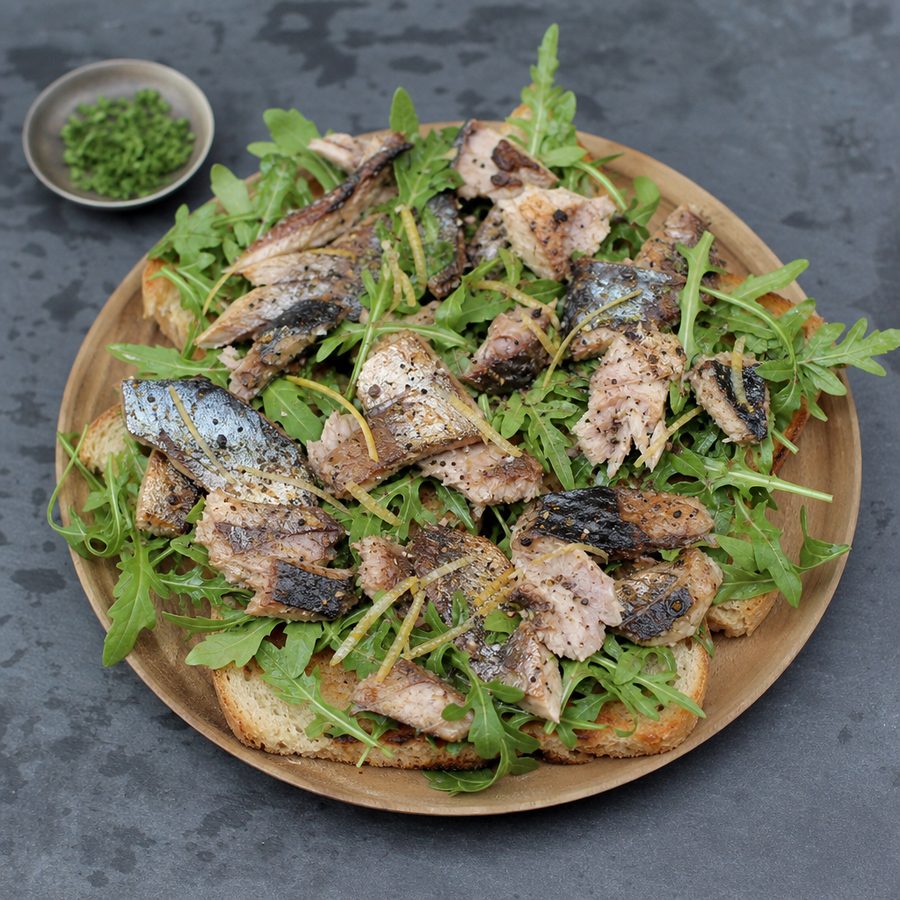
Crisp whole wheat toast piled with lemon-and-Dijon-dressed arugula and a charred broiled mackerel fillet, finished with fresh parsley and a squeeze of lemon.
Why You'll Love This Recipe
This is a fast, savory open-faced breakfast for anyone who wants something more substantial than cereal but does not want to spend much time at the stove. The whole thing comes together in the time it takes the broiler to do its work, and it leans on a single oily fish for big, bold flavor. It suits people who like a sharp, peppery, lemony start to the day and who are happy to eat fish in the morning the way it has long been served in British kitchens.
The broiler is doing all of this. High, direct overhead heat blisters the mackerel skin and firms the flesh quickly, giving you char and a little crisp without drying the fillet out, while the natural oils in the fish keep it moist. Dressing the arugula in a Dijon-and-lemon emulsion rather than plain oil matters too: the mustard both sharpens the greens and helps the dressing cling, so the peppery leaves cut cleanly through the richness of the fish. The crisp toast underneath is not just a vehicle; it soaks up the fish oils and dressing and gives the soft greens and flaky fish something with structure to sit against.
Richness, acid, bite, and crunch, all in a single mouthful. Mackerel is one of the most filling proteins you can put on a plate, and paired with fiber from the whole wheat bread and the volume of fresh greens, it keeps you full without feeling heavy. It is rich in the kind of fats and protein that make a meal feel like a real meal, and the lemon and mustard keep every bite bright rather than cloying.
Ingredients
- 480 g mackerel fillets
- 4 thick slices whole wheat bread
- 3 cups arugula
- 2 tbsp olive oil
- 1 1/2 tbsp lemon juice
- 2 tsp Dijon mustard
- 2 tbsp parsley, chopped
Instructions
- Heat the broiler: Position an oven rack about 4 to 6 inches below the broiler element and turn the broiler to high. Line a broiler pan or rimmed baking sheet with foil for easy cleanup.
- Prep the mackerel and herbs: Pat the mackerel fillets dry with paper towels, since even an oily fish needs a dry skin to blister rather than steam, and check for stray pin bones by running a finger along the flesh and pulling any out with tweezers. Roughly chop the parsley and set it aside.
- Broil the mackerel: Set the fillets skin-side up on the foil and brush the skin lightly with some of the olive oil. Broil 6 to 8 minutes, without turning, until the skin is blistered and lightly charred and the flesh is opaque and flakes easily when pressed with a fork; it should reach 145°F (63°C) at the thickest point.
- Toast the bread: While the fish broils, toast the whole wheat bread until deeply crisp and golden on both sides, either in a toaster or under the broiler for the last minute or two, watching it closely, because bread under a broiler goes from golden to black in about the time it takes to turn away.
- Make the dressing: In a large bowl, whisk together the remaining olive oil, the lemon juice, and the Dijon mustard until smooth and slightly thickened. Add the arugula and toss gently to coat every leaf.
- Assemble and finish: Lay a piece of toast on each plate and pile the dressed arugula on top. Set a mackerel fillet over the greens, sprinkle with the chopped parsley, and finish with a squeeze of lemon right before serving, since the acid is what cuts a fish this rich and it goes flat if it sits.
Variations
- Smoked mackerel: Swap the fresh fillets for ready-to-eat smoked mackerel and skip the broiling entirely; flake it over the greens for a deeper, smokier flavor with no cooking at all.
- Horseradish kick: Stir a little prepared horseradish into the Dijon dressing for a sharper, more warming bite that stands up well to the oily fish. This adds horseradish.
- Poached egg on top: Slide a soft poached egg over each assembled toast so the yolk runs into the greens and fish. This adds egg.
- Tomato and red onion: Add sliced ripe tomato and thin rings of red onion under the fish for extra juiciness and a mild sweet-sharp contrast to the arugula.
- Caper and dill: Scatter rinsed capers and a little chopped fresh dill over the top in place of, or alongside, the parsley for a briny, herbal lift that pairs naturally with mackerel.
Storage & Leftovers
Mackerel is best eaten right after broiling, but leftover cooked fillets keep in an airtight container in the refrigerator for up to two days. Store the components separately, keeping the fish, the toast, and the dressed greens apart so nothing goes soggy.
To reheat, warm the fillets gently in a 300°F (150°C) oven for a few minutes just until heated through, or eat them cold or at room temperature, which suits mackerel well. Avoid the microwave, which turns the fish rubbery and fills the kitchen with a strong smell; toast fresh bread rather than trying to re-crisp the old slice.
To get ahead, you can broil the mackerel and whisk the dressing a day in advance and refrigerate both. When you want to eat, toast the bread, toss the arugula with the dressing, and assemble; cold or barely-warmed fish on fresh toast comes together in a couple of minutes.
Notes & Tips
- Choosing the fish: Look for mackerel fillets that are firm, shiny, and smell clean and briny rather than fishy; because mackerel is oily, it turns quickly, so buy it the day you plan to cook or use fillets straight from frozen, thawed overnight in the fridge.
- Dry skin crisps better: Patting the fillets thoroughly dry before they go under the broiler is the single biggest thing you can do for good char; surface moisture steams the skin instead of letting it blister.
- Watch it closely: Broilers vary a lot and mackerel is thin, so start checking at the 6-minute mark; the flesh is done the moment it turns opaque and flakes, and a minute too long dries it out.
- Dress the greens last: Toss the arugula with the dressing only when you are ready to plate; the acid in the lemon and mustard wilts the delicate leaves within minutes, so dressing early leaves you with a soggy pile.
- Balance the acid: Taste the dressing before it hits the greens; if it puckers too hard, add a little more olive oil to round it out, and if it feels flat, a pinch of salt and a touch more Dijon will bring it back.
- What to serve alongside: This eats well with a wedge of lemon and, if you want to stretch it into a fuller plate, a soft-boiled egg or a spoonful of plain yogurt on the side to temper the richness of the fish.
Nutrition & Mindful Eating
- The fish, the toast and the lemon are a set. The mackerel is rich and oily, the whole wheat toast underneath soaks up everything that runs off it, and the lemon and arugula keep the whole thing lively.
- Mackerel is one of the great cheap fish. It broils fast, the flesh flakes into big soft pieces, and the oil that makes it so rich is the same long-chain omega-3 fat that oily fish is prized for.
- Whole wheat toast is the right base because it stays sturdy under a wet, oily fish, and the grain brings fiber and a chewiness that holds up to everything piled on it.
- Arugula goes on raw so it keeps its pepper, and it wilts slightly against the hot fish, which is exactly what you want, along with the folate and vitamin K the leaves carry.
- Lemon, dijon and chopped parsley are what turn this from broiled fish into breakfast. The acid and the mustard cut straight through the oil, and the parsley gives it a clean green finish.
- As you eat, listen for the crackle of the skin against the toast, taste how far the lemon cuts through the oil, and slow down enough to let the plate be a real start to the day.
Frequently Asked Questions
Can I use canned or smoked mackerel instead of fresh fillets?
Yes. Ready-to-eat smoked or canned mackerel works well and skips the broiling step entirely; just drain it, flake it over the dressed greens, and add the parsley and lemon. The flavor will be smokier and saltier, so you may want a little less on the plate.
How do I know when the mackerel is cooked through?
The flesh turns from translucent to opaque and flakes easily when you press it with a fork, and the skin blisters and chars in spots. At the thickest point it should read 145°F (63°C). Because the fillets are thin, this usually happens between 6 and 8 minutes under a hot broiler.
The mackerel tastes very rich. How can I lighten it?
The lemon and Dijon are there for exactly that reason; add a final squeeze of lemon at the table, and lean on the peppery arugula, which cuts the oiliness. Adding sliced tomato or a spoonful of plain yogurt on the side also freshens each bite.
Can I make this without a broiler?
Yes. Cook the fillets skin-side down in a hot nonstick or cast-iron pan with a little oil, pressing gently so the skin makes full contact, until the skin is crisp and the flesh is opaque, then finish flesh-side down for a minute. You will get a good sear even without overhead heat.