
Brown Butter Salmon Fillets
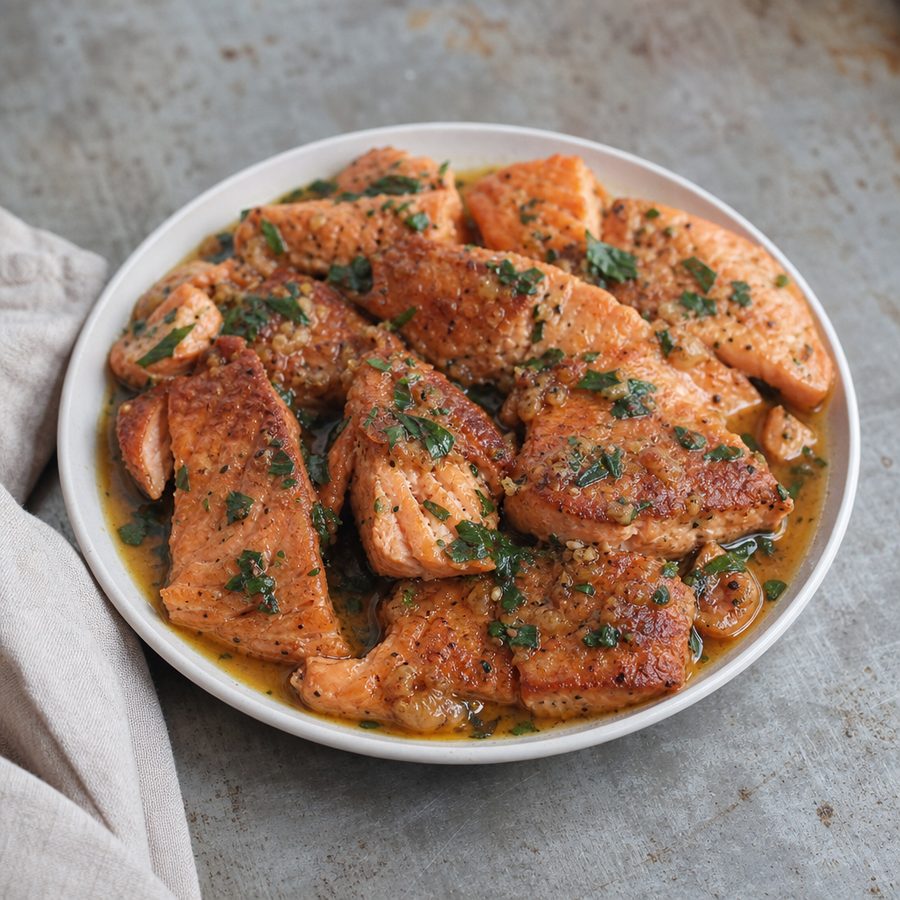
Salmon fillets seared skin-side down until crisp, then basted in nutty browned butter and finished with a pinch of salt.
Why You'll Love This Recipe
Butter browns and salmon crisps on roughly the same clock, which is the whole reason these two belong in one pan. The milk solids in the butter toast to the color of an almond and start smelling nutty at about the point the skin has released itself from the metal, and neither of those things can be rushed. If salmon has come out dry for you before, or the skin has torn and stayed behind in the pan, this method fixes both, and it does it on a weekday in fifteen minutes.
The technique is the whole point. Searing the skin side first in a dry, hot pan renders the fat under the skin and crisps it into something you actually want to eat, while the flesh stays gentle above it. Then, instead of adding a separate sauce, you brown the butter right in the pan: the milk solids in the butter toast and turn golden, giving off a deep, nutty aroma that clings to the fish as you baste. Spooning that hot butter over the top cooks the flesh evenly from above without overcooking the bottom.
Crackling skin, buttery outer flesh, and a soft, just-set center, all in one forkful. Salmon is a naturally rich fish, high in quality protein and the kind of fats that keep you full, and the browned butter amplifies that richness rather than masking it. A little salt is all it needs to bring everything into focus, which is why the short ingredient list works so well here.
Ingredients
- 4 salmon fillets (about 6 oz each)
- 4 tbsp butter
- 1 tsp salt
Instructions
- Dry and salt the fillets: Pat the salmon fillets very dry on both sides with paper towels; a dry surface is what lets the skin crisp instead of steam. Run a fingertip along the center of each fillet to feel for pin bones and pull any you find straight out with clean fingers or tweezers. Salt the flesh side generously.
- Heat the skillet: Set a heavy skillet over medium-high heat and let it get properly hot before the fish goes in. Lay the fillets in the dry pan skin-side down, pressing each one flat for a few seconds with a spatula so the skin makes full contact and does not curl.
- Sear the skin: Cook undisturbed, skin-side down, for 5 to 6 minutes. Do not move or flip the fish yet. You will see the flesh turn opaque creeping up from the bottom, and the skin will release cleanly from the pan and feel crisp when it is ready.
- Brown the butter and baste: Flip the fillets so the flesh side is down. Add the butter to the pan and let it foam, then turn from pale yellow to golden with brown flecks and a nutty aroma. Tilt the pan and spoon the browning butter over the fish continuously, basting the top of each fillet.
- Finish and plate: Continue cooking and basting for 2 to 3 more minutes, until the center is just opaque and the thickest part reaches about 125°F (52°C) for a moist, tender result. That is the top of medium-rare rather than the 145°F (63°C) the FDA gives for seafood, so take it further if you would rather have it firm. Move the fillets to plates and spoon the brown butter from the pan over the top.
Variations
- Ghee instead of butter: Use ghee in place of the butter. It is clarified, so it browns and turns nutty a little faster and takes higher heat without scorching. This still adds dairy.
- A different fatty fish: Swap the salmon for skin-on trout or arctic char fillets, which have a similar richness and crisp up the same way. Thinner fillets will need a shorter sear, so watch the color creeping up the sides.
- Egg on top: Once the fish is out of the pan, crack an egg into the remaining brown butter and fry it, spooning the butter over the white until set. Slide it onto the fillet. This adds egg.
- Bacon-fat baste: Cook a few strips of bacon first, set them aside, and sear and baste the salmon in the rendered bacon fat instead of butter, then crumble the bacon over the top. This adds pork.
- Hard cheese finish: Grate a fine dusting of a firm aged cheese over the hot fillets just before serving so it softens against the fish. This adds dairy.
Storage & Leftovers
Store leftover salmon in an airtight container in the refrigerator for up to three days. Keep any leftover brown butter with it; it will firm up when cold and melt again on reheating.
Reheat gently to keep the fish from drying out. Warm it in a covered skillet over low heat, or in a low oven around 275°F (135°C) just until heated through. The skin will lose some of its crispness once refrigerated, so if you want it crisp again, give the skin side a minute in a hot dry pan.
To get ahead, pat the fillets dry, salt the flesh side, and hold them uncovered on a plate in the refrigerator for a few hours before cooking. The chilled, dry surface actually crisps up better, so this step doubles as make-ahead prep.
Notes & Tips
- Buy center-cut, even fillets: Ask for center-cut, skin-on portions of even thickness rather than the thin tail end. Fillets of the same height cook at the same rate, so they finish together and none dries out.
- Use unsalted butter: Reach for unsalted butter so you control the seasoning yourself. Salted butter plus the salt on the fish can push the dish too far, and unsalted browns just as beautifully.
- Don't discard the brown flecks: The little brown specks that form in the butter are the toasted milk solids, and they carry most of the nutty flavor. Spoon them over the fish rather than leaving them in the pan.
- Judge doneness by temperature: For a moist, tender center pull the fish around 125°F (52°C); if you prefer it more firm and fully opaque, take it closer to 135°F (57°C). A thin-bladed knife slipped into the thickest part should meet almost no resistance.
- Let the pan get hot first: Give the empty skillet a full minute or two over the heat before the fish goes in. A pan that is not hot enough is the most common reason skin sticks and tears instead of releasing clean.
- Save the rendered fat: There is real flavor left in the pan after cooking. Any leftover browned butter and fish fat can be refrigerated and spooned back over the salmon when you reheat it.
Nutrition & Mindful Eating
- Three ingredients and a hot pan. The salmon gives up some of its own fat, the butter browns into something nutty around it, and the salt is what pulls the two flavors together on the plate.
- Salmon cooked to only just set slides apart in thick, rosy flakes, and the fat running through those flakes is where the long-chain omega-3s and the vitamin D live.
- Butter is the whole sauce. Left in the pan until the milk solids toast, it turns amber and smells like hazelnuts, and it carries the fat-soluble vitamin A that makes it worth spooning back over the fish.
- The moment to watch for is when the foaming quiets down and the butter goes brown. That is the smell that fills the kitchen, and pouring it over the fillet takes about two seconds.
- A fillet like this holds you a long time. The protein and the natural fat in the salmon are doing that together, and it is why a plate this simple still eats like a full meal.
- As you eat, run your fork into the fish and watch it fall apart, taste the toasted butter against the salt, and let something this quick still be worth sitting down for.
Frequently Asked Questions
Why is my salmon skin sticking to the pan instead of crisping?
Almost always it is one of two things: the fillets were not dry enough, or the pan was not hot enough. Pat the skin very dry, let the empty skillet heat up fully first, and then leave the fish completely alone. Properly seared skin releases itself from the pan when it is ready, so if it feels stuck, give it another minute before trying to move it.
How do I know when the salmon is done?
The most reliable cue is temperature: about 125°F (52°C) at the thickest part gives a moist, just-set center, while 135°F (57°C) is firmer and fully opaque. Visually, watch the opaque, cooked look climb up the sides of the fillet during the sear, and check that a knife slides into the center with little resistance.
Can I make this with skinless fillets?
Yes, though you lose the crisp skin that is part of the appeal. Sear the presentation side first in the hot pan for a couple of minutes to build color, then flip, add the butter, and baste as written. Handle skinless fillets gently, since they are more delicate without the skin holding them together.
What kind of salmon works best here?
Any variety works. Richer, fattier salmon bastes and stays moist very forgivingly, while thinner tail-end fillets cook a touch faster and are easier to overcook, so pull them promptly. Whichever you buy, choose thick, even center-cut portions with the skin left on for the best crust.