
Brown Butter Trout
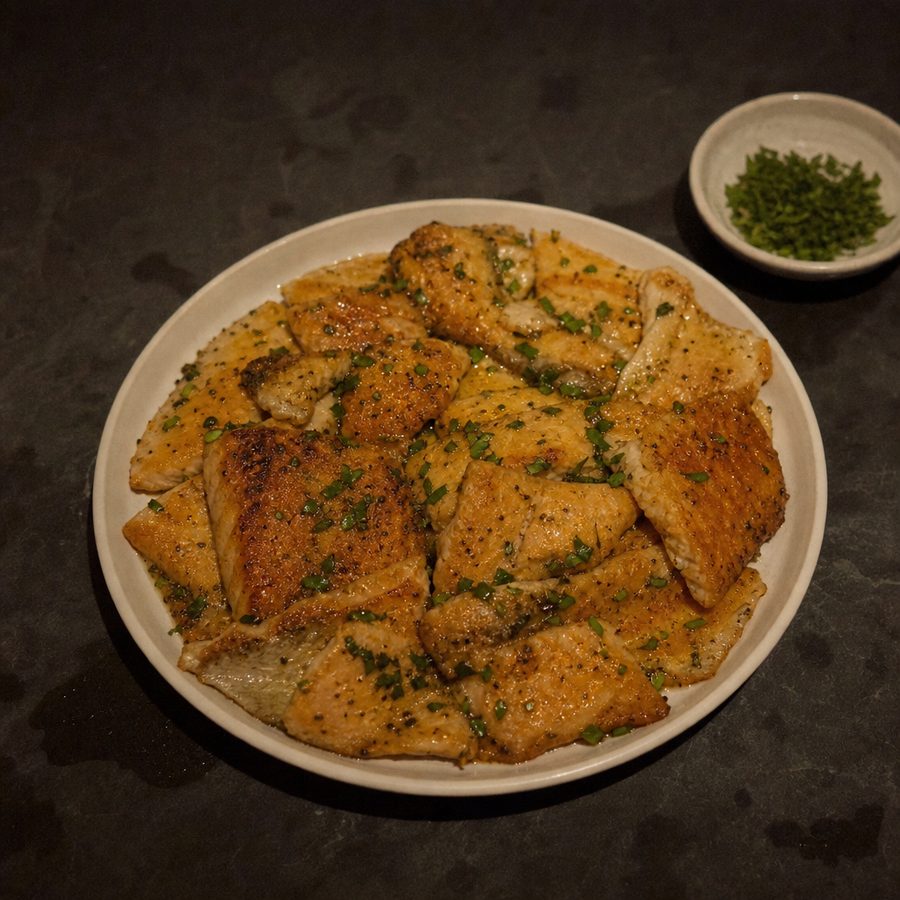
Pan-fried trout fillets with crisp, golden skin, finished with nutty brown butter and a clean hit of salt.
Why You'll Love This Recipe
This is a fast, weeknight-friendly dinner built around one clean idea: fresh trout cooked in butter until the skin crackles, then dressed in that same butter cooked a step further until it turns nutty and golden. It is a dish for anyone who wants a satisfying plate of fish without a long ingredient list or a sink full of pans, and for cooks who are keeping their meals centered on simple, whole animal foods.
The technique carries the whole thing. Browning butter is just melting it long enough for the milk solids to toast, and that toasting is what gives you the deep, almost caramel-and-hazelnut aroma that classic amandine dishes lean on almonds to provide. Here the butter does that work on its own. Getting the skin crisp first, then bathing the finished fillet in the hot browned butter, means every bite has three textures: shattering skin, tender flesh, and rich sauce.
Trout is a rich, flaky fish that delivers a big dose of high-quality protein and the kind of natural oils that make a fillet taste luxurious rather than dry and chalky. Butter rounds it out with real richness and staying power, so the plate feels filling. It is the sort of dinner that satisfies quickly and keeps you full, without needing anything else to prop it up.
Ingredients
- 4 trout fillets (about 6 oz each)
- 6 tbsp butter
- 3/4 tsp salt
Instructions
- Season the trout: Pat the trout fillets very dry on both sides with paper towels; dry skin is what crisps well. Season all over with salt.
- Sear skin-side down: Melt a portion of the butter in a large skillet over medium-high heat until it foams. Lay the fillets in skin-side down and press each one flat with a spatula for a few seconds so the skin makes full contact with the pan. Cook without moving them for 3 to 4 minutes, until the skin is deep golden and crisp.
- Flip and finish cooking: Turn the fillets and cook about 2 minutes more, until the flesh turns opaque, flakes easily when nudged with a fork, and reaches an internal temperature of 145°F (63°C) at the thickest part. Transfer the fillets to warm plates.
- Brown the butter: Add the remaining butter to the empty skillet over medium heat. Swirl the pan constantly as the butter melts, foams, and quiets down. Keep swirling until the milk solids at the bottom turn golden brown and the butter smells nutty and toasty, about 1 to 2 minutes. It goes from browned to burnt quickly, so pull it off the heat the moment it smells like toasted nuts.
- Sauce and serve: Spoon or pour the hot brown butter, milk solids and all, over the trout fillets and serve right away while the skin is still crisp.
Variations
- Take the butter darker: Let the butter cook a little longer until the solids reach a deep amber and the aroma turns toward toasted hazelnut. It intensifies the nutty flavor, but the window before burnt is narrow, so keep swirling and trust your nose.
- Swap the fish: The same method works beautifully with salmon or arctic char fillets in place of trout; this uses a different fish, and thicker fillets simply need a minute or two longer on each side to reach 145°F (63°C).
- Add a hard cheese finish: Grate a little aged hard cheese over the hot fillet just before you pour on the butter so it melts into the sauce. This adds an aged cheese and gives the dish a saltier, savory edge.
- Anchovy brown butter: Melt a rinsed anchovy fillet into the butter as it browns, mashing it so it dissolves. This adds anchovy and brings a deep, savory backbone to the sauce.
- Top with a fried egg: Fry an egg in a little of the browned butter and set it on the fillet so the runny yolk mingles with the sauce. This adds an egg and turns it into a richer, more substantial plate.
Storage & Leftovers
Refrigerate leftover trout in an airtight container once it has cooled, and eat it within two days. Cooked fish is best fresh, and trout in particular loses its delicate texture the longer it sits, so sooner is better.
To reheat, warm the fillet gently in a skillet over low heat with a little butter, just until heated through; high heat will overcook the flesh and toughen it. A brief warm-up in a low oven works too. The skin will not be as crisp as it was fresh, so consider eating the leftover flaked over a plate rather than expecting a crackling fillet.
For a head start, you can season the patted-dry fillets with salt and keep them covered in the refrigerator earlier in the day; a short rest with salt actually helps the surface dry out for better browning. Brown the butter fresh at serving time, though, since it is quick and does not hold or reheat well.
Notes & Tips
- Buy the freshest fillet you can: Look for trout that smells clean and briny, not fishy, with moist flesh that springs back and skin that looks bright rather than dull. Fresh fish is the single biggest factor in how good this tastes.
- Dry skin is crisp skin: Blot the fillets thoroughly and even let them sit uncovered in the fridge for a bit before cooking. Any surface moisture steams instead of sears and leaves the skin flabby.
- Use a light-colored or stainless pan for the butter: It is much easier to see the milk solids turn golden in a pan you can see the bottom of. In a dark nonstick pan, go by smell and by tilting the pan to check the color.
- Watch for the foam to subside: As butter browns it foams, then the foam quiets down right as the solids start to color. That quieting is your cue to watch closely, because burnt is only seconds away.
- Salt at the end if you like: The browned milk solids taste savory on their own, so taste before adding more salt at the table. A tiny extra pinch of salt over the finished fillet sharpens the nutty butter nicely.
- Cook the fish to temperature, not just time: Fillet thickness varies, so an instant-read thermometer showing 145°F (63°C) at the thickest point is more reliable than the clock. The flesh should look opaque and flake with gentle pressure.
Nutrition & Mindful Eating
- Trout, butter and salt in a very hot pan, and it is over in minutes. The fish is fine and mild, the browned butter gives it the richness it wants, and the salt sharpens both of them.
- Trout has a soft, almost sweet flesh that flakes into fine curds under a fork, and the oil in it carries omega-3 fat and vitamin D, which is a lot to get from a fish this gentle.
- Butter taken past melting until the solids toast is what turns this into a proper dish, and the nutty, amber sauce it makes clings to the fillet and pools around it on the plate.
- The skin side goes down first and crisps into something thin and shattery, and that contrast against the soft flesh is the best reason to cook trout in a pan at all.
- Fish this rich holds you longer than its size suggests, with the protein and the natural fats in the trout doing that work, and the browned butter alongside them.
- As you eat, work your way along the fillet slowly, noticing the crisp skin against the soft flesh and the toasted butter behind both, and let the meal have your attention for its few short minutes.
Frequently Asked Questions
Should I leave the skin on?
Yes. The skin crisps into the best part of the dish when you cook it skin-side down first. Keeping it on also helps the delicate fillet hold together in the pan.
How do I know the trout is done?
The flesh turns from translucent to opaque and flakes when nudged with a fork, and an instant-read thermometer reads 145°F (63°C) at the thickest part. Trout cooks fast, so start checking early to avoid drying it out.
Why did my butter turn out burnt instead of nutty?
Brown butter goes from golden to scorched in seconds, especially over higher heat. Keep the heat moderate, swirl the pan constantly, and pull it off the burner the instant it smells like toasted nuts and the solids look golden brown.
Can I use frozen trout?
Yes, just thaw it fully in the refrigerator first and pat it very dry. Frozen fillets release extra moisture, so thorough drying is even more important for getting the skin to crisp.