
Buckwheat Porridge With Figs and Walnuts
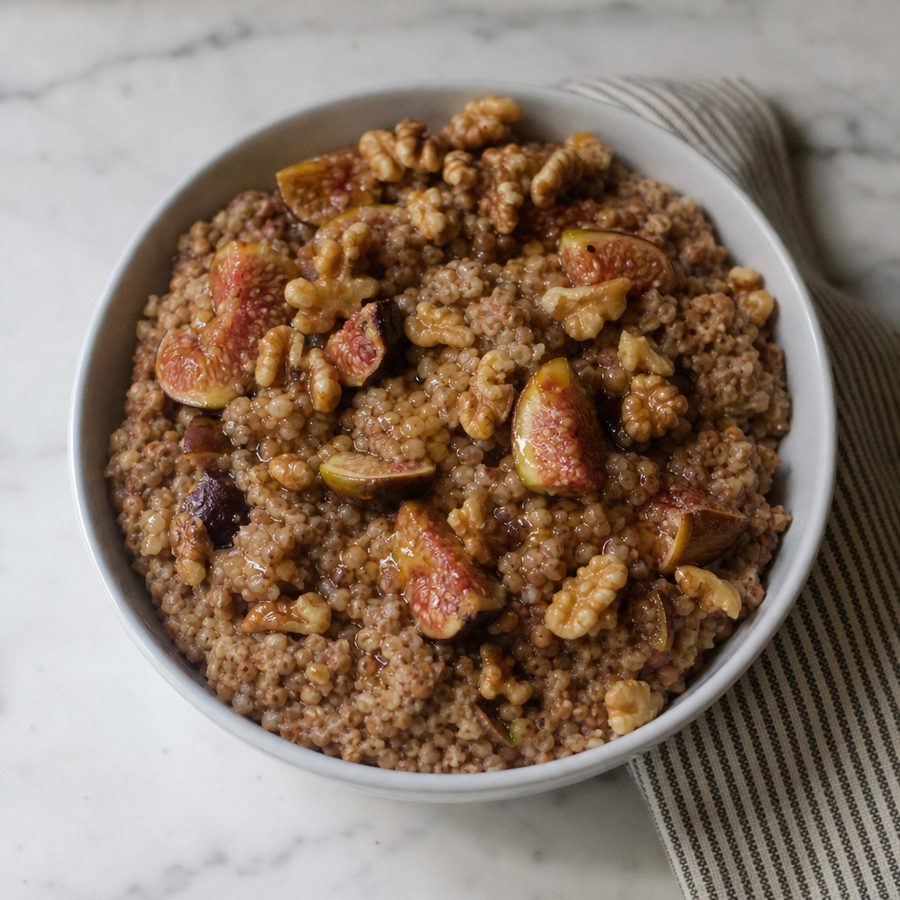
A warm, creamy bowl of buckwheat groats simmered in milk with cinnamon, sweetened with honey, and crowned with sliced fresh figs and crunchy walnut halves.
Why You'll Love This Recipe
This is a hearty, comforting breakfast for anyone who wants something warm and filling that still tastes a little special. The base is humble and inexpensive, but the jammy figs and rich walnuts turn it into a bowl you look forward to on a cool morning. It suits a slow weekend as easily as a busy weekday, and it is naturally free of gluten for households that avoid it.
It depends entirely on how the buckwheat is handled. Rinsing the groats first removes the starchy dust that would otherwise make the porridge slick and pasty, and the second simmer in milk lets the softened grains release just enough of their own starch to thicken everything into a creamy, spoonable texture without any flour or thickener. Stirring often during that second cook keeps the milk from catching on the bottom and builds the smooth, cohesive body that separates a good porridge from a watery one.
The result is satisfying because it balances slow-burning, fiber-rich whole grains with the healthy fats and crunch of walnuts and the natural sweetness of ripe figs. Buckwheat brings an earthy, nutty backbone and plenty of plant minerals, the milk adds protein and a soft creaminess, and the honey and cinnamon tie it together with gentle warmth. It is the kind of breakfast that keeps you full and steady through the morning rather than leaving you hungry an hour later.
Ingredients
- 3 cups cooked buckwheat groats
- 6 fresh figs, sliced
- 3/4 cup walnut halves
- 1 3/4 cups milk
- 2 tbsp honey
- 1 1/2 tsp cinnamon
Instructions
- Rinse and cook the buckwheat, 12 to 15 minutes: Rinse the buckwheat groats in a fine-mesh strainer under cold water to wash off the powdery coating that turns a porridge gluey. Tip them into a saucepan, cover generously with water, bring to a boil, then lower to a gentle simmer and cook uncovered for 12 to 15 minutes, until the grains are tender and plump. Cook them uncovered with plenty of room, since buckwheat sheds a great deal of starch and a tight covered pot turns that starch into paste. Drain off the excess.
- Cut the figs and leave the walnuts big: While the groats cook, trim the tough stem tips from the figs and slice each one lengthwise into rounds or wedges, so the seeds and the pink center show rather than a flat face of skin. Leave the walnut halves whole for more crunch, or chop them roughly if you want smaller pieces; either way they stay on top rather than going into the pot.
- Add the milk and cinnamon: Return the cooked buckwheat to the saucepan, add the milk and the cinnamon, and set it over medium heat, stirring to combine. The cinnamon goes in now rather than at the end because ground spice needs a few minutes of warm liquid to open up, and stirred in at the table it sits on the surface tasting dusty.
- Simmer 8 to 10 minutes until it mounds: Cook for 8 to 10 minutes, stirring often so the bottom does not scorch, until the mixture thickens and the grains soften into a porridge that mounds softly on a spoon rather than running off it. If it tightens more than you want, loosen it with a splash more milk or water, a little at a time, since it thins quickly once it starts.
- Sweeten with the heat off: Take the pan off the burner and stir in the honey. Adding it off the heat keeps the honey's flavor bright, because the floral notes that separate honey from plain sugar cook off within a minute or two in a simmering pot.
- Top and serve it hot: Spoon the warm porridge into bowls and finish each with the sliced figs and the walnuts. Serve right away while it is hot and creamy, since buckwheat keeps drinking liquid as it stands and a bowl left for ten minutes sets up thick enough to hold a spoon upright.
Variations
- Dried fig version: When fresh figs are out of season, swap in chopped dried figs. Simmer them into the porridge with the milk so they plump and soften, adding a deeper, more concentrated sweetness. This adds a more concentrated source of natural sugar.
- Dairy-free bowl: Use an unsweetened almond or oat milk in place of the milk for a lighter, plant-based bowl. It will be a touch less creamy, so simmer a minute or two longer to thicken. Oat milk adds gluten unless you choose a certified gluten-free brand.
- Warm spice blend: Stir in a pinch of ground cardamom or ginger along with the cinnamon for a more fragrant, chai-like porridge. It changes the aroma without altering the makeup of the dish.
- Toasted walnut finish: Toast the walnuts in a dry skillet over medium heat until fragrant before adding them on top. Toasting deepens their flavor and keeps them crisp against the soft porridge.
- Seed and citrus lift: Finish with a spoon of chia or flax seeds and a little grated orange zest. The seeds add extra fiber and the zest brightens the figs. This adds seeds.
Storage & Leftovers
Store leftover porridge in an airtight container in the refrigerator for up to four days. Keep the figs and walnuts separate if you can, since the figs soften and the walnuts lose their crunch once they sit in the warm base.
To reheat, warm the porridge gently in a saucepan over low heat with a splash of milk or water, stirring until it loosens back to a creamy consistency. It thickens considerably as it chills, so the added liquid is what brings it back to life. The microwave is quicker. Warm it in two goes with a stir between, which spreads the heat further than one long round ever manages.
For a make-ahead breakfast, cook the buckwheat base through the simmer and refrigerate it without the toppings. In the morning, reheat with a little extra milk, then slice fresh figs and add the walnuts just before serving so both stay at their best.
Notes & Tips
- Choose ripe figs: Look for figs that feel soft and heavy with a slight give and a sweet aroma at the stem end. Firm, underripe figs stay bland and a little dry, while a ripe one turns jammy against the warm porridge.
- Do not skip the rinse: Rinsing the raw groats until the water runs clear is the single biggest step toward a smooth, non-gluey porridge. The powdery starch on the surface is what makes an unrinsed batch turn pasty.
- Control the thickness: Buckwheat keeps drinking up liquid as it sits, so cook it a shade looser than you want to serve it. It is easy to loosen a thick porridge with a splash of milk, but hard to fix one that is soupy.
- Taste before sweetening: Ripe figs and honey both bring sweetness, so add the honey gradually and taste as you go. On a batch of very sweet figs you may want less than you think.
- Double the base: The plain buckwheat-and-milk base keeps well, so cook a larger batch and portion it out. Reheated with fresh figs and walnuts, it turns several mornings into a two-minute breakfast.
- Serve it right away: This porridge is at its best hot off the stove when the base is creamy and the walnuts are still crunchy. If it has to wait, hold the toppings until the moment you serve.
Nutrition & Mindful Eating
- Buckwheat, figs and walnuts are the three notes here. The groats cook down soft and earthy, the figs melt into sweetness through the pot, and the walnuts stay crunchy on top for contrast.
- Buckwheat groats cook into a creamy porridge that still has a bit of grain to it, and their earthy, almost malty flavor comes with fiber and magnesium built in.
- Fresh figs collapse into the hot porridge and sweeten it from the inside, seeds and all, and that sweetness arrives with the soft fiber and potassium the fruit carries.
- Walnuts toasted for a minute before they go on give the bowl its crunch and a slight bitterness that keeps the sweetness in check, and they bring plant omega-3 fat and a little protein with them.
- Cinnamon and warm milk are what make this smell like breakfast, and a thread of honey stirred through at the end catches the cinnamon and pulls the whole bowl together.
- As you eat, spoon through to find a piece of fig and a bit of walnut in the same mouthful, and let the warmth of the bowl set the pace of your morning.
Frequently Asked Questions
Do I have to use fresh figs, or can I use dried?
Both work. Fresh figs give a soft, jammy topping, while dried figs are sweeter and more concentrated. If you use dried, chop them and simmer them into the porridge so they soften rather than adding them raw at the end.
My porridge turned out pasty and gluey. What went wrong?
That usually comes from skipping the rinse. Buckwheat groats have a powdery surface starch that must be washed off under cold water until it runs clear, otherwise the porridge turns slick and sticky as it cooks.
Can I make this without dairy?
Yes. Swap the milk for an unsweetened plant milk such as almond or oat. The porridge will be a little less rich, so simmer it slightly longer to thicken to the same creamy texture.
Why add the honey off the heat instead of while it cooks?
Stirring honey in after the pan comes off the heat keeps its flavor bright and floral. It also lets you taste and adjust the sweetness once the naturally sweet figs are factored in.