
Buckwheat Pear Breakfast Porridge
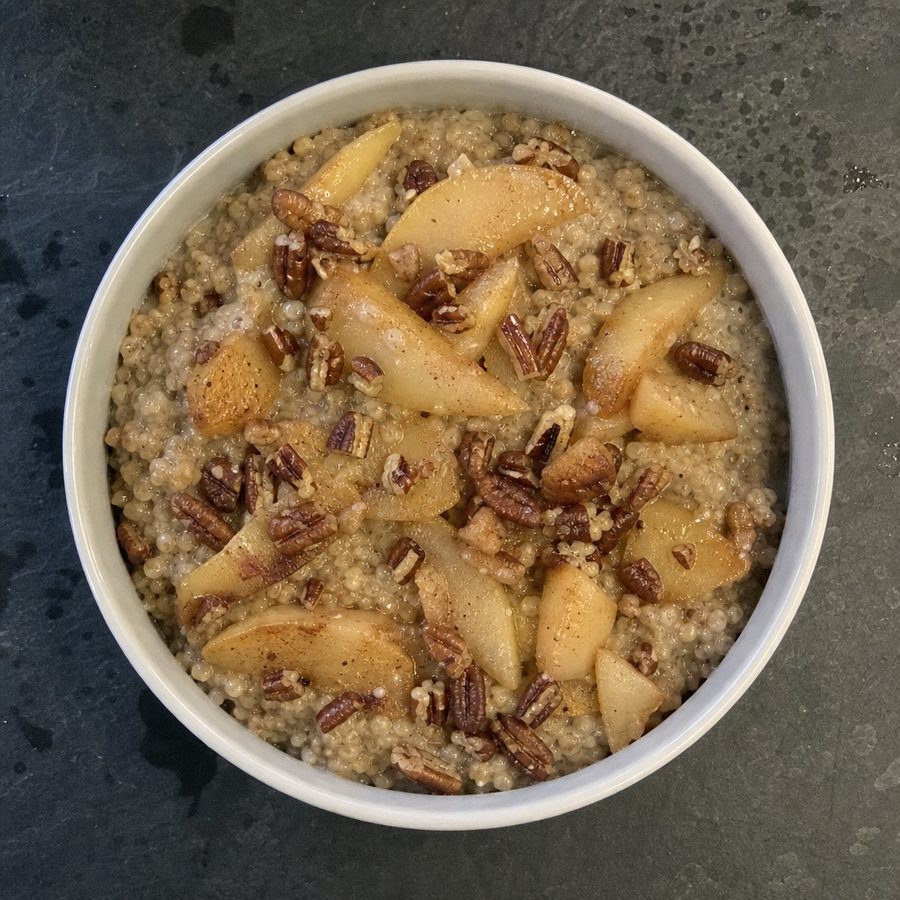
Nutty buckwheat simmered creamy in coconut milk with cinnamon, spooned into bowls and topped with maple-warmed pears and toasted pecans.
Why You'll Love This Recipe
Cozy and filling first thing in the morning is the whole intention here. It leans on whole buckwheat groats rather than a refined cereal, so it eats hearty and stays with you, while the maple-warmed pears give it the gentle sweetness of a comfort dish without leaning on much added sugar. It is a good choice for mornings when you want breakfast to feel like a small treat but still carry real substance.
Simmer the cooked buckwheat in coconut milk until the starch releases and the whole pot turns creamy, the same way a good rice pudding thickens. Buckwheat has a naturally nutty, almost earthy flavor, and the cinnamon and a small amount of maple round it out so it reads as warm and mellow rather than grassy. Cooking the pears separately in maple syrup keeps their shape and concentrates their flavor, so they sit on top as a distinct, glossy layer instead of dissolving into the porridge.
Soft, creamy grains against tender pear slices and the crunch of toasted pecans. It is high in fiber from the buckwheat and pears, which helps the meal feel filling and steady rather than sugary and fleeting, and the pecans and coconut milk add richness that makes a plant-based bowl taste indulgent. It is the kind of breakfast that is nourishing while still feeling like something you look forward to.
Ingredients
- 4 cups cooked buckwheat
- 2 large pears, sliced
- 1/2 cup chopped pecans
- 1 1/2 cups coconut milk
- 2 tbsp maple syrup
- 1 1/2 tsp cinnamon
- 1/4 tsp salt
Instructions
- Cook the buckwheat: Rinse raw buckwheat groats under cold water and drain. Add to a pot with roughly twice their volume of water and a pinch of salt, bring to a boil, then lower to a gentle simmer and cook, covered, until the groats are tender and the water is absorbed, about 15 to 18 minutes. Fluff with a fork.
- Slice and prep: Halve the pears, cut out the cores, and slice them into thin wedges. Roughly chop the pecans so they toast evenly.
- Toast the pecans: Warm a dry skillet over medium heat and add the chopped pecans. Toast, stirring often, until they smell nutty and darken slightly, about 3 to 4 minutes. Tip them onto a plate so they stop cooking.
- Simmer the porridge: Combine the cooked buckwheat, coconut milk, cinnamon, and salt in a pot. Simmer over medium-low heat, stirring now and then, until the mixture turns thick and creamy and the grains soften further, about 6 minutes.
- Cook the pears: Warm the pear slices with the maple syrup in a small pan over medium heat. Cook, turning the slices once or twice, until they are tender and glossy and the syrup clings to them, about 4 minutes.
- Serve: Spoon the warm porridge into bowls. Top each with the spiced pears and a sprinkle of toasted pecans.
Variations
- Apple instead of pear: Swap the pears for firm apple slices cooked the same way in maple syrup. Apples hold their shape well and turn tart-sweet as they soften.
- Berry topping: Skip the cooked pears and finish the porridge with fresh or thawed frozen berries for a brighter, more tart contrast to the creamy base.
- Warmer spice: Add a pinch of ground ginger, nutmeg, or cardamom along with the cinnamon for a more aromatic, chai-like porridge.
- Walnut or almond crunch: Trade the pecans for chopped walnuts or sliced almonds, toasted the same way. This changes which nuts the dish contains but keeps the crunch.
- Lighter and thinner: Use a lighter plant milk in place of some of the coconut milk for a thinner, less rich porridge that still turns creamy as it simmers.
Storage & Leftovers
Store leftover porridge in an airtight container in the refrigerator for up to four days. Keep the pears and pecans separate if you can, so the pecans stay crisp and the pears do not weep into the grains.
The porridge thickens considerably once chilled. To reheat, warm it in a pot or the microwave with a splash of coconut milk or water, stirring until it loosens back to a creamy consistency. Warm the pears briefly alongside it.
To get ahead, cook a batch of buckwheat groats and refrigerate them plain. In the morning you can simmer the grains with coconut milk and cinnamon and cook the pears while the porridge thickens, and breakfast comes together in minutes.
Notes & Tips
- Pick the right pears: Choose pears that are ripe but still firm, like Bosc or Anjou. A rock-hard pear will not soften in the pan, and an overripe one will fall apart into mush.
- Toast the pecans first: The toasting step is what wakes up the pecans. Raw nuts taste flat here, so do not skip the dry skillet, and watch them closely because they go from golden to burnt quickly.
- Stir for creaminess: Stirring the porridge as it simmers coaxes out the starch and is what turns it creamy. If it looks thin, keep it on the heat a minute longer; if it tightens too much, loosen it with a splash of coconut milk.
- Adjust the sweetness: Taste before serving. The maple syrup mostly flavors the pears, so if you like a sweeter bowl, drizzle a little extra over the finished porridge rather than adding it to the pot.
- Shake the coconut milk: Canned coconut milk separates, so shake the can well or whisk it smooth before adding it, otherwise you get pockets of firm coconut cream instead of an even, creamy base.
- Double the batch: This scales up easily for a crowd or for meal prep. Cook extra buckwheat groats and portion the porridge into containers so you have breakfast ready through the week.
Nutrition & Mindful Eating
- Buckwheat, pear and coconut milk make this bowl what it is. The groats go soft and earthy, the pear cooks down into sweetness through the pot, and the coconut milk gives the whole thing a creamy body.
- Buckwheat has a deep, toasty flavor that stands up to fruit and spice, and cooked slowly it turns creamy at the edges while holding a little chew, bringing fiber and plant protein to the bowl.
- Pears break down faster than most fruit, so they sweeten the porridge as it cooks rather than sitting on top of it, and they carry a soft, soluble fiber that feeds the bacteria in your gut.
- Pecans are the crunch and the butteriness. Toasted, they smell like baking, and the unsaturated fat that makes them so rich is also what gives the bowl a bit more staying power.
- Cinnamon and a spoonful of maple syrup stirred in at the end make the kitchen smell like dessert, and the pinch of salt underneath them is what stops the sweetness from going flat.
- As you eat, sit with the smell of the cinnamon for a moment before the first spoonful, notice how soft the pear has gone, and let this be a slow start rather than a rushed one.
Frequently Asked Questions
Can I use buckwheat flour or cream of buckwheat instead of whole groats?
This porridge is built on whole buckwheat groats, which stay distinct and tender as they simmer. A flour or finely ground cereal would turn gluey rather than creamy, so stick with the whole groats for the right texture.
Is toasted (kasha) buckwheat the same thing?
Kasha is buckwheat that has already been toasted, and it has a stronger, more roasted flavor and cooks a little faster. It works here, but the porridge will taste more intense and earthy. Raw groats give a milder, mellower result.
My porridge got very thick in the fridge. Did I do something wrong?
No, that is normal. Buckwheat absorbs liquid as it sits, so it firms up once chilled. Just reheat it with a splash of coconut milk or water and stir until it loosens back into a creamy porridge.
Can I make this without the coconut milk?
Yes. Any plant milk will work to simmer the grains creamy, though coconut milk gives the richest result. A lighter milk makes a thinner, less rich bowl that still thickens as it cooks.