
Butter-Baked Cod Loins
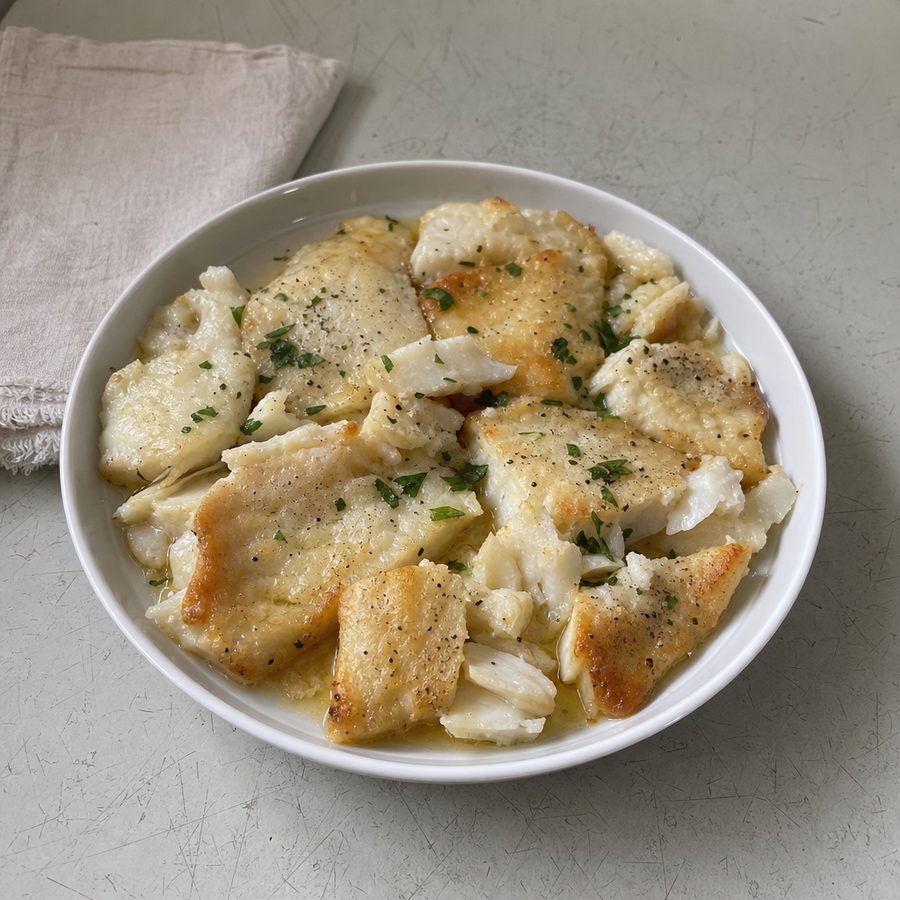
Thick cod loins baked in a bath of melted butter and seasoned with salt until they turn snowy white and flake at the touch of a fork.
Why You'll Love This Recipe
This is a quiet, hands-off dinner for anyone who wants a serious amount of clean protein without a long ingredient list or a sink full of pans. It leans on just three things: thick cod loins, plenty of good butter, and salt. Because cod loin is the meaty center-cut portion rather than the thin tail, it stays in generous, forkable pieces instead of shredding, which makes it feel like a real plated meal even though almost nothing happens at the stove.
The cod sits in a bath of butter. Cod is delicate and can dry out and turn rubbery when it is cooked with too little fat or too much heat, so surrounding it with melted butter keeps the surface moist while the inside gently comes up to temperature. The butter carries the salt into the flesh and, as the fish releases a little of its own moisture, the two combine into a light pan sauce that tastes far richer than the effort suggests. A moderate 400°F (200°C) oven cooks the loins through evenly before the outside overcooks.
The payoff is a plate that is deeply satisfying without being heavy-handed. Cod delivers a large amount of mild, complete protein that keeps you full, while the butter adds richness and a soft, silky mouthfeel that makes the fish feel indulgent. The flesh cooks up snowy white and tender, flaking into clean pieces, and the warm buttery juices tie every bite together. It is plain food done carefully, which is usually what makes fish worth eating.
Ingredients
- 4 cod loins (about 8 oz each)
- 10 tbsp butter, melted
- 3/4 tsp salt
Instructions
- Preheat the oven: Preheat the oven to 400°F (200°C) and set a rack in the middle position. Have a baking dish ready that holds the cod loins in a single layer without crowding.
- Melt the butter: Melt the butter gently, either in a small saucepan over low heat or in short bursts in the microwave, until fully liquid but not browned or bubbling hard. Set it aside.
- Pat the cod dry: Pat each cod loin dry on all sides with paper towels. Removing the surface moisture helps the fish sit in the butter rather than steam in its own liquid, and gives you a cleaner, richer pan sauce.
- Assemble the dish: Pour about half of the melted butter into the baking dish to coat the bottom. Lay the cod loins in the dish in a single layer, then sprinkle the salt evenly over the tops.
- Bake: Spoon the remaining melted butter over the loins so they are well coated. Bake for 18 to 20 minutes, until the fish is opaque all the way through, flakes easily when nudged with a fork, and reaches an internal temperature of 145°F (63°C) at the thickest part.
- Serve: Spoon the buttery pan juices over the loins and serve hot, sending any extra butter from the dish to the table to spoon over each portion.
Variations
- Browned butter: Cook the butter a little longer before you pour it, until it turns golden and smells nutty, then use it exactly as directed. This deepens the flavor with a toasty, caramelized note and no new ingredients.
- Cheese-crusted top: Grate a hard aged cheese over the loins for the last few minutes of baking so it melts into a savory layer. This adds more dairy and a sharper, saltier finish.
- A different fish: Swap the cod for another thick, firm fillet such as halibut or haddock, baked the same way. This uses a different fish, so watch the timing since a thinner or thicker cut will cook faster or slower.
- Egg on top: Slide a fried egg onto each finished loin so the runny yolk mingles with the buttery juices. This adds egg and turns the dish into something richer and more brunch-like.
- Clarified butter finish: Use clarified butter or ghee in place of the melted butter for a cleaner, more golden pool with a slightly higher tolerance for heat and a purer buttery taste.
Storage & Leftovers
Refrigerate leftover cod in an airtight container, with any pan juices poured over it to keep it moist, for up to three days. Let it cool for a few minutes before sealing so condensation does not build up and turn the fish watery.
Cod reheats best gently, since high heat makes it tough and dry. Warm it in a covered dish in a 275°F (135°C) oven just until heated through, spooning the reserved butter over the top to re-moisten the flesh. Avoid the microwave if you can, as it tends to overcook the edges and toughen the fish.
To get ahead, pat the loins dry and melt the butter earlier in the day, keeping the fish covered in the refrigerator until you are ready. From there it goes straight into the dish and the oven, so dinner is only about twenty minutes away.
Notes & Tips
- Buy true loins: Ask for center-cut cod loin rather than the thin, tapered tail fillets. The loins are thick and even, so they cook at the same rate and hold together in meaty pieces instead of falling apart.
- Thaw and dry frozen fish well: If you start with frozen cod, thaw it fully in the refrigerator and pat it very dry before it goes in the dish. Excess water thins out the butter and makes the pan juices watery instead of rich.
- Cook to temperature, not the clock: An instant-read thermometer takes the guesswork out; 145°F (63°C) at the thickest point means it is done. Visually, the flesh should be opaque throughout and separate into clean flakes with light pressure.
- Mind the butter you use: If your butter is salted rather than unsalted, hold back on the added salt and taste, since the two together can push the dish too far.
- Do not overbake: Cod goes from perfectly tender to dry and rubbery quickly. Pull it as soon as it flakes and carries over a couple of degrees while it rests on the plate.
- Save every drop of the pan sauce: The pooled butter and fish juices are the whole sauce, so scrape and spoon all of it over the portions rather than leaving it in the dish.
Nutrition & Mindful Eating
- Cod and butter are the entire recipe and they need each other. The fish is mild and firm, the butter pools around it and bastes it as it bakes, and the salt is what pulls the flavor of both forward.
- Cod loin is the thick center cut, which is why it bakes into big opaque flakes rather than shredding, and it carries a dense amount of protein that makes a quiet plate like this eat like a full dinner.
- Butter melting in the dish does more than add richness. It keeps the surface of the fish moist while the oven works, browns lightly at the edges of the pan, and carries vitamin A in the same spoonful of fat that helps you take it up.
- The smell coming out of the oven is the real timer, warm butter and something faintly sweet from the fish, and the loin is ready when it looks opaque all the way through with the flakes just beginning to separate.
- Cod eats gently. The flakes come apart under a fork with almost no effort, and the protein sitting underneath that softness is what holds you, so this stays with you longer than it looks like it will.
- As you eat, watch how cleanly each flake lifts away, and let the butter and salt register before the next forkful so the meal has time to tell you when you are satisfied.
Frequently Asked Questions
What is the difference between a cod loin and a regular cod fillet?
The loin is the thick center portion of the fillet, cut from the meatiest part of the fish. It stays in generous, even pieces and cooks more evenly than the thin tail end, which is why it works so well for baking in butter.
How do I know when the cod is done?
The fish should be opaque all the way through and flake apart easily when you nudge it with a fork. For certainty, check the thickest part with a thermometer; it is ready at 145°F (63°C). Pull it right away, since cod dries out fast once it is cooked.
Can I use frozen cod?
Yes. Thaw it completely in the refrigerator first, then pat it thoroughly dry on all sides. Trapped water will dilute the melted butter and make the pan juices thin, so drying the fish well is the key step.
Why did my fish turn out watery instead of buttery?
That usually comes from surface moisture on the loins, most often with fish that was frozen or not patted dry. Blot the cod well before it goes in the dish so the butter stays rich and the loins bake rather than steam.