
Butter-Baked Mackerel
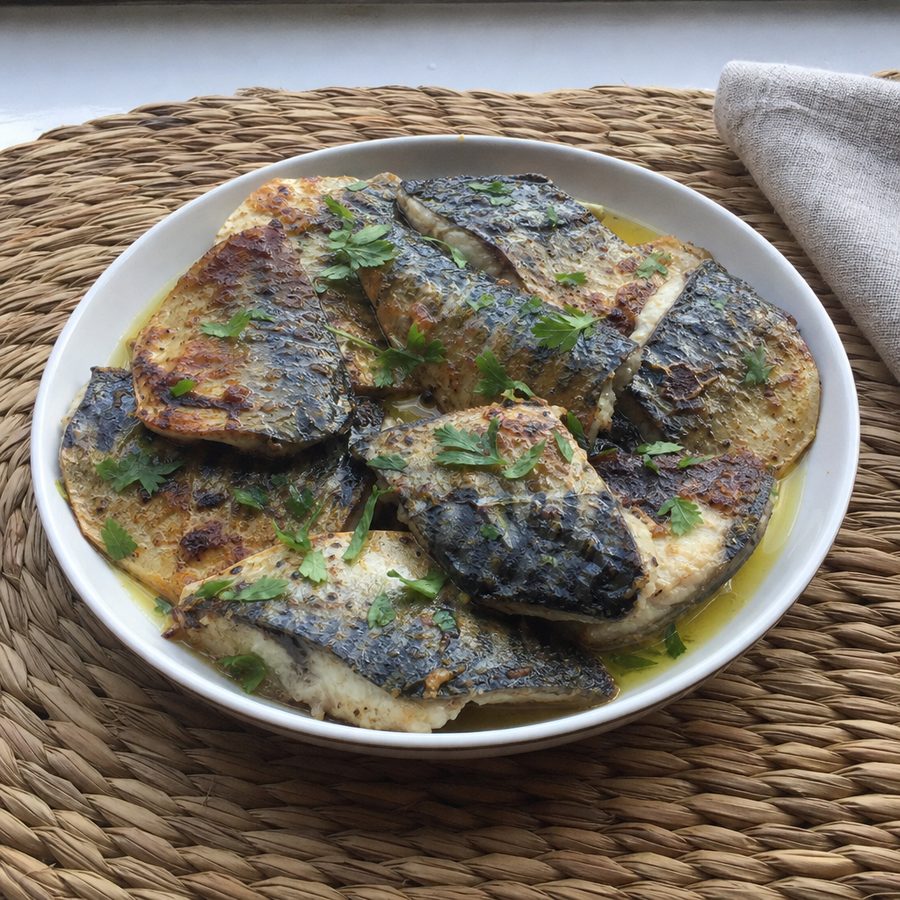
Rich mackerel fillets baked skin-down in melted butter and seasoned only with salt until the flesh turns meltingly tender and the edges crisp.
Why You'll Love This Recipe
This is a plainly cooked, deeply savory fish supper for anyone who wants a real dinner with almost no work and nothing on the plate but the fish itself. Mackerel is one of the richest, most full-flavored fish you can buy, and baking it in butter leans into that richness rather than fighting it. It suits a busy weeknight when you want something that tastes like more effort than it took, and it suits anyone keeping their food simple and centered on protein and fat.
The technique is almost entirely about moisture control and gentle heat. Patting the fillets dry and setting them skin-side down means the skin protects the flesh from the hot dish while the exposed top and thin edges brown and crisp. The melted butter does two jobs at once: it bastes the surface so the exposed top does not dry out, and it carries the salt into the flesh as the fish cooks. Because mackerel is naturally oily, it stays tender through the whole bake, and pulling it at the point where it just flakes keeps it succulent instead of firm.
A rich, oily fish, the roundness of butter, and a clean hit of salt, with nothing else asked of you. Mackerel is high in protein and in the long-chain omega-3 fats that give it its character, so a single fillet is filling and stays with you. The buttery juices spooned back over the top pull the whole thing together, so a dish with only three components tastes generous and complete.
Ingredients
- 4 mackerel fillets (about 6 oz each)
- 3 tbsp butter, melted
- 3/4 tsp salt
Instructions
- Preheat the oven: Preheat the oven to 400°F (200°C). While it comes up to temperature, pat the mackerel fillets thoroughly dry on both sides with paper towels; a dry surface is what lets the edges crisp rather than steam.
- Butter the dish: Brush the bottom of a baking dish with a little of the melted butter so the skin does not stick. Lay the fillets in the dish skin-side down, leaving a small gap between them so heat can reach the edges.
- Season: Brush the tops of the fillets with the remaining melted butter, letting it pool slightly in the dish, then season evenly with the salt.
- Bake: Bake for 14 to 18 minutes, until the flesh turns opaque and flakes easily when nudged with a fork and the thin edges look crisp and lightly browned. At the center the fish should reach about 145°F (63°C) on an instant-read thermometer.
- Serve: Spoon the buttery juices from the dish back over each fillet and serve hot, straight from the oven while the edges are still crisp.
Variations
- Cheese-crusted top: In the last few minutes of baking, sprinkle the fillets with finely grated hard cheese and return them to the oven until it melts into a savory crust. This adds dairy.
- Brown butter: Before brushing, cook the butter in a small pan over medium heat until it smells nutty and turns golden, then use it as the basting fat for a deeper, toasted flavor.
- Crisp-skin finish: After baking, run the fillets under the broiler for a minute or two, watching closely, to blister and crisp the tops and edges further.
- Different oily fish: Swap the mackerel for salmon or sardine fillets and bake the same way, adjusting the time to the thickness of the fillet. This changes which fish is on the plate.
- Egg on top: Serve each baked fillet with a fried or poached egg set over it so the yolk runs into the buttery juices. This adds egg.
Storage & Leftovers
Refrigerate leftover fillets in an airtight container once they have cooled, and eat them within two days. Oily fish like mackerel is strongest in flavor the day it is cooked and becomes more pronounced in the fridge, so sooner is better.
To reheat without drying the fish out, warm the fillets in a covered dish in a 275°F (135°C) oven just until heated through, spooning any saved butter over the top first. Avoid a hard blast of heat or a long turn in the microwave, both of which toughen the flesh and drive off the moisture that keeps it tender.
To get ahead, pat the fillets dry and set them buttered and salted in the baking dish, then cover and refrigerate for a few hours before dinner. Slide the dish straight into the preheated oven when you are ready, adding a minute or two since the fish starts cold.
Notes & Tips
- Buy the freshest fish you can: Mackerel is highly perishable, so look for fillets that smell clean and briny rather than fishy, with firm, glossy flesh and shiny skin. If you cannot get it fresh, frozen-at-sea fillets are often a better bet than tired fresh ones.
- Thaw and dry frozen fillets well: If using frozen fillets, thaw them overnight in the fridge, then blot them very dry before buttering. Surface water is the enemy of crisp edges and will make the fish steam instead.
- Watch thickness, not just the clock: The 14-to-18-minute range depends on how thick your fillets are. Thin tail-end pieces finish fast, so start checking early and pull each fillet when it flakes rather than waiting on the timer.
- Use a thermometer near the center: If you are unsure, an instant-read thermometer in the thickest part reading about 145°F (63°C) is your surest sign the fish is done without overcooking.
- Keep the skin on: Leave the skin on even if you do not plan to eat it; it shields the flesh from the hot dish and keeps the fillet from falling apart, and it crisps nicely if you do want it.
- Do not skip spooning the juices: The butter and rendered fish oils that pool in the dish are the best part. Spoon them back over the fillets at the table so nothing goes to waste and every bite stays moist.
Nutrition & Mindful Eating
- Mackerel, butter and salt are all that is here, and the oven does the joining. The fish releases its own oil as it bakes, the butter melts into it, and the two together make a sauce you can spoon straight back over the fillet.
- Mackerel has a deep, meaty flavor that comes from its own oil, and that oil is where the long-chain omega-3 fats live, so the richest tasting part of the fillet is also the most interesting part of it.
- Butter is what softens mackerel for anyone who finds it strong. It rounds the edges of the flavor, browns against the skin, and its own vitamin A rides along in the same spoonful of pan juices.
- The skin is worth the attention. Baked in butter it tightens and crisps at the edges while the flesh underneath stays soft and dark, and the contrast between the two is most of the pleasure of eating this.
- A fillet of mackerel goes further than its size suggests. The oil and the protein in the fish work on you together, slowly, so dinner keeps you comfortable for hours afterward.
- As you eat, let the richness slow you down, noticing how the dark flesh gives way and how the butter and pan juices carry the salt, and stop once the fillet has done its work.
Frequently Asked Questions
My mackerel tastes very strong and fishy. Is that normal?
Mackerel is a naturally oily, full-flavored fish, so a rich savory taste is expected. A truly off, sour, or ammonia-like smell is a sign the fish is past its prime, though, so start with the freshest fillets you can find and cook them the day you buy them for the mildest flavor.
Do I eat the skin?
That is up to you. Baked skin-side down and finished until crisp, the skin is pleasant to eat and holds the fillet together. If you prefer, lift the flesh off the skin at the table; either way, keeping the skin on during baking protects the fish.
How do I know when it is done without overcooking it?
Look for flesh that has turned opaque all the way through and flakes easily when you nudge it with a fork, with crisp browned edges. If you want to be exact, an instant-read thermometer in the thickest part should read about 145°F (63°C). Pull it right at that point, since oily fish keeps cooking briefly off the heat.
Can I use a sheet pan instead of a baking dish?
Yes. A rimmed baking pan works well and gives the edges even more room to crisp. Butter the pan first so the skin does not stick, and keep the fillets spaced apart. A dish with sides simply holds more of the buttery juices for spooning over the top.