
Butter-Basted Chicken Thighs
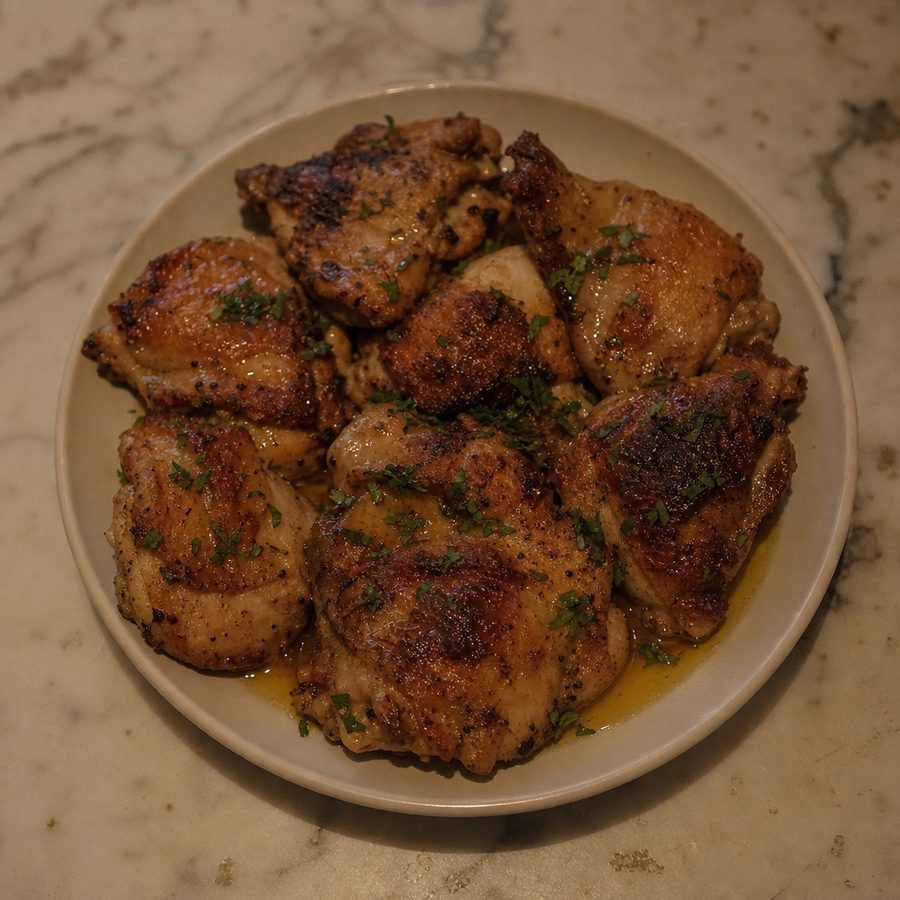
Skin-on chicken thighs seared until the skin turns deep, shattering gold, then repeatedly spooned with foaming salted butter for meat that stays juicy and rich.
Why You'll Love This Recipe
Skin is fat and water held together by connective tissue, and it will not crisp until both the water has gone and the fat has rendered out from underneath. That takes longer than most people give it and lower heat than instinct suggests, which is why these start skin down in a pan that is barely warm and stay there without being touched for the better part of ten minutes. Three ingredients, one skillet, and a weeknight dinner that tastes like it came from somewhere with tablecloths.
The technique is what makes the difference. Rendering the skin from a cold pan gives the fat time to melt out slowly, so the skin dries and crisps instead of seizing and steaming, while the meat below cooks gently. Once flipped, the constant basting with foaming butter bathes the top of each thigh in hot fat, browning the surface and carrying the salt and butter flavor deep into every bite. The butter foams because its water is cooking off, which tells you it is hot enough to brown well.
Chicken thighs are dark meat, which stays moist and forgiving even when cooked through, and they are naturally rich in protein. The rendered skin and butter make the dish filling and flavorful, so a portion satisfies without anything else on the plate. It is a simple, protein-forward meal that eats like something far more indulgent than its ingredient list suggests, and the fat left in the pan is worth keeping for whatever you cook next.
Ingredients
- 6 bone-in, skin-on chicken thighs (about 1.6 lb)
- 4 tbsp butter
- 1 tsp salt
Instructions
- Dry and salt: Pat the chicken thighs completely dry with paper towels, giving special attention to the skin, since surface moisture is what keeps skin from crisping. Salt the skin side generously and evenly so it seasons the meat and helps draw out moisture for a crisper finish.
- Start in a cold pan: Lay the thighs skin-side down in a cold, heavy skillet, spacing them so they are not touching. Set the burner to medium and let the pan and skin heat together. Starting cold renders the fat slowly and evenly instead of scorching it.
- Render the skin: Cook without moving the thighs for 10 to 12 minutes. You will hear a steady, quiet sizzle as the fat renders and pools in the pan. The skin is ready to turn when it is deep golden brown and releases easily from the pan; if it sticks, give it another minute.
- Flip and baste: Turn the thighs skin-side up and add the butter to the pan. Once it melts and foams, tilt the pan slightly so the butter gathers at one edge, and use a spoon to pour it over the meat again and again for 6 to 8 minutes. Baste continuously so the tops stay coated and cook evenly. They are done when the juices run clear and a thermometer in the thickest part, away from the bone, reads 175°F (80°C).
- Rest and serve: Move the thighs to a plate and rest them for 3 minutes so the juices settle before cutting. Spoon the buttery pan drippings over each portion to serve.
Variations
- Beef tallow baste: Swap the butter for beef tallow or duck fat and baste the same way for a meatier, less dairy-rich finish.
- Ghee finish: Baste with ghee instead of butter for a nuttier, more heat-stable fat; this still adds dairy but removes the milk solids that can brown quickly.
- Cheese-crisped skin: In the last minute, press a thin layer of finely grated hard cheese onto the crisp skin and let it melt into a golden crust; this adds more dairy.
- Fried egg on top: Crack an egg into the buttery drippings after the thighs come out and fry it in the seasoned fat to set on each portion; this adds egg.
- Turkey thighs: Use bone-in, skin-on turkey thighs in place of chicken and extend the basting time, cooking to the same internal temperature, for a larger, deeper-flavored portion.
Storage & Leftovers
Refrigerate leftover thighs in an airtight container, along with any pan drippings, for up to 4 days. Let them cool before sealing so condensation does not soften the skin.
To reheat and keep the skin from going rubbery, warm the thighs skin-side down in a dry skillet over medium heat until the skin re-crisps and the meat is hot through, spooning any reserved drippings over the top at the end. A hot oven works too; avoid the microwave, which steams the skin soft.
To get ahead, dry and salt the thighs a day in advance and leave them uncovered on a rack in the refrigerator. The dry surface renders and crisps even better the next day, so all that is left is the searing and basting.
Notes & Tips
- Pick even thighs: Choose thighs that are similar in size and thickness so they render and finish cooking at the same rate; a very large thigh beside a small one will leave one over- and one underdone.
- Dry skin is everything: The single biggest factor in crisp skin is a dry surface. If you have time, salt the thighs and leave them uncovered in the refrigerator for a few hours before cooking so the skin dries out.
- Do not crowd the pan: Leave space between the thighs so the rendering fat and steam can escape. Packed too tightly, the skin steams instead of crisping; cook in two rounds if your skillet is small.
- Trust the thermometer: Thighs are most tender cooked past the usual poultry minimum, to around 175°F (80°C) in the thickest part away from the bone, where the connective tissue softens; an instant-read thermometer takes the guesswork out.
- Save the rendered fat: Pour the leftover butter and rendered chicken fat from the pan into a small jar and refrigerate it. It keeps for cooking eggs or searing more meat and carries a lot of flavor.
- Salt to your taste: The only seasoning here is salt, so it does the heavy lifting. Season the skin confidently before cooking, then taste a bite at the end and add a small pinch more if the meat needs it.
Nutrition & Mindful Eating
- The thighs, the butter and the pan work as one thing. The skin renders its own fat, the butter joins it and browns, and every spoonful you tip back over the meat carries both at once.
- Thigh is the cut that forgives you. The fat running through dark meat keeps it juicy even when the pan runs hot, and that same dark meat carries iron and zinc in the form your body takes up most easily.
- Butter is not only a cooking fat here, it is the sauce. It browns as it bastes, picking up the salt and the fond from the chicken, and it brings vitamin A along in a form the body uses directly.
- The skin is the reason to make this. Salted ahead and patted dry, it tightens in the pan and turns brittle and golden, and the sound it makes under a knife is how you know you got it right.
- Thighs eat richer than their size, with the protein and the rendered fat working together, so one or two off the pan settle in and keep you comfortable well into the afternoon.
- As you eat, start with the skin while it is still crackling, then slow down for the meat underneath, letting the buttery smell and the salt register long enough that you feel yourself filling up.
Frequently Asked Questions
Why start the thighs in a cold pan instead of a hot one?
Starting cold lets the fat under the skin melt out slowly and evenly as the pan heats. That gradual rendering dries and crisps the skin, whereas dropping thighs into an already-screaming pan tends to scorch the outside before the fat has a chance to render.
Can I use boneless or skinless thighs?
You can, but you lose the two things that define this dish: the crisp rendered skin and the fat it gives up. Boneless, skinless thighs cook faster and will still take well to the butter basting, so watch them closely and pull them as soon as they reach temperature.
My skin turned out soft instead of crisp. What went wrong?
Usually it is moisture or crowding. Pat the thighs bone-dry before salting, give them room in the pan, and resist moving them while the skin renders. Turning too early, before the skin has fully browned and releases on its own, also leaves it soft.
How do I know when they are done without cutting into them?
An instant-read thermometer in the thickest part of the thigh, away from the bone, is the surest way; aim for about 175°F (80°C) for tender dark meat. As a backup cue, the juices should run clear rather than pink when you tilt a thigh.