
Butter-Basted Halibut Steaks
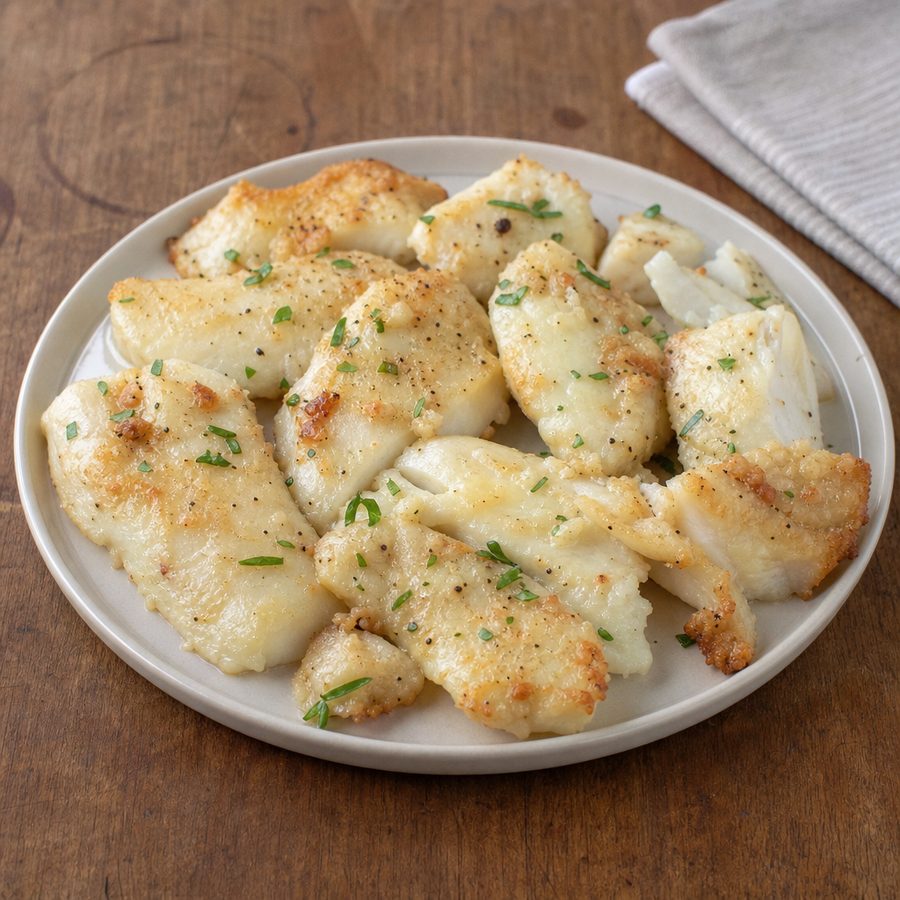
Thick halibut steaks seared to a golden crust, then bathed in foaming salted butter until the flesh turns opaque and flakes at the touch of a fork.
Why You'll Love This Recipe
Halibut is firm and meaty and carries almost no fat of its own, which is exactly why it wants butter spooned over it rather than more time in the pan. Basting cooks the top with hot fat while the bottom sears, so the steak comes up to temperature evenly and comes off the heat while it is still juicy, which is the whole difference with a fish this expensive. It is worth cooking on an evening when you have spent money on a good piece and would rather not learn from a mistake.
The technique is what carries it. A dry surface and a hot pan give you a golden crust for flavor and texture, while the butter-basting step is the real trick: once you flip the fish, spooning foaming butter over the top cooks it gently from above and keeps the flesh moist right up to the edge of doneness. The salt seasons the fish through and the browned butter picks up a faint nutty depth that a mild white fish welcomes.
It is deeply satisfying without being heavy in the ways that leave you sluggish. Halibut delivers a large amount of complete protein that keeps you full, and the butter adds richness and fat that make the plate feel like a treat while carrying the flavor. With nothing but fish, butter, and salt on the plate, it is about as clean and direct as a hot meal gets, and it eats rich enough to need nothing else beside it.
Ingredients
- 4 halibut steaks (about 7 oz each)
- 9 tbsp butter
- 1 tsp salt
Instructions
- Pat dry and salt: Set the halibut steaks on paper towels and pat them completely dry on both sides; surface moisture is what keeps fish from browning. Salt both sides and let them sit at room temperature for about ten minutes while the skillet heats, so the salt begins to draw out and then reabsorb, seasoning the flesh.
- Heat the skillet: Place a heavy stainless steel or cast iron skillet over medium-high heat and let it get properly hot before the fish goes in. A hot pan gives you a fast crust instead of a slow, gray steam; the surface is ready when a drop of water flicked onto it skitters and evaporates almost at once.
- Sear the first side: Lay the steaks into the dry hot pan away from you and press each one down gently for a few seconds so it makes full contact. Sear undisturbed for four to five minutes, until the underside builds a deep golden crust and releases cleanly from the pan; if it sticks when you nudge it, give it another half minute. Flip each steak.
- Add the butter and baste: Drop the butter into the pan around the fish and let it melt and foam. Tilt the pan slightly toward you so the butter pools at the near edge, then spoon it continuously over the tops of the steaks for four to five minutes, letting the hot butter finish cooking the top while the second side sears.
- Check doneness and rest: Pull the halibut the moment the flesh turns from translucent to opaque and just begins to flake when nudged with a fork, or when a thermometer in the thickest part reads about 130 to 135°F (54 to 57°C); it will climb a few more degrees off the heat. Halibut is firm and dries out fast, so err toward pulling it early. The FDA figure for seafood is 145°F (63°C), and a halibut steak taken there loses the flake this method is after, which is why the range above stops at medium. Let the steaks rest a couple of minutes, then spoon the pan butter over the top to serve.
Variations
- Deeper browned butter: Let the butter go past foaming to a light amber with a nutty aroma before you start basting, watching closely so it browns rather than burns. It gives the mild fish a toastier, richer flavor.
- Clarified butter: Baste with ghee or clarified butter instead of whole butter. With the milk solids removed it tolerates higher heat without darkening, so you get a cleaner sear and a more neutral richness. This keeps the dish dairy-based.
- Tallow blend: Melt a spoonful of beef tallow into the butter as it foams. The rendered beef fat adds a savory, meaty backbone to the basting fat. This adds beef fat.
- Another meaty fish: Swap the halibut for swordfish or thick cod steaks, which take the same sear-and-baste treatment well; adjust the timing to their thickness. This substitutes a different fish.
- Hard cheese finish: Grate a little aged hard cheese over the hot steaks just before serving so it softens against the fish. This adds dairy.
Storage & Leftovers
Cooked halibut keeps in an airtight container in the refrigerator for up to three days. Let the steaks cool before sealing them, and if there is pan butter left, spoon a little over the fish to keep the surface from drying out in the cold.
Reheat gently, because halibut that was cooked to just-flaking will turn dry and chalky under high heat. Warm the steaks in a covered skillet over low heat with a knob of butter, spooning it over as they come back up to temperature, or in a low oven just until warmed through. Halibut is also very good served cold, flaked straight from the fridge.
To get ahead, pat the steaks dry and salt them, then keep them uncovered on a rack in the refrigerator for a few hours before cooking; the drier surface sears even better. The searing and basting are quick enough that they are best done just before eating rather than fully in advance.
Notes & Tips
- Buy steaks, not fillets: Look for halibut cut across the bone into steaks of even thickness rather than thin, tapering fillets; a uniform steak sears evenly and gives you a real margin before it overcooks. Ask the counter for pieces of similar thickness so they finish together.
- Fresh or thawed, but bone dry: Frozen halibut works well if you thaw it fully in the refrigerator overnight, but pat it especially dry afterward since thawed fish releases extra moisture that will steam instead of sear.
- Salt is the only seasoning it needs: Because the flavor rests entirely on the fish, the browned butter, and the salt, use a good flaky or fine sea salt and taste a corner of a cooked steak before adding more; halibut takes salt well and a light second sprinkle at the table sharpens it.
- Trust the thermometer: Halibut goes from perfect to dry in under a minute, so an instant-read thermometer is the single best tool here. Pull it at about 130 to 135°F (54 to 57°C) in the thickest spot and let carryover finish the job rather than cooking it all the way in the pan.
- Do not crowd the pan: Give each steak room so the pan stays hot; steaks packed together drop the temperature and steam. Sear in two batches if your skillet is small, wiping it and adding fresh butter between rounds.
- Spoon the pan butter over to serve: The seasoned, slightly browned butter left in the pan is the sauce; pour or spoon it over the steaks at the table so nothing is wasted and every bite stays glossy and rich.
Nutrition & Mindful Eating
- Halibut, butter and salt is the entire list, so the technique is what makes the dish. The pan browns the outside, the butter you spoon over the top finishes the inside gently, and the salt sharpens the natural sweetness of the fish.
- Halibut has a dense, almost steak-like grain that holds together in the pan under a hard sear, and that firm white flesh is loaded with protein, which is why a single steak eats like a whole dinner.
- Butter basting is a gentler heat than the pan alone. Spooned over the top it cooks the fish from above while it browns underneath, and the milk solids toasting in it are where that nutty smell comes from.
- Watch for the moment the flesh turns from glassy to opaque near the bone. That is halibut at its best, still juicy and faintly sweet, with a browned crust that gives a little resistance before it gives way.
- Fish from cold water like this carries selenium and B12 alongside all that protein, and the combination is what makes a plate that looks this simple sit with you for hours.
- As you eat, let the smell of the browned butter reach you first, then give each forkful of that firm white flesh your full attention, so the meal has room to feel like enough.
Frequently Asked Questions
How do I know when halibut is done without cutting into it?
The flesh turns from translucent to opaque and just begins to separate into flakes when you nudge it with a fork. The surest way is an instant-read thermometer in the thickest part reading about 130 to 135°F (54 to 57°C); pull it there and let carryover heat finish it, since halibut dries out fast once it passes that point.
Why is my halibut sticking to the pan?
It is almost always because the crust has not formed yet. A properly seared steak releases on its own; if it grips the pan when you try to flip, give it another thirty seconds to a minute and it will let go. Starting with a dry surface and a hot pan prevents most sticking.
Can I use halibut fillets instead of steaks?
Yes, though fillets are thinner and cook faster, so they give you a smaller window before they overcook. Pat them very dry, sear a shorter time per side, and watch the doneness closely; the sear-and-baste method is the same.
The butter browned and smoked before I finished basting. What happened?
The pan was hotter than the butter could handle, or the milk solids in whole butter browned quickly. Lower the heat slightly once the fish is flipped and the butter goes in, or use ghee or clarified butter, which has the solids removed and tolerates higher heat without burning.