
Butter-Basted Pork Tenderloin Medallions
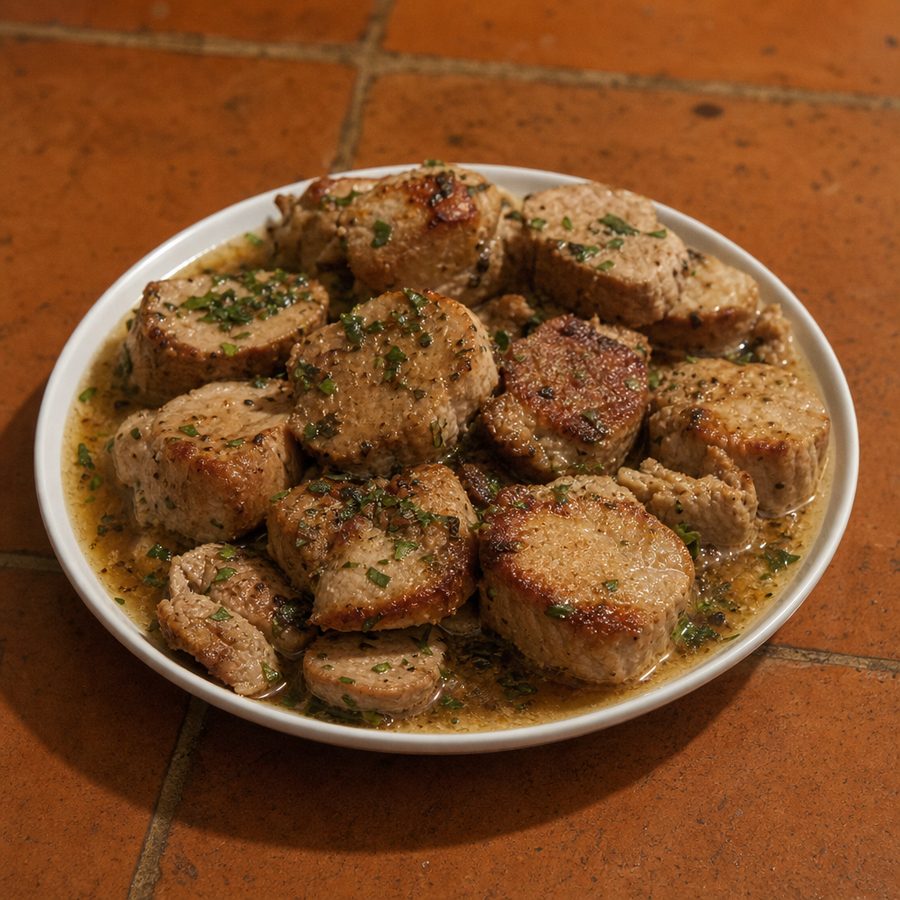
Thick pork tenderloin medallions seared until deeply browned, then spooned again and again with foaming salted butter for a rich, glossy crust and a juicy, faintly pink center.
Why You'll Love This Recipe
One pan, one tender cut of pork, and a finish in butter is the whole of a satisfying hot lunch here, without a long ingredient list or a lot of cleanup. It leans on good technique rather than a pantry full of seasonings, so the pork itself and the browned butter do all the work. If you like a plate that is almost entirely rich, savory protein, this is squarely aimed at you.
The whole thing succeeds or fails on two moves: a hard sear on a dry, very hot surface, and a patient butter baste. Searing browns the exterior through the Maillard reaction, which builds the roasted, meaty flavor and the crust you want; it is about taste and texture, not about trapping anything inside. The butter baste is where medallions shine over a thick roast, because spooning hot fat over the tops brings the centers up to temperature evenly and gently, so you get a browned outside and a still-juicy middle instead of an overcooked band.
Pork tenderloin is a fine-grained muscle that does almost no work, so it delivers a lot of high-quality, complete protein in a tender cut, and the butter you baste with adds richness and satiety that makes a modest portion feel like a full meal. Protein and fat together are slow to digest and steady to burn, which is why this eats heavier and holds you longer than the size of the plate suggests. It is simple food, but it is nourishing and it keeps you full.
Ingredients
- 1 3/4 lb pork tenderloin, cut in 1-inch medallions
- 6 tbsp butter
- 1 tsp salt
Instructions
- Trim and slice: Lay the pork tenderloin on a cutting board and slide a thin knife under the silvery membrane (silverskin) running along one side, peeling it off in strips; it will not break down with cooking and turns rubbery if left on. Cut the trimmed tenderloin crosswise into medallions about 1 inch thick. The tapered tail end will give thinner pieces, which is fine.
- Dry and salt: Blot every medallion dry on all sides with paper towels; a dry surface browns far better than a wet one. Salt both cut faces of each piece, pressing the salt on lightly so it sticks.
- Heat the skillet: Set a heavy skillet, cast iron or stainless steel, over medium-high heat and let it get properly hot, until it feels like it is radiating heat when you hold a hand above it, about 3 to 4 minutes. A hot pan is what gives you a crust instead of gray, steamed meat.
- Sear: Stand the medallions in the dry pan cut-side down, spacing them apart so they are not touching. Leave them undisturbed for 2 to 3 minutes until the underside is deeply browned, then flip and sear the second side another 2 to 3 minutes. Work in batches if the pan is crowded, since crowding drops the temperature and steams the meat.
- Baste in butter: Turn the heat down to medium and drop in the butter. As it melts and foams, tilt the pan so the butter pools at the lower edge, and use a spoon to lift that foaming butter over the tops of the medallions again and again for about a minute. This coats them in nutty, browned butter and helps carry the heat gently into the center.
- Rest: Move the medallions to a warm plate. They are done when the thickest piece reaches 145°F (63°C) on an instant-read thermometer; the center should be juicy and just faintly pink. Let them rest 3 minutes so the juices settle, then spoon the pan butter over the top before serving.
Variations
- Brown-butter finish: Keep basting a little longer, until the butter turns golden and smells toasty and nutty, then spoon that deeper-flavored butter over the pork. Watch it closely so it stops at golden rather than burning.
- Ghee baste: Swap the butter for ghee, which is clarified butter with the milk solids removed. It takes higher heat without browning and gives a cleaner, more neutral richness; this keeps the dish based on dairy fat.
- Hard cheese crust: In the last minute, grate a shower of aged hard cheese over the medallions and let the pan heat melt it into a savory layer. This adds dairy and a sharper, saltier edge.
- Beef swap: Use beef tenderloin medallions cut to the same thickness and cook them exactly the same way, pulling them a touch earlier for a rosier center. The butter baste suits beef just as well.
- Fried egg on top: Once the pork is resting, crack an egg into the leftover pan butter and fry it, then slide it over a medallion so the runny yolk becomes a sauce. This adds egg.
Storage & Leftovers
Cool leftover medallions and refrigerate them in an airtight container; they keep well for up to three to four days. Pour any leftover pan butter in with them, since it protects the meat from drying and firms up into a flavorful coating you can melt again later.
Reheat gently to avoid overcooking already-cooked pork. Warm the medallions in a covered skillet over low heat with a little of the saved butter, turning once, just until heated through; a quick, hot blast will push them past done and dry them out. A brief warm-up is all they need since they were cooked to a juicy medium the first time.
To get ahead, trim, slice, salt, and pat the medallions dry earlier in the day and keep them uncovered on a rack in the refrigerator. The surface dries out further as they sit, which actually gives you an even better sear when it is time to cook, so all that is left at mealtime is the sear, baste, and rest.
Notes & Tips
- Buy a whole tenderloin, not pre-cut: Look for a firm, pinkish-red tenderloin and cut the medallions yourself so you control the thickness. Even-sized pieces cook at the same rate, which is the single biggest factor in not overcooking half of them.
- Skip anything labeled enhanced: Some pork is sold pumped with a saltwater solution, marked enhanced or up to X percent solution on the label. It holds extra water, weeps in the pan, and fights your sear, so choose plain, unenhanced pork when you can.
- Match your salt to your butter: If you use salted butter for the baste, go a little lighter when you salt the raw medallions, since the butter brings its own salt to the finish. With unsalted butter, season the meat a touch more confidently.
- Get a thermometer involved: Pork tenderloin goes from juicy to dry in a matter of a minute or two. An instant-read thermometer pulled at 145°F (63°C) takes the guesswork out and is worth more here than any visual cue.
- Do not skip the rest: Three minutes off the heat lets the juices redistribute so they stay in the meat instead of running out on the board. The medallions also climb a few degrees as they rest, so pulling them right at temperature is on purpose.
- Spoon the pan butter over to serve: Do not leave the browned butter in the skillet. It carries concentrated flavor from the sear, and pouring it over the plated medallions is the easiest way to make the dish taste finished.
Nutrition & Mindful Eating
- The tenderloin, the butter and the heat of the pan are all this needs. Cutting the loin into medallions gives you more surface to brown, the butter carries that browning around the sides, and the salt is what makes it taste finished.
- Tenderloin is the most tender muscle on the pig and it stays that way if you pull it early, at just barely pink, and pork carries more thiamine than nearly any other meat, riding along with all that protein.
- Butter foaming in the pan is what keeps a quick-cooking cut succulent, coating each medallion as it goes and finishing brown and nutty, and it brings vitamin A into the same spoonful.
- The crust is the reward, dark gold where the medallion met the pan and rosy inside, and the butter that has caught the salt and the pork fond is worth pouring over the plate rather than leaving in the pan.
- Medallions cook quickly but the protein in the pork works slowly, so a few of them off a hot pan hold you steadily through the afternoon, with the butter fat adding to that.
- As you eat, cut across the grain and notice how little effort the meat asks of you, letting the browned butter and salt sit on your tongue a moment so the meal registers before it is over.
Frequently Asked Questions
Is it safe to leave the pork faintly pink in the middle?
Yes. Cooked to an internal temperature of 145°F (63°C) followed by a short rest, whole cuts of pork are safe, and at that temperature the center stays juicy and just faintly pink. The old advice to cook pork until gray is what made it dry.
Why did my medallions turn out tough and dry?
Almost always overcooking. Tenderloin is a fast, unforgiving cut with almost no margin, and even a minute or two too long pushes it past juicy. Use a thermometer, pull at 145°F (63°C), and rest before slicing into it.
Can I use pork chops or another cut instead?
Boneless chops cut to a similar thickness work with the same sear-and-baste method, though they are firmer and a little chewier than tenderloin. Thicker chops will need a bit more time in the pan to reach temperature in the center.
Should I use salted or unsalted butter?
Either works. Unsalted gives you the most control, since you set all the salt when you season the meat. If you use salted butter, ease up on how much salt you put on the raw medallions so the finished dish is not over-salted.