
Butter-Basted Salmon Fillets
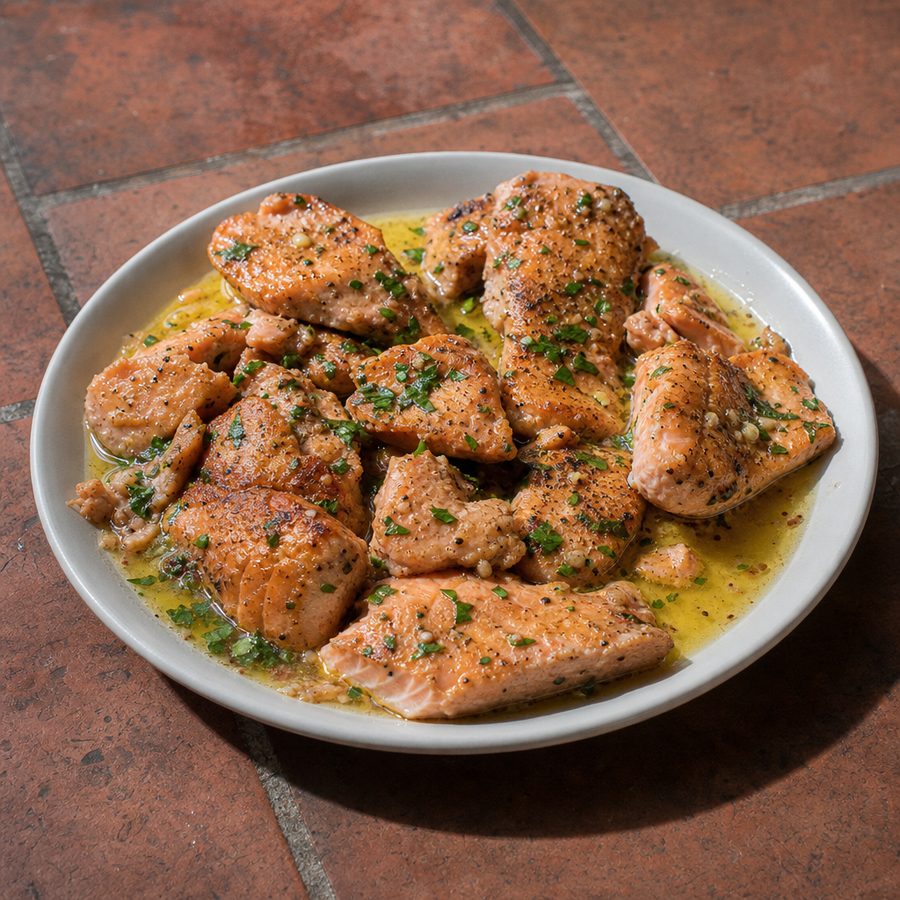
Salmon fillets seared skin-side down until crisp, then spooned with foaming butter until glossy, seasoned simply with salt.
Why You'll Love This Recipe
This is a fast, weeknight-friendly dinner built around one thing done well: salmon with crisp skin and a silky, just-cooked interior. It suits anyone who wants a rich, protein-forward plate with almost no prep and only a skillet to wash, and it is a good choice for people keeping their meals simple and free of added starches and sugars. It is also the kind of dinner worth learning properly, since a fillet cooked this way needs nothing beside it but whatever vegetable is in the drawer.
The technique is what makes it. Searing the fillets skin-side down in butter dries and crisps the skin while the flesh cooks gently from below, and pressing the fillets flat at the start keeps the skin in full contact so it browns evenly instead of curling away. Once flipped, spooning the foaming butter over the top bathes the fish in hot fat, cooking the surface quickly and carrying the nutty flavor of browned butter into every bite. Pulling the fish while the center is just opaque keeps it moist rather than dry and chalky.
The result is deeply satisfying: the crackle of crisp skin against tender, buttery flesh, and a richness that makes a small plate feel like plenty. Salmon delivers a generous amount of high-quality protein and the omega-3 fats that support the heart and brain, while the butter adds fat-soluble vitamins and the kind of richness that keeps you full and content long after the meal. The browned butter left in the pan is worth spooning over whatever vegetable is going alongside.
Ingredients
- 4 salmon fillets (about 6 oz each)
- 5 tbsp butter
- 3/4 tsp salt
Instructions
- Dry and salt the fillets: Pat each salmon fillet very dry on both sides with paper towels; a dry surface is what lets the skin crisp and the flesh brown instead of steam. Season both sides evenly with salt.
- Melt butter and heat the pan: Set a heavy skillet, preferably stainless steel or cast iron, over medium-high heat. Add some of the butter and let it melt and stop foaming, so the pan is hot before the fish goes in.
- Sear skin-side down: Lay the fillets in the pan skin-side down, laying them away from you. Press each one flat with a spatula for the first 20 to 30 seconds so the skin makes full contact and does not buckle. Cook without moving them for 5 to 6 minutes, until the skin is crisp and deep golden and you can see the flesh turning opaque about a third of the way up the sides.
- Flip and baste: Turn the fillets over. Add the remaining butter and let it melt and foam. Tilt the pan slightly so the butter pools at the low edge, and use a spoon to scoop the foaming butter continuously over the top of each fillet for 3 to 4 minutes. The fish is done when it is just opaque through the center and flakes with gentle pressure, about 125 to 130°F (52 to 54°C) at the thickest point, which is medium-rare. Cook it to 145°F (63°C) if you would rather follow the FDA figure for seafood, and expect a firmer, drier fillet.
- Rest and serve: Move the fillets to plates and let them rest 2 minutes so the heat settles evenly through the flesh. Pour the browned pan butter over each fillet and serve.
Variations
- Trout instead of salmon: Swap in trout fillets, which are thinner and cook a little faster; watch the flesh closely and pull them as soon as they turn opaque.
- Ghee basting butter: Baste with ghee in place of the butter for a cleaner, higher-heat fat that browns the skin fast and adds a toastier flavor. This still adds dairy.
- Hard cheese crust: In the last minute of basting, sprinkle finely grated hard cheese over the tops so it melts and crisps into a savory crust. This adds cheese.
- Seared in bacon fat: Start the sear in rendered bacon fat instead of butter for a smoky, meaty edge, then finish basting with the butter. This adds pork.
- Topped with a basted egg: Fry an egg in the leftover pan butter, spooning the hot fat over the yolk, and slide it onto each fillet for a richer plate. This adds egg.
Storage & Leftovers
Store leftover salmon in an airtight container in the refrigerator for up to three days. Let the fillets cool to room temperature before sealing so condensation does not soften the crisp skin.
Reheat gently to avoid drying the fish out. Warm the fillets in a covered skillet over low heat with a little of the reserved pan butter, or in a low oven until just heated through. High heat will overcook the already-cooked flesh and turn it chalky, so keep it slow.
To get ahead, pat the fillets dry and salt them, then keep them uncovered on a plate in the refrigerator for a few hours before cooking. The chill and airflow dry the surface further, which gives you even crispier skin when you sear.
Notes & Tips
- Buy even, thick fillets: Ask for center-cut fillets of even thickness rather than thin tail pieces, which cook unevenly and dry out at the edges before the middle is done.
- Dry is everything: The single biggest factor in crisp skin is a truly dry surface. Pat the fillets again right before they hit the pan, and if you have time, leave them uncovered in the fridge first.
- Let the pan tell you when to flip: Do not force the fish loose. Properly seared skin releases from the pan on its own; if it sticks when you lift a corner, give it another 30 to 60 seconds.
- Watch the color creep up the side: You can judge doneness before flipping by looking at the side of the fillet: cook until the flesh has turned opaque about a third of the way up, then turn and baste.
- Save the browned butter: The butter left in the pan is toasty and salty from the fish. Spoon every bit of it over the fillets, or save it to reheat leftovers the next day.
- Serve it right away: Crisp skin stays crisp only for a few minutes. Have your plates ready before you flip so the fish goes from pan to table without sitting and steaming.
Nutrition & Mindful Eating
- Salmon and butter both bring their own fat, and that is why this works. The salmon renders as it cooks, the butter browns alongside it, and salt draws out the sweetness sitting underneath all that richness.
- Salmon is a fatty fish and the fat is the point, running through the flesh in pale lines that keep it moist and bringing the omega-3s and vitamin D that come packaged with a fish this rich.
- Butter basting gives you control that direct heat does not. Tipping the pan and spooning the foam over the top cooks the fillet evenly from above, and the browned milk solids leave a nutty edge on the finished fish.
- Skin side down and left alone is how salmon gets crisp, and if you wait for it, the skin releases from the pan on its own and shatters under a fork while the flesh above it stays soft.
- A fillet of salmon holds you a long time. The protein and the fat in the fish do that together, which is why a plate this simple still eats like a proper dinner.
- As you eat, take the crisp skin and the soft flesh in the same forkful and notice how differently the two behave, then slow the pace enough to feel the meal settling in.
Frequently Asked Questions
How do I know when the salmon is done without cutting into it?
The flesh turns from translucent to opaque and flakes gently when pressed with a fork. At the thickest point it should reach about 125 to 130°F (52 to 54°C) for a moist, just-cooked center. If you like it more firm, cook a minute or two longer, but pull it before it looks dry.
My salmon skin sticks to the pan and tears. What went wrong?
Usually the fillet was not dry enough or you tried to move it too soon. Pat the skin very dry, press it flat for the first few seconds, and then leave it alone. Properly seared skin releases from the pan by itself once it has crisped.
Should I cook it skin-on or can I remove the skin?
Cook it skin-on. The skin protects the delicate flesh from the direct heat, crisps into the best part of the dish, and makes the fillet easier to flip and lift without falling apart.
Why baste with butter instead of just flipping and waiting?
Spooning the hot, foaming butter over the top cooks the surface quickly and evenly while the fish is only in the pan a short time, and it carries the nutty flavor of the browned butter into the flesh. It is what gives the fillet its glossy finish and rich taste.