
Butter-Basted Seared Sirloin Steaks
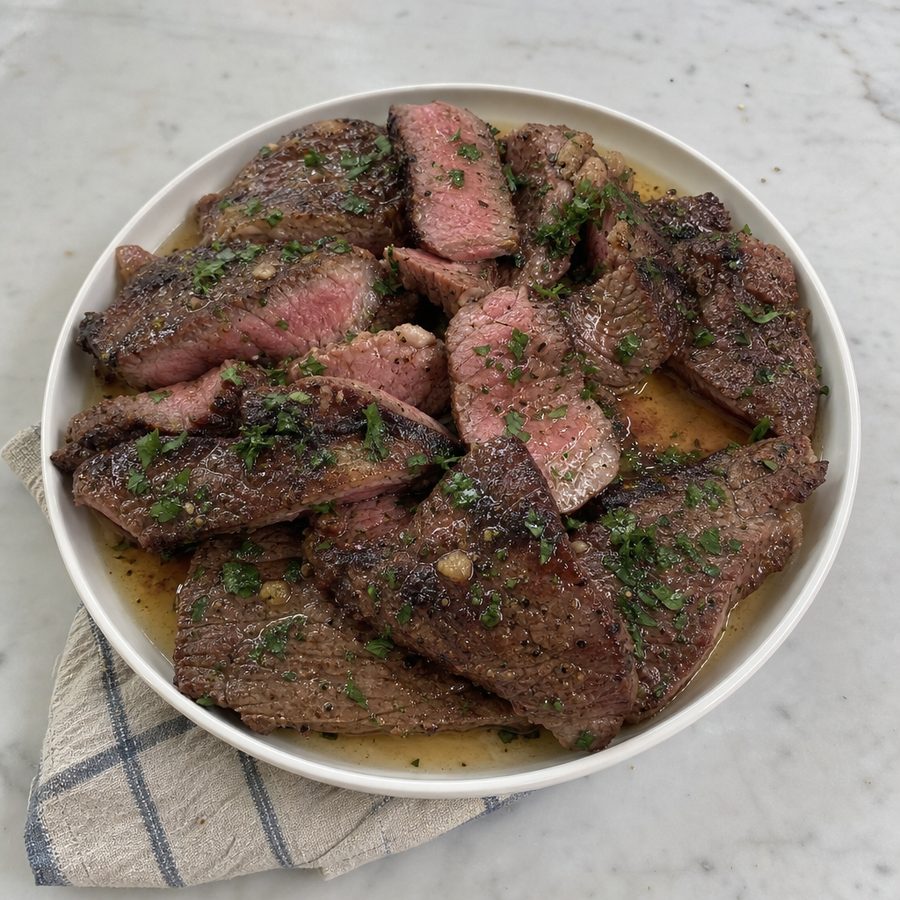
Thick sirloin steaks seared hard in a screaming-hot skillet until darkly crusted, then basted in foaming butter and finished with a spoonful of the seasoned pan drippings.
Why You'll Love This Recipe
This is dinner for someone who wants steak to be the whole point of the plate, cooked simply and cooked well. There is nothing to hide behind here, just sirloin, butter, and salt, so the pleasure comes from a hard crust, a rosy interior, and the richness of butter carried into every bite. It is a fast, weeknight-friendly way to turn a good cut into something that eats like a restaurant plate.
A very hot pan first, butter second. Searing over high heat builds a dark, savory crust through browning, which is where the deep roasted flavor and the appealing texture come from. Basting is the second act: once the crust is set, spooning foaming butter over the meat bathes the surface in fat that carries flavor and helps the top cook evenly with the bottom, giving you an even, well-browned finish rather than one seared side and one pale one.
A substantial cut and the staying power of butter fat together. Sirloin is firm and meaty with real chew and a beefy depth, while the butter rounds it out and makes each bite feel rich and complete. It is the kind of plate that leaves you full and content on a single steak, with the salt sharpening the beef and the pan butter tying it together.
Ingredients
- 4 sirloin steaks (about 7 oz each)
- 4 tbsp butter
- 1 tsp salt
Instructions
- Temper and salt the steaks: Pat the sirloin steaks completely dry on both sides with paper towels, which is what lets the surface brown instead of steam. Season both sides evenly with salt, then let the steaks sit on a plate at room temperature for 20 to 30 minutes so they cook more evenly from edge to center.
- Heat the skillet: Set a heavy skillet, ideally cast iron, over high heat and let it get very hot, until it is just beginning to smoke. A properly preheated pan is the single biggest factor in getting a dark crust rather than a gray band, so give it a few minutes and do not rush this step.
- Sear hard on both sides: Add a knob of the butter, swirl it as it melts, and lay the steaks in the pan away from you. Sear undisturbed for 2 to 3 minutes until the underside is deeply browned, then flip and sear the second side another 2 to 3 minutes. You want a dark, crusted surface, not just tan.
- Baste in foaming butter: Add the remaining butter to the pan. Tilt the skillet so the butter pools at the lower edge, and use a spoon to continuously ladle the foaming butter over the tops of the steaks for about a minute. For medium-rare, pull the steaks when an instant-read thermometer inserted into the thickest part reads about 130°F (54°C); for medium, aim for about 140°F (60°C).
- Rest and serve: Transfer the steaks to a warm plate and rest them for 5 minutes so the juices redistribute and stay on the plate rather than running out when cut. Spoon the seasoned pan butter over the top just before serving.
Variations
- Ribeye instead of sirloin: Swap the sirloin for ribeye when you want a richer, more marbled steak with more internal fat. The method is identical, though the extra fat means it may flare a bit more in the hot pan.
- Tallow baste: Sear and baste in rendered beef tallow in place of the butter for a pure beef-on-beef flavor. This removes the dairy while keeping the same foaming baste and crust.
- Clarified butter baste: Use ghee, or clarified butter, for the baste. With the milk solids removed it can take higher heat before browning too far, so you get a cleaner, nuttier finish; this still adds dairy.
- Fried egg on top: Crown each rested steak with a butter-fried egg so the runny yolk mingles with the pan butter. This adds egg to the plate.
- Hard cheese crust: In the last minute, shower the tops with finely grated hard cheese and let it melt into the basting butter for a savory, salty layer. This adds more dairy.
Storage & Leftovers
Store leftover steak in an airtight container in the refrigerator for up to 3 to 4 days. Slice it only when you are ready to eat, since a whole steak holds its moisture and reheats better than pre-cut pieces that dry out at the edges.
Reheat gently to avoid overcooking the interior. The best way is a low oven, around 250°F (120°C), until the steak is just warmed through, then a quick sear in a hot buttered skillet for a few seconds a side to revive the crust. Spoon any saved pan butter over it as it warms. Avoid a hard microwave blast, which tends to make sirloin tough and gray.
To get ahead, salt the steaks and let them sit uncovered on a rack in the refrigerator earlier in the day; the surface dries out, which gives you an even better crust at dinner. Bring them back to room temperature before searing, and cook fresh at the last minute for the best texture.
Notes & Tips
- Choose steaks of even thickness: Pick sirloin steaks that are thick and uniform rather than thin and tapered. An even, hearty thickness lets you build a dark crust while keeping a pink center; thin steaks overcook before the crust ever forms.
- Dry surface, better crust: The drier the surface, the darker the sear. If you have time, leave the salted steaks uncovered in the refrigerator for an hour or more before cooking so the outside dries out.
- Use a thermometer: Sirloin goes from perfect to tough quickly, so an instant-read thermometer is worth it. Around 130°F (54°C) is medium-rare and roughly 140°F (60°C) is medium, and the steak climbs a few degrees more while it rests.
- Salt is the only seasoning, so use good salt: Since salt carries all the seasoning here, a flaky finishing salt spooned on at the end alongside the pan butter adds a pleasant crunch and brightness that fine table salt does not.
- Do not crowd the pan: Give each steak room so the skillet stays hot. If you are cooking several, sear them in batches; a crowded pan drops in temperature and the meat steams instead of browning.
- Save the pan butter: The browned butter left in the skillet is full of flavor. Pour it off and refrigerate it to spoon over reheated steak later, or use it to baste the next batch.
Nutrition & Mindful Eating
- The steak, the salt and the butter each do a separate job. Salt ahead of time dries the surface so it can brown, the hard sear builds the crust, and the butter spooned over at the end carries that flavor across the whole steak.
- Sirloin is a working muscle, which is where its deep beefy taste comes from, and it slices clean across the grain, carrying heme iron and B12 in the form the body takes up most readily.
- Butter goes in twice, a knob to sear in and the rest once the pan has done its browning, so it foams and turns nutty rather than burning, and it finishes the steak with vitamin A and a glossy coat.
- The crust is where the flavor concentrates, that dark, almost crackling surface you get when a dry steak meets a very hot pan, and the contrast between it and the soft red middle is the reason to cook steak this way.
- Beef this dense holds you for a long stretch. The protein is doing most of that work, with the zinc red meat carries alongside it, and a modest steak eats like a full meal because of it.
- As you eat, cut a piece with some crust and some center in it, notice how the butter has pooled and how the salt sits on the edge, and let the plate take longer than it needs to.
Frequently Asked Questions
How do I get a dark crust instead of a gray steak?
Two things matter most: a very dry steak surface and a hot pan. Pat the steaks bone-dry, salt them ahead so the surface dries further, and heat the skillet until it is just smoking before the meat goes in. Do not move the steaks while the first side sears.
Won't the butter burn at such high heat?
Butter can brown quickly, which is fine here, but you add most of it after the initial sear and keep it moving by basting, so it foams and browns rather than scorching. If you are worried, sear in just a little butter and add the rest for the baste once the pan has taken the edge off its heat, or use clarified butter, which tolerates more heat.
How do I know when the steak is done?
An instant-read thermometer in the thickest part is the reliable answer: about 130°F (54°C) for medium-rare and about 140°F (60°C) for medium. Pull the steaks a few degrees early because the temperature keeps rising during the rest.
Why rest the steak before cutting?
Resting lets the juices settle back through the meat so they stay on the plate instead of pouring out the moment you slice. Five minutes is enough for a steak this size, and spooning the warm pan butter over it during the rest keeps it from cooling too much.