
Butter-Poached Cod Loin
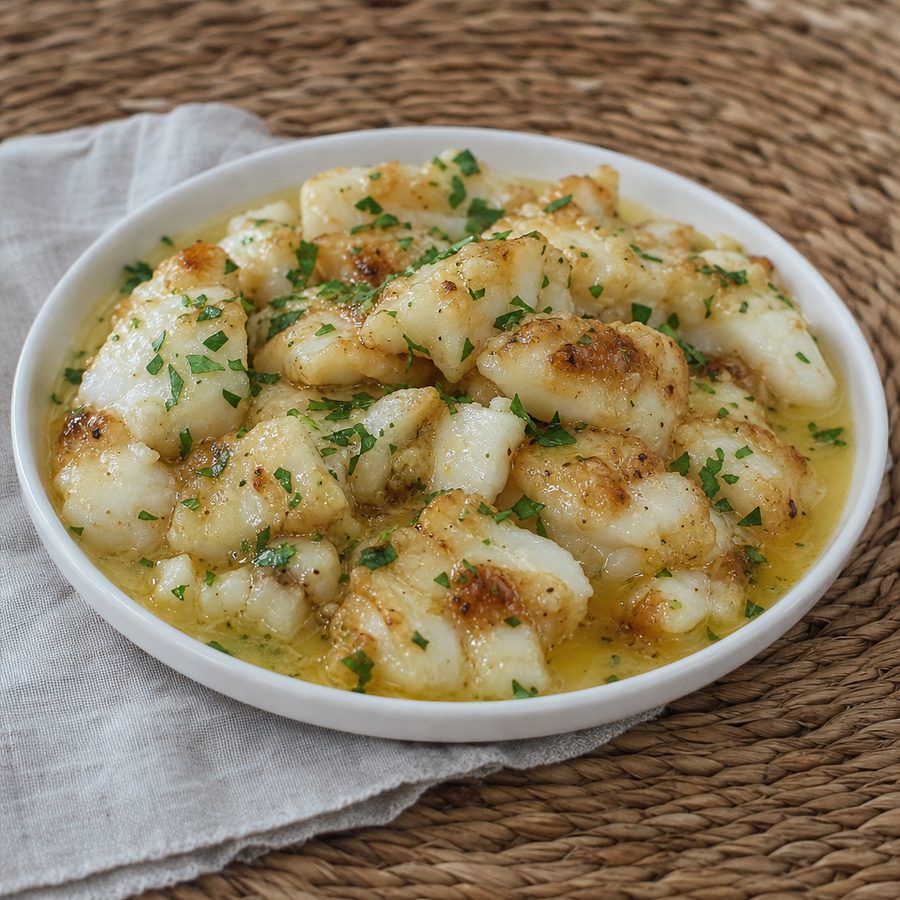
Thick cod loins poached slowly in salted butter until they turn opaque, silky, and just flake apart under a fork.
Why You'll Love This Recipe
This is a quiet, gentle main for anyone who wants something rich and filling without much effort or a long ingredient list. Thick cod loins are the meatiest, most forgiving cut of the fish, and poaching them in warm butter is close to foolproof once you keep the heat low. It suits a slow lunch at home when you want real food that feels a little indulgent but still comes together in the time it takes to melt butter and set a plate.
The whole method rests on temperature. Butter held just below a simmer surrounds the fish and cooks it slowly and evenly from all sides, so the outside never toughens while you wait for the center to come up. Spooning the warm butter over the top keeps the parts above the surface cooking at the same pace as the parts submerged. Because the heat is so low and the fat is so forgiving, the cod stays moist and turns silky instead of dry and stringy, which is the usual fate of white fish cooked too hard.
Mild, flaky fish and a generous amount of butter. Cod on its own is almost pure protein, which fills you up and keeps you full, and the butter it poaches in adds richness and carries flavor across every bite. Salt is the only seasoning it needs to taste complete. You finish with a clean, protein-forward plate and a spoonful of the buttery poaching liquid that tastes like far more work than it was.
Ingredients
- 4 thick cod loins (about 7 oz each)
- 9 tbsp butter
- 1 tsp salt
Instructions
- Dry the cod: Pat the cod loins completely dry on all sides with paper towels. A dry surface lets the fish sit in the butter without shedding water and cooling it down.
- Melt the butter: Cut the butter into a few pieces and add it to a wide skillet set over low heat. Let it melt slowly until it is just liquid and glossy, not foaming or sizzling. If it starts to bubble, pull the pan off the heat for a moment to bring it back down.
- Season and add the fish: Sprinkle salt over both sides of each cod loin. Slide the loins into the warm butter in a single layer, leaving a little space between them so they poach rather than steam against each other.
- Poach gently: Keep the heat low so the butter stays warm but never boils. Poach for 8 to 10 minutes, tilting the pan and spooning the butter over the tops of the loins every couple of minutes to bathe them evenly. The fish is done when it turns from translucent to opaque white and flakes when nudged with a fork; an instant-read thermometer in the thickest part should read about 130 to 135°F (54 to 57°C), which leaves the loin in thick, moist flakes. The FDA gives 145°F (63°C) for seafood, and cod held there tightens and goes chalky, so choose the one you prefer.
- Serve: Slide a fish spatula fully under each loin and lift it out carefully, since poached cod is delicate and wants to break. Set each portion on a warm plate and spoon the golden poaching butter over the top.
Variations
- Brown-butter cod: Before adding the fish, let the butter cook a little longer over low heat until the milk solids turn golden and smell nutty, then lower the heat and poach as usual for a deeper, toastier flavor.
- Another white fish: Swap the cod for thick loins of halibut or haddock; this keeps the dish a different fish but poaches the same way. Adjust the time to the thickness of the piece.
- Clarified butter poach: Poach in clarified butter or ghee instead of whole butter for a cleaner, higher-heat fat that is less likely to brown and lets the fish flavor come through.
- Cheese-topped: Finish each poached loin with a shower of finely grated hard cheese while it is still hot so it melts into the butter; this adds more dairy.
- Egg-enriched plate: Serve each portion alongside a soft-poached or butter-fried egg and let the yolk mingle with the poaching butter; this adds egg.
Storage & Leftovers
Store leftover cod and its butter in an airtight container in the refrigerator for up to two days. Cod is best eaten soon after cooking, and it holds better sitting in a little of the poaching butter, which keeps it from drying out.
Reheat gently. Set the cod and its butter in a small skillet over the lowest heat, cover, and warm just until heated through, spooning the melted butter over the top. High heat will overcook the fish and turn it rubbery, so go slow and pull it the moment it is warm. A brief, low warm-up in a covered dish also works.
To get ahead, pat the loins dry and salt them, then keep them covered in the refrigerator for a few hours before cooking. Bringing them close to room temperature on the counter for a few minutes before they go into the butter helps them poach more evenly.
Notes & Tips
- Buy loins, not fillets: Ask specifically for cod loin, the thick center cut, rather than tail-end fillets. Loins are uniformly thick, so they cook evenly and are much less likely to overcook at the thin end.
- Fresh or frozen: Frozen-at-sea cod is often fresher than the thawed fish at the counter. If you use frozen, thaw it overnight in the refrigerator and pat it very dry, since extra water will cool the butter and make it foam.
- Judge by flake and color: Trust the look over the clock: the fish is ready when it has gone fully opaque and the flakes just begin to separate when you press with a fork. It keeps cooking a little after it leaves the pan, so pull it right at that point.
- Keep the heat low: If the butter ever starts to sizzle or bubble, it is too hot and will toughen the fish. Move the pan off the burner for a moment and let it settle back to a bare warmth before continuing.
- Save the butter: The leftover poaching butter is full of flavor. Keep it in the refrigerator and spoon it over the reheated fish, or use it to cook eggs or another piece of fish another day.
- Salt in layers: Season the loins before they go in, then taste a flake near the end and add a little more salt if it needs it. Butter mutes salt, so cod poached this way often wants a touch more than you expect.
Nutrition & Mindful Eating
- Butter here is the cooking liquid, not a topping. Kept just warm enough to melt and no hotter, it surrounds the loin and cooks it so gently that the fish never seizes up, and the salt seasons both at once.
- Cod loin is thick and even, which is exactly what this method wants, since it cooks through without any thin edge going first, and the protein in a piece that size makes it the anchor of the plate.
- Butter poaching leaves the cod tasting round and full, and the fat the fish takes on is what carries vitamin A and makes a mild white fish worth lingering over.
- Watch the butter rather than the clock. It should shiver at the surface, never bubble, and the cod is ready when it turns from glassy to white and a knife slides through the middle with no resistance at all.
- Cod from cold water brings selenium and B12 along with all that protein, and poached this way it eats richer than it looks, so a single loin settles a meal comfortably.
- As you eat, press a forkful against the roof of your mouth to feel how soft the poaching has left it, and let the warm butter and salt be a reason to stay at the table a while.
Frequently Asked Questions
How do I know when the cod is done without overcooking it?
Watch for two signs: the flesh turns from translucent to solid opaque white, and the flakes just begin to separate when you press gently with a fork. In the thickest part it should read about 130 to 135°F (54 to 57°C) on an instant-read thermometer. Because it carries over a little off the heat, lift it out as soon as it reaches that point.
Can I use frozen cod?
Yes. Thaw it overnight in the refrigerator, then pat it thoroughly dry before it goes into the butter. Surface water cools the fat and makes it foam, which works against the gentle poach, so drying the loins well is the key step.
My butter started sizzling and browning. Did I ruin it?
Not at all, though it means the pan got too hot for a true poach. Pull it off the heat and let it settle back to a bare warmth. A little browning actually tastes good and nutty; the thing to avoid is a hard sizzle, which cooks the fish too fast and can toughen it.
What can I do with the leftover poaching butter?
Keep it. Once strained and refrigerated it firms up and stays good for several days, carrying a lot of savory flavor. Spoon it over the reheated fish, or use it as the fat for cooking eggs or another piece of fish.