
Butter-Poached Halibut Steaks
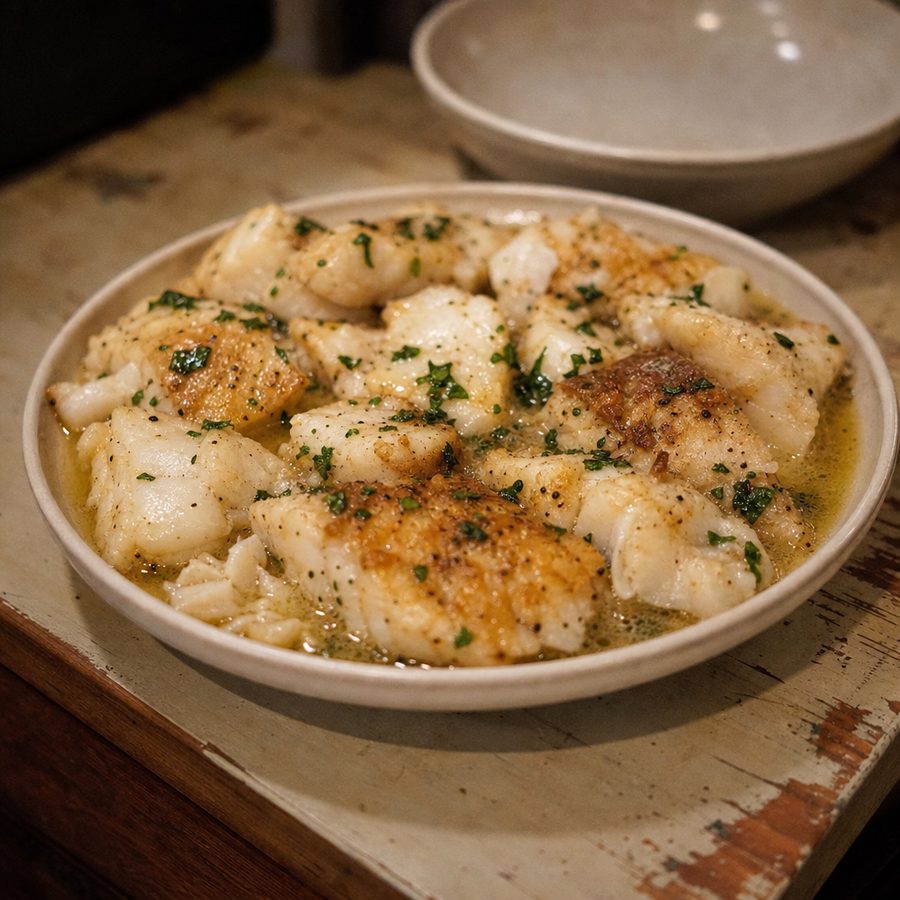
Meaty halibut steaks gently poached in warm salted butter until silky, tender, and just set through.
Why You'll Love This Recipe
This is a quiet, luxurious dinner built around one great piece of fish and very little else. Halibut is a firm, meaty white fish with large tender flakes, and it shines when it is treated simply. This dish is for anyone who wants a restaurant-quality main with almost no fuss, and for cooks who appreciate that a short ingredient list leaves nowhere to hide, so the quality of the fish and the care of the cooking are what carry the plate.
The technique is what makes it work. Because halibut has such fine, tender flakes, it dries out fast over high, direct heat and can turn chalky in minutes. Submerging it in warm butter and holding that butter just below a simmer surrounds the fish with gentle, even heat, so the outside never overcooks while the center comes up to temperature. Basting the tops keeps every part bathed in fat, and the butter itself seasons the flesh as it cooks, giving you silky, just-set fish with a richness that a dry pan simply cannot deliver.
Halibut is substantial on its own, and the butter makes it mouth-coating. Halibut delivers a generous amount of complete protein that keeps you full and steadies the meal, while the butter adds the fat that makes each bite feel indulgent and helps the body absorb the fat-soluble nutrients in the fish. It is a clean, focused plate: one beautiful steak, its own warm butter, and a little salt, with nothing to distract from the fish.
Ingredients
- 4 halibut steaks (about 7 oz each)
- 10 tbsp butter
- 3/4 tsp salt
Instructions
- Pat and season the halibut: Pat the halibut steaks completely dry on both sides, turning them against the paper until it comes away clean, then season them all over with salt. Drying the surface keeps the fish from weeping into the butter and helps it stay silky.
- Warm the butter: Cut the butter into pieces and add it to a wide, straight-sided pan set over low heat. Let it melt slowly until it is fully liquid and just barely trembling with the smallest bubbles. You want it warm enough to cook the fish gently but never at a hard simmer or fry.
- Slip in the steaks: Lower the halibut steaks into the warm butter in a single layer so they sit flat on the bottom of the pan. The butter should come partway up the sides of the fish; tilt the pan slightly if you need to pool it around them.
- Poach and baste: Poach gently for 8 to 10 minutes, keeping the heat low so the butter stays just below a simmer, and spoon the warm butter over the tops of the steaks every couple of minutes. The fish is done when it turns from translucent to opaque all the way through and the flesh flakes when nudged with a fork; an instant-read thermometer in the thickest part should read about 130 to 135°F (54 to 57°C), which is medium. Take it to the FDA figure of 145°F (63°C) if you prefer, though halibut at that temperature is noticeably firmer and less inclined to flake.
- Lift and serve: Slide a fish spatula fully under each steak and lift it out gently, letting the excess butter drip back into the pan so the steak does not fall apart. Serve right away with a little of the warm poaching butter spooned over the top.
Variations
- Brown butter poach: Before adding the fish, let the butter cook a little longer over low heat until the milk solids at the bottom turn golden and smell nutty, then poach as usual for a deeper, toasted richness.
- Hard cheese finish: Grate a fine dusting of aged hard cheese over the hot steaks just before serving so it melts into the butter; this adds more dairy.
- Egg-yolk enriched butter: Off the heat, whisk an egg yolk into a little of the warm poaching butter until it thickens into a glossy sauce, then spoon it over the fish; this adds egg.
- Another firm fish: Swap the halibut for thick cod or salmon steaks and poach the same way, adjusting the time to the thickness; this changes the fish and, with salmon, adds a richer, oilier flesh.
- Tallow poach: Poach the fish in rendered beef tallow in place of some or all of the butter for a savory, beefy background note; this adds beef fat.
Storage & Leftovers
Refrigerate leftover halibut in an airtight container, with a little of the poaching butter spooned over it to keep it moist, for up to three days. The fat will firm up in the cold and set around the fish, which actually helps protect it from drying out.
Reheat gently, since halibut is easy to overcook a second time. Set the fish in a covered pan over the lowest heat with a spoonful of the reserved butter and warm it just until heated through, basting once or twice; avoid the microwave on full power, which toughens the flakes. Even easier, let it come partway to room temperature and enjoy it barely warm.
To get ahead, pat and salt the steaks earlier in the day and keep them uncovered on a rack in the refrigerator, which dries the surface even further for cleaner poaching. You can also melt and clarify the butter ahead and simply rewarm it when it is time to cook.
Notes & Tips
- Choose the fish well: Look for halibut steaks with firm, translucent, moist-looking flesh and a clean, briny smell. Any strong fishy odor or dull, gaping flakes means it is past its best, and in this simple dish there is no seasoning to cover it up.
- Salted or unsalted butter: Either works, but if you use salted butter, hold back on the salt you add to the fish and taste before serving, since the butter is doing double duty as both the cooking medium and part of the seasoning.
- Judge doneness by feel and temperature: Halibut goes from perfect to dry quickly. Pull it the moment it turns opaque through the center and flakes with light pressure, or when a thermometer reads about 130 to 135°F (54 to 57°C), and remember it will keep cooking slightly as it rests.
- Mind the thickness: Thicker steaks near the center of the fish need the longer end of the time and more basting, while thinner tail pieces cook faster; check the thin ones first so they do not overshoot.
- Save the poaching butter: Strain the leftover butter, cool it, and keep it covered in the refrigerator. It carries a gentle seafood flavor and is excellent for reheating the leftovers or for cooking eggs.
- Serve it hot: Halibut firms up and loses its silky quality as it cools, so plate it and eat it soon after it comes out of the butter for the best texture.
Nutrition & Mindful Eating
- Halibut and butter meet in the pan at a low temperature and stay there, which changes both. The fish takes on the butter as it cooks, the butter takes on the sweet, briny flavor of the halibut, and the salt ties the two together.
- Halibut is a firm, thick-grained fish, so it holds its shape in the poaching butter and stays in one piece, and each steak carries a dense load of protein that makes it the center of the plate.
- Butter kept below a simmer never browns, so its flavor stays sweet and creamy rather than nutty, and its fat is what carries vitamin A and the fat-soluble vitamins from the fish into the same mouthful.
- The finished steak looks almost translucent at the middle and pulls away from the bone cleanly, and the butter left behind has gone cloudy with fish juices, which makes it the best thing on the plate to spoon over the top.
- A halibut steak cooked this way eats richer than the fish would on its own, and the protein together with the butter fat is what keeps you comfortable long after the plate is cleared.
- As you eat, notice the difference between the silky outside and the firmer center, and let the warm butter smell reach you between forkfuls so the meal has room to feel like enough.
Frequently Asked Questions
How do I keep the halibut from turning dry and chalky?
The gentle butter poach is your best protection, so keep the heat low enough that the butter never truly simmers, baste the tops as it cooks, and pull the fish the instant it turns opaque and flakes, around 130 to 135°F (54 to 57°C) in the center. Overcooking is the main cause of dry halibut, and even a minute or two too long makes a difference.
Can I reuse the poaching butter?
Yes. Strain it to remove any bits, cool it, and refrigerate it in a covered container. It picks up a mild seafood flavor and is great for reheating the leftovers, basting other fish, or cooking eggs.
Can I use frozen halibut?
Yes, just thaw it fully in the refrigerator first, then pat it very dry before seasoning. Frozen fish releases extra moisture, and drying the surface well keeps the poaching butter clean and helps the steaks hold together.
Why poach in butter instead of searing in a pan?
Halibut is thick and firm, so high, direct heat overcooks the outside before the center is done and leaves it dry. Surrounding the fish in warm butter cooks it slowly and evenly, keeps it moist, and lets the butter season the flesh from all sides, giving you a silky, tender steak rather than a browned crust.