
Butter-Seared Sea Scallops
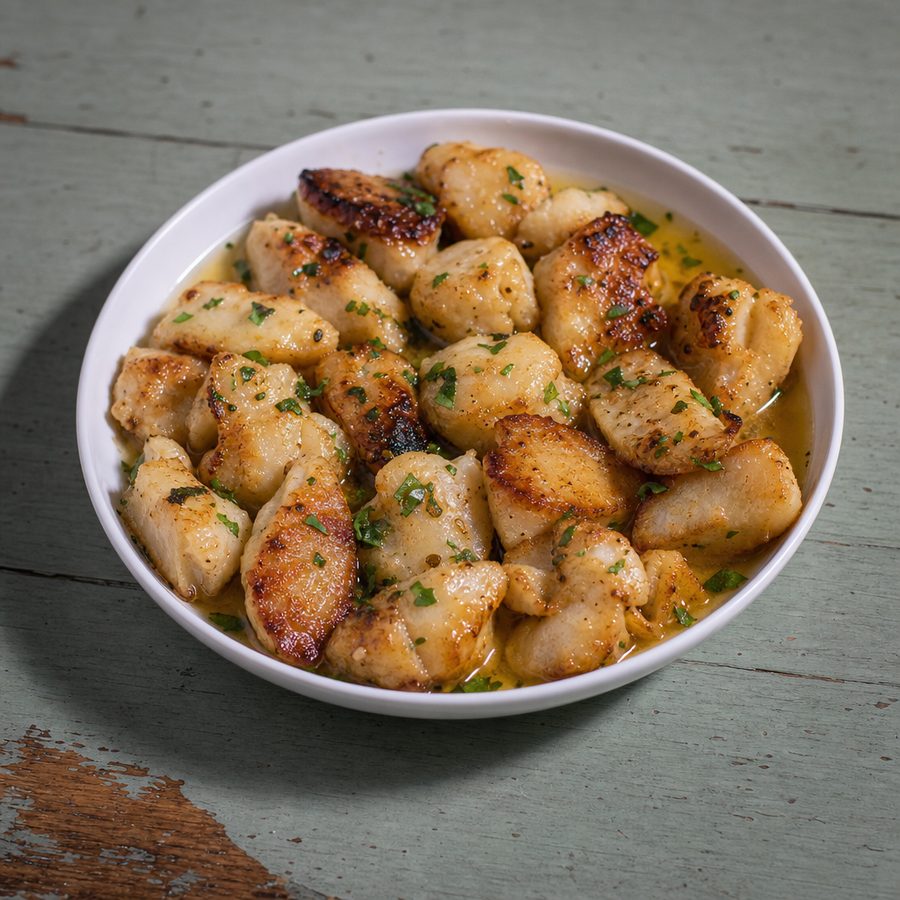
Plump sea scallops seared hard in a screaming-hot skillet until a deep golden crust forms, then basted in foaming salted butter until the centers turn just opaque.
Why You'll Love This Recipe
This is a fast, restaurant-quality plate built around one great ingredient: large, dry-packed sea scallops. It suits anyone who wants a rich, protein-dense meal on the table in minutes and who appreciates a dish where technique matters more than a long ingredient list. Because it leans entirely on scallops, butter, and salt, it is also a good choice for cooks who like clean, uncomplicated food with nothing to hide behind.
The whole dish rises or falls on the sear. Dry, well-salted scallops laid into a truly hot pan develop a deep browned crust through the Maillard reaction, the same chemistry that gives seared steak and toasted bread their savory, nutty flavor. Searing does not seal in any juices; what it does is build color, aroma, and a crisp textural contrast against the tender interior. Finishing with foaming butter and basting bathes each scallop in gently browning milk solids that add a warm, almost caramel richness and carry that flavor over every surface.
Scallops are sweet, delicate, and remarkably high in protein, which makes this plate filling without feeling heavy. The butter adds satisfying richness and a silky mouthfeel that makes a modest portion feel indulgent. The contrast of a crisp, savory crust against a sweet, just-firm center is what makes each bite feel like a treat, and the simplicity means the natural, briny sweetness of the shellfish stays front and center.
Ingredients
- about 20 large dry sea scallops (1.9 lb)
- 7 tbsp butter
Instructions
- Prep the scallops: Look at the side of each scallop for the small, tougher tab of muscle that runs vertically up one edge; pinch it off and discard it, since it turns rubbery when cooked. Lay the scallops on a plate lined with paper towels, blot the tops with more paper towels, and pat them completely dry. Any surface moisture will steam instead of sear, so take your time here. Season both flat sides lightly if you like, keeping in mind that scallops carry their own salinity.
- Heat the skillet: Set a heavy stainless steel or cast iron skillet over medium-high to high heat and let it get very hot, until a drop of water flicked in skitters and evaporates almost instantly, about 3 to 4 minutes. Add a little of the butter and swirl it to coat the pan; it should sizzle and just begin to color.
- Sear the first side: Lay the scallops flat side down in the hot pan, spacing them apart so they are not touching. Work in batches if needed to avoid crowding. Do not move or nudge them; let them sear undisturbed for about 2 minutes, until the bottom edge shows a deep golden-brown crust and the scallops release from the pan on their own.
- Flip and finish the sear: Turn each scallop once with tongs and sear the second side 1 to 2 minutes more, until both faces are golden and the sides look opaque with just a thin band of translucency at the very center. The scallops should feel springy and slightly firm to the touch, not hard; pull them just before they feel fully firm, as they finish from residual heat.
- Butter baste and serve: Add the remaining butter to the pan and let it melt and foam. Tilt the pan slightly, and with a spoon repeatedly scoop the foaming butter over the tops of the scallops for about 30 seconds. Transfer the scallops to a warm plate, spoon the pan butter over them, and serve right away.
Variations
- Brown butter finish: Let the finishing butter cook a little longer, until the milk solids turn golden and smell nutty, before basting. It deepens the flavor without adding any new ingredient.
- Bacon fat sear: Render chopped bacon until crisp, lift it out, and sear the scallops in the rendered fat before basting with butter. This adds pork and gives the crust a smoky edge.
- Clarified butter sear: Sear in ghee, or clarified butter with the milk solids skimmed off, which tolerates higher heat without burning, then finish with fresh butter for flavor. This keeps the dish dairy-based but pushes the crust darker.
- Hard cheese crown: Grate a fine dusting of aged hard cheese over the hot scallops just before serving so it melts against the crust. This adds more dairy and a salty, savory note.
- Egg-topped: Fry an egg in the same buttery pan and set it over the scallops so the runny yolk becomes part of the sauce. This adds egg and turns the plate into a richer meal.
Storage & Leftovers
Seared scallops are best eaten the moment they come off the heat, but leftovers keep in an airtight container in the refrigerator for up to two days. Spoon a little of the pan butter over them before sealing so they do not dry out.
Reheat gently, since scallops turn rubbery when overcooked. Warm them in a skillet over low heat with a knob of butter just until heated through, a minute or two per side, or eat them cold, sliced, straight from the fridge. Avoid the microwave, which cooks them further and toughens the flesh.
To get ahead, remove the side muscle, pat the scallops dry, and salt them up to a few hours in advance; store them uncovered on a paper-towel-lined plate in the fridge so the surface dries further, which gives you an even better crust when you sear. Do the actual searing just before serving.
Notes & Tips
- Buy dry, not wet: Ask for dry-packed or dry sea scallops. Wet scallops are soaked in a phosphate solution that holds water and makes them nearly impossible to brown. Dry ones look ivory or slightly pinkish and a little tacky, not stark bright white and glossy.
- Pick the right pan: Use heavy stainless steel or cast iron, which hold intense heat. Skip nonstick; it rarely gets hot enough to build a real crust and the surface keeps scallops from browning properly.
- Give them room: Crowding drops the pan temperature and traps steam, so the scallops poach instead of sear. Leave space between each one and cook in batches rather than jamming them in together.
- Let them come up in temperature: Take the scallops out of the fridge and let them sit at room temperature for a few minutes before searing. Ice-cold scallops cool the pan and cook unevenly, leaving the centers underdone by the time the crust forms.
- Judge doneness by feel: A perfectly cooked scallop is springy with a little give, like the pad below your thumb; a firm, bouncy one is overdone. Pull them a touch early, because they keep cooking on the plate.
- Use good butter: Because butter is one of only three ingredients, its quality shows. A fresh, high-fat cultured butter gives the richest foam and the most flavor when you baste.
Nutrition & Mindful Eating
- Scallops and butter are the whole dish, and heat is the third ingredient. A very hot pan builds the crust in a minute or two, the butter browns while that happens, and the inside of the scallop is left almost translucent on purpose.
- Sea scallops are sweet in a way no other shellfish is, dense and slightly springy under the tooth, and that firm white muscle is close to pure protein, which is why a handful of them makes a real lunch.
- Butter gives the crust its color and its smell, browning into something nutty as the scallops sear, and the fat it adds is what makes a naturally delicate shellfish taste rich on the plate.
- Dry scallops and a hot pan are the entire secret. Left undisturbed, they release on their own once the crust has formed, and the gap between that caramelized surface and the silky middle is the whole pleasure of eating them.
- Scallops carry B12 and zinc alongside their protein, and with browned butter over them they satisfy quickly, so a plate of a few of them eats like a full meal.
- As you eat, take them one at a time and notice the crust giving way to the soft center, letting the sweetness and the browned butter register before you reach for the next one.
Frequently Asked Questions
What are "dry" scallops and why do they matter here?
Dry scallops are shellfish that have not been treated with a phosphate soak. Wet or wet-packed scallops absorb water and additional liquid, which floods the pan and steams the surface so it can never brown. Since a deep crust is the whole point of this dish, dry-packed scallops are worth seeking out.
How do I know when a scallop is cooked through?
Look for opaque sides with only a thin band of translucency at the very center, and a springy feel with slight give when you press the top. Cooked all the way to firm and bouncy means overdone. Because they carry over off the heat, pull them just before they feel fully set.
Why won't my scallops get golden?
Almost always it is moisture or heat. Pat them bone-dry, salt them, and make sure the pan is hot before they go in. Crowding is the other culprit, since too many scallops cool the pan and release steam, so give each one space and work in batches.
Can I use frozen scallops?
Yes. Thaw them slowly in the refrigerator overnight, then blot them very thoroughly and let them rest on paper towels, as frozen scallops shed extra water. The drier you get the surface, the closer you will come to the crust you would get from fresh.