
Buttered Bison Steaks
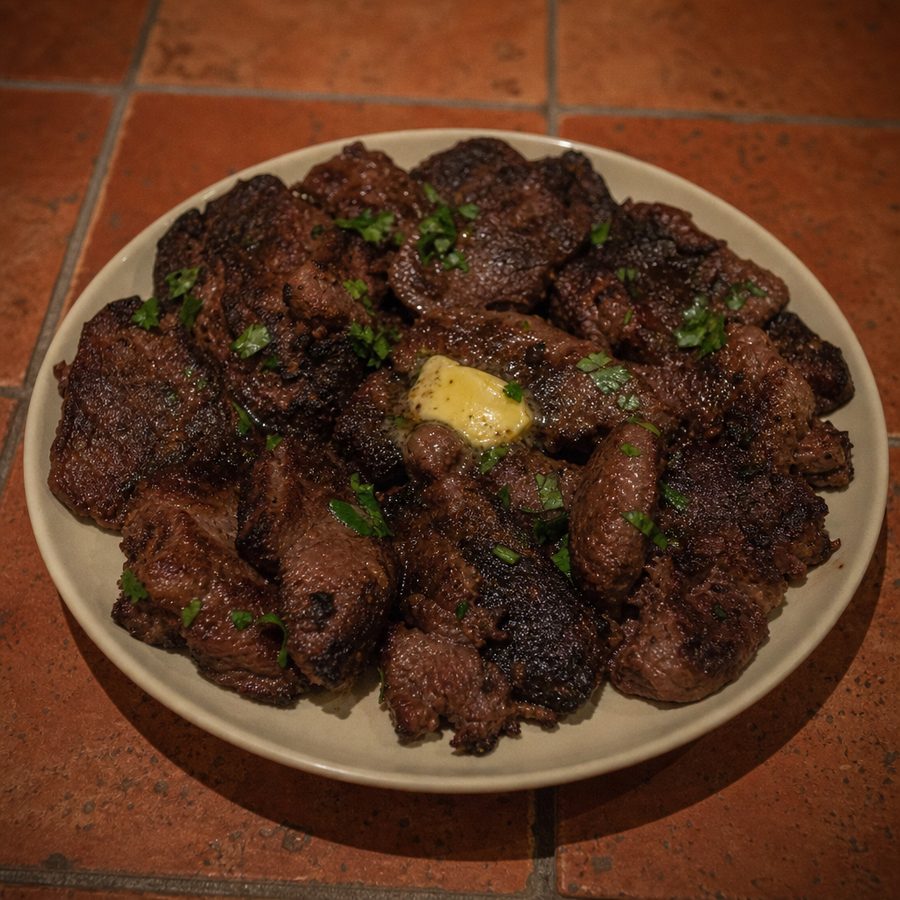
Bison steaks seared hard in a screaming-hot skillet, then basted in melted butter and rested until the juices settle, for a rich, beefy dinner with a deeply browned crust.
Why You'll Love This Recipe
These buttered bison steaks are a straightforward, protein-forward dinner for anyone who wants a serious, satisfying piece of meat with almost no fuss. Bison tastes like a cleaner, slightly sweeter version of beef, and with just steak, butter, and salt on the ingredient list, there is nowhere to hide, which makes it a great choice when you want the meat itself to be the whole point of the meal.
The technique here is all about respecting how fast bison cooks. With far less marbling than a typical beef steak, it can go from juicy to dry in under a minute, so the method is built for speed: a very hot dry pan to build a browned crust quickly, a short sear on each side, and only a brief finish. Basting with butter at the end lays a coat of fat over the surface and carries flavor into meat that does not have much internal fat of its own, while the five-minute rest lets the juices redistribute so they stay in the steak instead of pooling on the board.
What makes this dish satisfying is its density: a deeply savory piece of meat that is rich in high-quality protein and eats heavier than its size suggests. The butter adds just enough fat to round out the meat and keep each bite tender, and the browned crust from the sear gives the kind of roasted, meaty flavor that makes a simple steak feel like a full meal. It is filling, clean-tasting, and nourishing.
Ingredients
- 4 bison steaks (about 8 oz each)
- 5 tbsp butter
- 1 tsp salt
Instructions
- Temper and salt: Take the bison steaks out of the refrigerator and let them sit on the counter until they lose their fridge chill, about 30 to 45 minutes. Pat them dry on both sides with a paper towel, then season all over with salt. Dry, room-temperature meat browns far better than cold, damp meat.
- Heat the skillet: Set a heavy skillet, preferably cast iron, over high heat and let it get very hot, until a drop of water flicked onto the surface skitters and evaporates almost instantly. A properly hot pan is what gives bison its crust in the short time it spends cooking.
- Sear fast: Lay the steaks in the dry pan without crowding them and sear undisturbed until the underside is well browned, about 2 minutes. Flip and sear the second side another 2 minutes. Bison cooks noticeably faster than beef, so it is easy to overshoot; aim for an internal temperature of about 130 to 135°F (54 to 57°C) at the center for medium-rare, checked with an instant-read thermometer.
- Baste with butter: Add the butter to the pan. As it melts and foams, tilt the skillet slightly and spoon the hot butter over the tops of the steaks continuously for about 30 seconds, coating them and adding richness to the meat.
- Rest and serve: Move the steaks to a board or warm plate and let them rest for 5 minutes so the juices settle back through the meat instead of running out when you cut. Slice against the grain and spoon any butter from the pan over the top.
Variations
- Tallow sear: Skip the butter and render a spoonful of beef tallow or bison fat in the pan for basting instead. This keeps the steak rich while removing the dairy.
- Clarified butter finish: Baste with ghee in place of butter. It is clarified butter with the milk solids removed, so it can take the pan's high heat without the flecks of butter browning as quickly.
- Fried egg on top: Fry an egg in the buttery pan after the steaks come out and slide it onto each steak; the runny yolk acts as a rich sauce. This adds egg.
- Hard cheese crust: Grate an aged hard cheese over the hot steaks as they rest so it softens against the meat. This adds dairy.
- Bone marrow finish: Roast split marrow bones until the marrow is soft and spoon it over the rested steaks for an extra-rich, silky topping.
Storage & Leftovers
Cooked bison keeps in the refrigerator for three to four days in an airtight container. Because it is so dense, it firms up more than a beef steak once chilled, so slice it thin against the grain before storing if you plan to eat it cold over the next couple of days.
Reheat gently to avoid drying it out. Set the steak in a skillet over low heat with a small knob of butter, cover, and warm just until heated through, turning once; pull it as soon as it is warm rather than letting it keep cooking. A cold bison steak sliced thin is also good straight from the refrigerator, since gentle handling is the main thing that protects its texture.
To get ahead, temper and salt the steaks and keep them loosely covered while your skillet heats, then sear just before serving. Bison is at its best cooked to order, so if you are feeding a crowd, sear in batches and hold the finished steaks under loosely tented foil in a warm spot rather than cooking them all early and reheating.
Notes & Tips
- Buy an even thickness: Look for steaks that are a uniform thickness, ideally around an inch, so they cook evenly in the same short window. A steak that is thin at one end will overcook there before the thick end is ready.
- Use a thermometer: An instant-read thermometer is the single best tool for bison steaks. The difference between a juicy medium-rare and a dry, tough steak is only a matter of degrees, and you cannot reliably judge it by time alone.
- Mind your salt source: If you use salted butter for basting, pull back slightly on the salt you season with, since the butter will add its own. With unsalted butter, season the meat as written.
- Do not crowd the pan: Give each steak room. Crowding drops the pan temperature and steams the meat instead of searing it, and you will lose the crust. Cook in batches if your skillet is small.
- Slice against the grain: Look at the direction the muscle fibers run and cut across them, not with them. On a fine-grained cut like bison this makes a real difference in how tender each bite feels.
- Let the crust release itself: When you go to flip, if the steak sticks it is not ready to turn. A well-seared surface loosens from the pan on its own, so wait a few more seconds rather than tearing the crust off.
Nutrition & Mindful Eating
- The bison, the salt and the butter each carry a part of this. Salt drawn into the surface ahead of time gives you a better crust, the pan supplies the browning, and the butter melting over the rested steak brings it all back together.
- Bison has a firmer, closer grain than beef and a deeper, faintly sweet flavor, and it carries heme iron and zinc in the form the body absorbs most readily, which is part of why it tastes so distinctly mineral.
- Butter is essential rather than optional with bison, because the meat cooks fast and the fat keeps it supple, and the vitamin A the butter carries arrives in the same glossy spoonful you pour over the top.
- Pull bison off the heat sooner than you think. It moves from rosy to gray quickly, and the steak you want has a dark crust, a warm red middle and butter running down the board when you slice it.
- Bison eats substantial. The protein does most of that work and the butter rounds it out, and a modest steak keeps you settled for hours afterward.
- As you eat, chew slowly enough to catch how different bison tastes from beef, sweeter and more mineral, and let the pauses between bites tell you when the plate has been enough.
Frequently Asked Questions
How do I know when the bison is done?
Use an instant-read thermometer in the thickest part of the steak. Around 130 to 135°F (54 to 57°C) gives you a juicy medium-rare, which is where bison shines. Because the window is so narrow, cooking much past medium tends to make it dry and tough, so pull it a touch early and let the rest finish the job.
Why does bison cook faster than beef?
Bison has far less internal fat and marbling than most beef steaks. Fat insulates and slows cooking, so with less of it, bison heats through more quickly and can overcook in the time you would still be searing a comparable beef steak.
Can I cook these from frozen?
It is best to thaw them fully first. Move the steaks to the refrigerator a day ahead so they thaw slowly, then temper and pat them dry before searing. A frozen or wet steak will steam rather than brown and will cook very unevenly.
My bison turned out dry and tough. What went wrong?
Almost always it was cooked too long. Bison cooks quickly and unforgivingly, so even a minute or two past medium can dry it out. Sear fast over high heat, pull it at medium-rare by temperature, and give it the full rest before slicing against the grain.