
Buttered Seared Sirloin
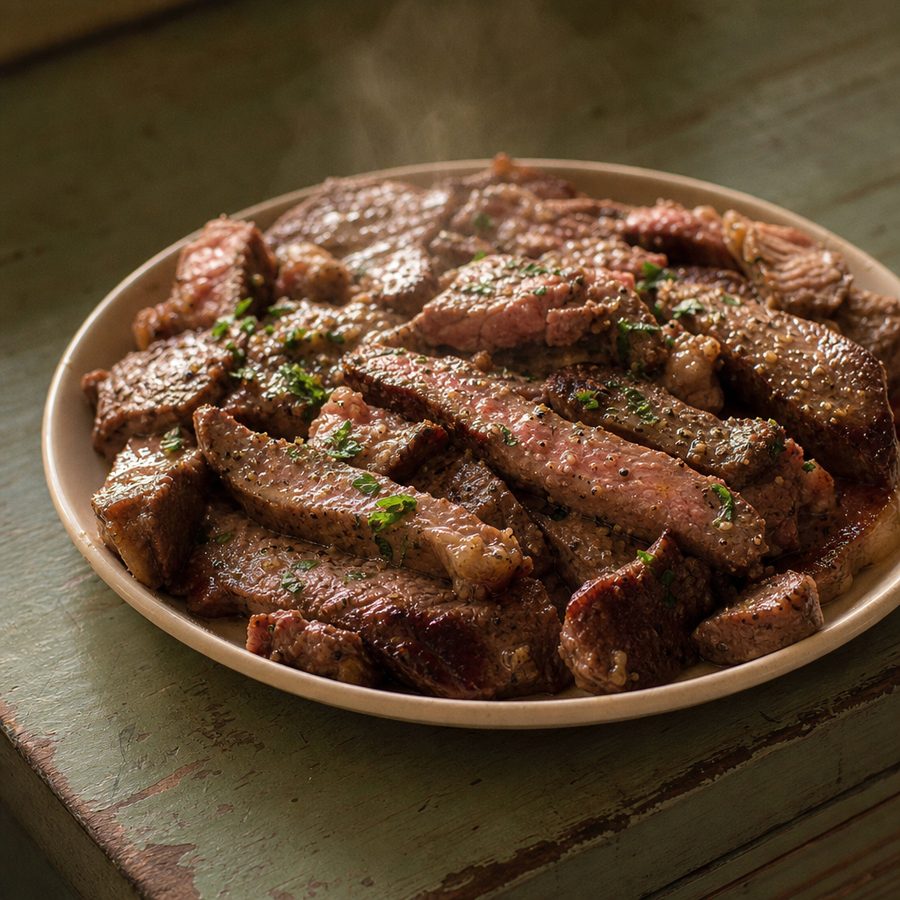
Thick-cut sirloin steaks seared until a deep brown crust forms, then basted with foaming salted butter for a rich, beefy finish.
Why You'll Love This Recipe
This is a fast, single-skillet lunch for anyone who wants a serious, protein-forward meal without a long ingredient list. It is three ingredients and about twenty minutes start to finish, which makes it as practical for a weekday as it is satisfying. If you cook for people who eat simply and want real, filling food rather than something fussy, this is squarely for them, and it slices cold the next day into something worth putting on a salad.
The whole thing works because of two techniques stacked together. A screaming-hot dry pan drives off surface moisture and browns the exterior, building the dark, savory crust that gives seared beef its flavor and texture. Then the butter baste finishes the job: spooning foaming butter over the steaks bathes them in fat that carries flavor into every crevice of the crust and helps the top brown as evenly as the side touching the pan. Resting afterward lets the interior settle so the steak stays juicy under the knife.
The thing that fills you is the thing that feeds you. Sirloin is firm but deeply beefy, so you get a full, meaty bite that keeps you full, while the butter adds richness and a smooth mouthfeel that the meat alone can miss. It is high in protein and rich in the minerals beef is known for, and because it leans on fat and protein rather than starch, it eats rich and keeps you satisfied well past the meal.
Ingredients
- 1 3/4 lb sirloin steak
- 3 1/2 tbsp butter
- 3/4 tsp salt
Instructions
- Salt and temper the steaks: Pat the sirloin steaks completely dry on both sides with paper towels, then sprinkle them evenly with salt. Let them sit at room temperature for 10 minutes so the surface dries and the salt begins to work into the meat, which helps a darker crust form.
- Heat the skillet: Set a heavy skillet, preferably cast iron, over high heat and let it get very hot, until it just begins to smoke. A properly hot pan is what gives you a seared crust instead of gray, steamed meat.
- Sear: Lay the steaks into the dry skillet away from you and let them sear undisturbed for 3 to 4 minutes, until the underside is deeply browned. Flip once and sear the second side another 3 to 4 minutes for medium-rare. Use an instant-read thermometer in the thickest part: pull them at about 130°F (54°C) for medium-rare or 140°F (60°C) for medium.
- Baste with butter: Add the butter to the skillet. As it melts and foams, tilt the pan slightly and spoon the hot butter continuously over the tops of the steaks for about 1 minute, coating them in the browning butter.
- Rest and slice: Transfer the steaks to a board or warm plate and let them rest for 5 minutes so the juices settle and stay in the meat when cut. Slice against the grain into thick strips and spoon any pan butter over the top.
Variations
- Tallow baste: Swap the butter for beef tallow. It gives an even more pronounced beef flavor and a higher smoke point for basting, and it removes the dairy that butter adds.
- Egg on top: Crack an egg into the foaming butter beside the steak and fry it until the white sets, then slide it over the sliced meat. This adds egg.
- Hard cheese crown: Shave an aged hard cheese over the steak while it rests so it softens against the warm meat. This adds more aged dairy on top of the butter.
- Ribeye instead of sirloin: Use a well-marbled ribeye in place of the sirloin for a richer, more tender bite. The extra marbling adds more fat throughout the cut.
- Ghee baste: Use ghee in place of the butter. It behaves like butter but browns without the milk solids scorching, and it is a clarified form of dairy.
Storage & Leftovers
Refrigerate leftover steak in an airtight container within two hours of cooking, and it will keep well for three to four days. Slicing it before storing is fine, though keeping it whole holds in a touch more moisture.
Reheat gently to avoid overcooking meat that is already done. The best way is a low oven or a skillet over low heat with a little of the reserved butter, warming just until heated through. A quick, low-power run in the microwave also works if you cover it and stop as soon as it is warm; high heat will make it tough and dry.
To get ahead, salt the raw steaks and hold them uncovered in the fridge for a few hours or overnight, which dries the surface for an even better crust. Pull them out to take the chill off before searing, and cook them fresh when you are ready to eat.
Notes & Tips
- Pick even, thick cuts: Buy steaks of even thickness, at least an inch thick if you can. A thick, uniform cut lets you build a real crust before the middle overcooks, while thin steaks go from raw to well-done in the time it takes to brown.
- Dry the surface well: Blot the meat aggressively before it hits the pan. Any moisture on the surface turns to steam and stalls browning, so the drier the steak, the darker the sear.
- Trust a thermometer: Use an instant-read thermometer instead of guessing. Pull the steaks a few degrees below your target because they climb a little while resting, and pulling at about 130°F (54°C) lands medium-rare.
- Salted or unsalted butter: Choose to taste. Salted butter seasons a little more as it bastes; if you use unsalted, you may want a slightly heavier hand with the salt on the meat.
- Do not crowd the pan: Leave space between the steaks so the skillet stays hot and the meat sears rather than steams. Work in batches if your pan is small.
- Save the pan butter: Spoon the browned butter left in the skillet over the sliced steak, or refrigerate it to reheat leftovers, since it carries a lot of the flavor.
Nutrition & Mindful Eating
- Sirloin, salt and butter is a short list, so timing carries the dish. The steak goes into a pan hot enough to brown on contact, the butter joins once the crust has set, and a few minutes of resting keeps the juices in the meat rather than on the board.
- Sirloin gives you real beef flavor from a few minutes in a pan, firm and grainy and best sliced thin across the grain, with the iron and B12 riding along inside that flavor.
- Butter added late foams up and turns nutty, and tipping it over the steak coats every surface with the browned bits it has picked up, along with the vitamin A butter brings with it.
- The sound tells you more than the timer does. A steady, sharp sizzle means the surface is browning, and when it drops to a quiet hiss the pan has cooled too far and the crust stops building.
- A sirloin eaten hot off the pan carries you well past the afternoon, with the protein doing most of that and the butter adding the richness that makes a modest portion feel generous.
- As you eat, slice thin and notice how much juice comes out on the board, taste the salt sitting on the crust, and let the plate be a proper stop in the day rather than something quick.
Frequently Asked Questions
What internal temperature should I cook sirloin to?
For medium-rare, pull the steaks at about 130°F (54°C) and for medium at about 140°F (60°C), measured with an instant-read thermometer in the thickest part. They will rise a few degrees while resting, so take them off the heat just before your target.
Why do I rest the steak before slicing?
Resting gives the juices time to settle back through the meat so they stay put when you cut, rather than running out onto the board. Five minutes is enough for steaks this size, and slicing against the grain keeps each bite tender.
Can I use unsalted butter?
Yes. Unsalted butter bastes just as well; you simply control all the salt yourself on the meat. If you use salted butter, keep that in mind so the finished steak is not too salty.
Why did my butter turn dark and smell nutty?
That is the milk solids in the butter browning in the hot pan, which is normal and adds a rich, toasty flavor. If it goes past deep brown to black and smells acrid it has burned, so lower the heat slightly or add the butter a little later in the sear.